Frankenstein Chapter 12 Summary
Learning and Longing
The Creature watches the De Lacey family through winter, learns language and morals, secretly helps them, and discovers his own deformity in a pool.

Summary
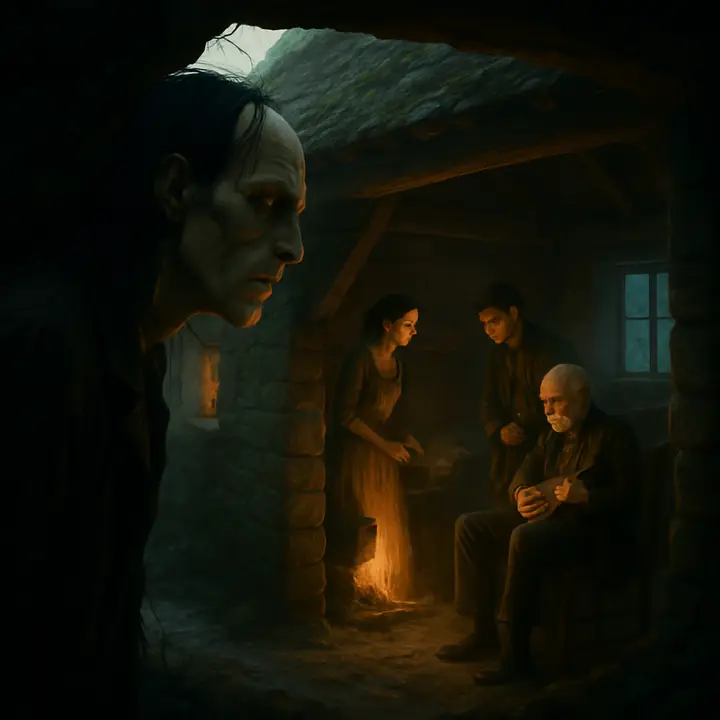
The Creature spends the winter living in a hovel near a cottage inhabited by an old blind man and two younger companions, whom he comes to call father, Agatha, and Felix. After witnessing their gentle manners and mutual care, he resolves to remain hidden and learn about their lives. He observes their daily routine, sees their poverty and sacrifices, and stops stealing food when he realizes his theft causes them pain. He begins leaving gathered wood and fuel, which astonishes and helps them.
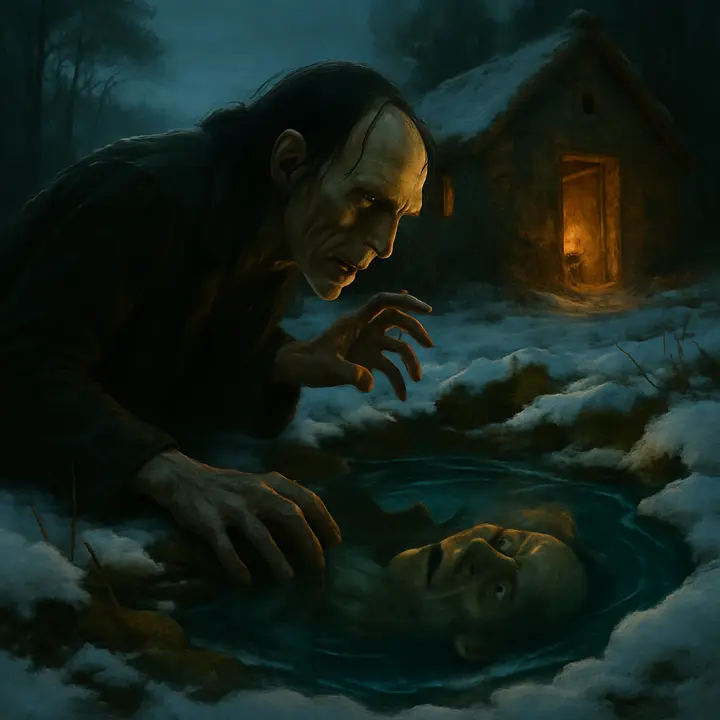
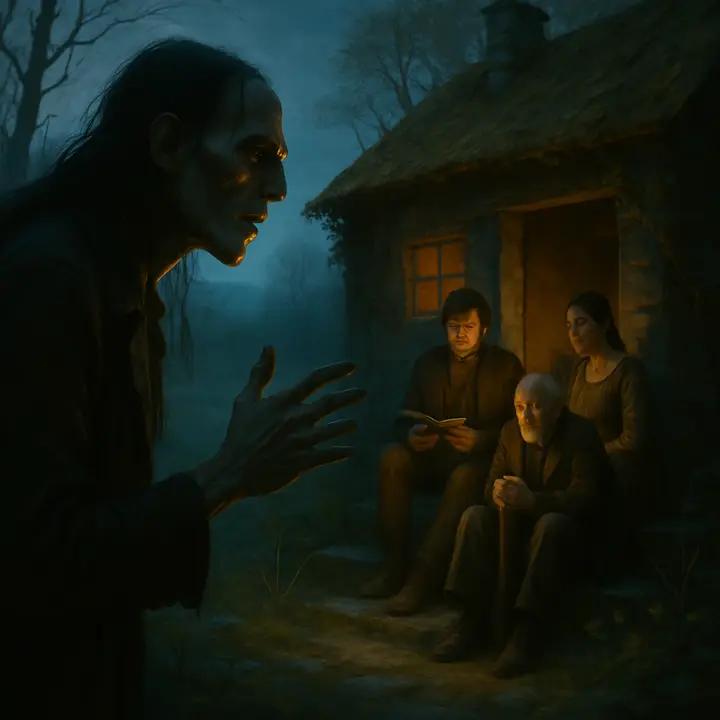
Over months of patient observation the Creature discovers human speech and the connection between words and ideas. He learns basic nouns—fire, milk, bread, wood—and the names used for the family members, and he slowly improves his pronunciation. He also recognizes the family's virtues: kindness, self-sacrifice, and love despite want. While he idealizes them and imagines revealing himself to win their affection, a mirror-like pool shows him his own reflection; he is horrified to see his deformed appearance and feels deep despondence. Still, the arrival of spring and the family's increasing comfort lift his spirits and renew his hope that he might be accepted if he can master their language and prove his gentle intentions.
Key events
- The Creature watches the De Lacey family and decides to remain hidden.
- He notices the family's poverty and stops stealing their food to avoid causing harm.
- He secretly brings wood and fuel, which benevolently aids the family.
- He gradually learns spoken words and links sounds to objects and feelings.
- He discovers the names used for the family: father, Agatha, and Felix.
- He sees his reflection in a pool and is horrified by his own appearance.
Chapter 12 in pictures
Analysis
This chapter advances the novel's exploration of nurture, empathy, and social belonging by showing the Creature's moral and intellectual development through observation. The De Lacey household functions as a moral mirror: their kindness teaches the Creature language, compassion, and social norms, while their poverty highlights human dignity amid suffering. The episode deepens sympathy for the Creature by portraying his deliberate restraint—abstaining from theft when he realizes it harms others—and his efforts to help anonymously, which emphasizes his desire for reciprocity and acceptance.
Narratively, the chapter shifts from isolated physical survival to interior education, using a close, almost anthropological third-person account filtered through the Creature's voice. Language-learning scenes foreshadow the Creature's later attempts at communication and the novel’s focus on speech and narrative authority. The pool reflection is a key symbolic moment: water/reflective surface reveals self-knowledge and precipitates anguish, introducing the theme of appearance versus intrinsic worth. The De Laceys also serve as a foil to the 'barbarous villagers' mentioned earlier—gentleness contrasted with cruelty—intensifying the Creature’s tragic position between two human responses.
Important quotes
“I lay on my straw, but I could not sleep.”
NarratorOpens the chapter and expresses the Creature's restless reflection after observing the family.
“I discovered also another means through which I was enabled to assist their labours.”
NarratorMarks the Creature's transition from passive observer to active, secret helper of the De Laceys.
“Alas! I did not yet entirely know the fatal effects of this miserable deformity.”
NarratorAfter seeing his reflection, the Creature recognizes the devastating social consequences of his appearance.
Characters in Chapter 12
All chapter summaries ›Characters ›
Read Frankenstein illustrated
Every scene in these notes comes from the Book2Life reader, where the full public-domain text is illustrated as you read, with character portraits and narration. Free in your browser and on iPhone.
