
Ophelia in Hamlet
Major character
Polonius’s dutiful daughter and Laertes’s sister caught between love for Hamlet and obedience to her father.
Who is Ophelia?
Ophelia is a gentle, soft-spoken young noblewoman at Elsinore who is romantically linked to Prince Hamlet. Surrounded by men who shape her choices, she promises Laertes to heed his warning about Hamlet and then obeys her father Polonius when he commands her to end private contact with the prince. After Hamlet appears before her in a disordered state and later rejects her cruelly during a staged encounter watched by the court, Ophelia becomes increasingly fragile. Polonius uses her situation as evidence of Hamlet’s supposed madness, and the King and Queen exploit her presence to test Hamlet. Following her father’s death at Hamlet’s hands, Ophelia’s grief fractures into public, disturbed behaviour—singing fragmented songs, scattering flowers, and speaking in riddled verses—leading the court to regard her as mad. Her decline culminates in a funeral where her death is ambiguous and her burial rites are debated, while Laertes and Hamlet publicly vie to display sorrow for her. Ophelia’s actions are shaped by loyalty, obedience, and the limited agency permitted to her in the court.
In the book: We first meet Ophelia as Polonius’s dutiful daughter and Laertes’s sister, a polite, soft-spoken presence at the Danish court. She’s being courted by Prince Hamlet, and everyone around her has an opinion about it—so she’s trying to navigate love and loyalty while staying respectful to her father.
Personality
- Obedient
- Promises Laertes to heed his warnings and follows Polonius’s command to end private encounters with Hamlet (Act 1, Scene 3).
- Reserved
- She appears soft-spoken and polite at court, offering little resistance when questioned by Polonius (Act 1, Scene 3).
- Vulnerable
- Describes Hamlet’s wild, trembling visit and is visibly disturbed after he behaves erratically toward her (Act 2, Scene 1).
- Grieving
- After Polonius’s death she sings fragmented songs and scatters flowers, showing public signs of deep sorrow (Act 4, Scene 5).
- Passive
- She allows others—Laertes, Polonius, Claudius—to dictate her relationship with Hamlet and her presence at court (Acts 1–3).
Character arc
Ophelia first appears as a dutiful daughter and cautious sister trying to balance affection for Hamlet with familial obligations. Early on she follows Laertes’s pragmatic warning and immediately complies with Polonius’s stringent order to cut off private interaction with Hamlet, positioning her as obedient and constrained. When Hamlet confronts her in a disordered fit and later rejects her harshly under Polonius and Claudius’s surveillance, Ophelia’s composure begins to crack; she reports frightening behaviour and becomes an unwitting instrument in the court’s inquiries into Hamlet’s mind. The decisive rupture comes with Polonius’s death: bereft of her father and having been used in political theatre, she slips into a disturbed, public madness, singing fragmented songs and distributing symbolic flowers that reveal grief and confusion. By the final scenes she dies under ambiguous circumstances and is carried to a debated Christian burial. Across the play she moves from controlled obedience and private feeling to visible, tragic disintegration, her voice shifting from polite reserve to fractured song, marking a decline driven by loss and the pressures of courtly manipulation.
Relationships
- Polonius Her father, who prescribes conduct for her and commands her to sever private contact with Hamlet.
- Laertes Her brother, who warns her to guard her honor and whose departure and return frame her obedience and later the public spectacle of grief.
- Hamlet A suitor whose affectionate and later cruel, disordered behaviour deeply affects Ophelia and is central to her emotional unraveling.
- Claudius The king who, with Polonius, uses Ophelia in an arranged encounter to test Hamlet and later observes her madness as evidence of grief.
- Gertrude The queen who watches Ophelia’s disturbed condition and laments her loss, once hoping her as a daughter-in-law.
- Horatio A steady court observer who witnesses events around Ophelia, including discussions of her condition and the later funeral scene.
Quotes by Ophelia
“Lord Hamlet, with his doublet all unbrac’d, No hat upon his head, his stockings foul’d, Ungart’red, and down-gyved to his ankle, Pale as his shirt, his knees knocking each other,”
Act 2, Scene 1Ophelia’s description of Hamlet’s disordered appearance is the central eyewitness account that prompts Polonius’s diagnosis of love-madness.
“O, what a noble mind is here o'erthrown!”
Act 3, Scene 1Ophelia's grieving assessment after Hamlet departs, mourning the collapse of his formerly noble, admired character.
“There’s rosemary, that’s for remembrance; pray love, remember.”
Act 4, Scene 5Ophelia distributes herbs and names their meanings in a fragmentary ritual that ties grief to memory and symbolic mourning.
“They bore him barefac’d on the bier, Hey non nonny, nonny, hey nonny And on his grave rain’d many a tear.— Fare you well, my dove!”
Act 4, Scene 5Ophelia sings of burial and loss, mixing nursery-song cadence with bereavement to unsettle the court and reveal her fractured mind.
Why Ophelia matters
Ophelia embodies the human cost of political intrigue and patriarchal control in the play: her obedience and marginalization expose how private affections are politicized and how women’s voices can be silenced and infantilized. Her descent into fragmented song and ambiguous death highlights themes of madness, grief, and the breakdown of order at court. Through Ophelia, the text questions who bears responsibility for tragedy when social structures restrict autonomy and reduce individuals to instruments in others’ schemes.
Chapters with Ophelia
More Hamlet characters
 HamletProtagonist
 ClaudiusAntagonist
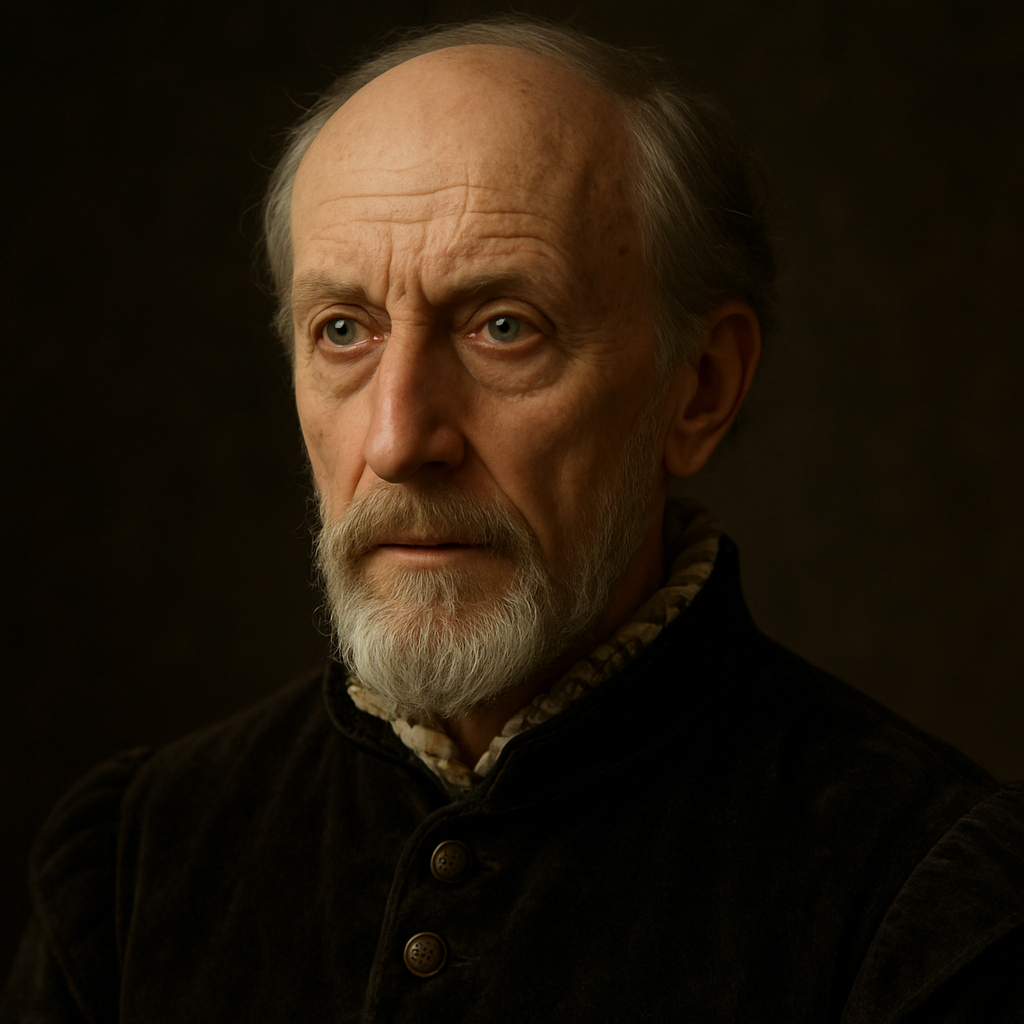 PoloniusMajor character
 GuildensternMinor character
 HoratioMajor character
 RosencrantzMinor character
 GertrudeMajor character
 LaertesMajor character
All chapter summaries ›Characters ›
Read Hamlet illustrated
Every scene in these notes comes from the Book2Life reader, where the full public-domain text is illustrated as you read, with character portraits and narration. Free in your browser and on iPhone.
