
Horatio in Hamlet
Major character
A calm, scholarly friend and steady witness who supports Hamlet and reports what he sees at Elsinore.
Who is Horatio?
Horatio is a visiting scholar from Wittenberg who becomes Hamlet’s closest, most reliable friend and the play’s steadier witness. He first appears on the battlements when Marcellus summons him to verify a ghostly apparition; his initial skepticism turns to conviction when he sees the Ghost himself. Horatio moves fluidly between observation and counsel: he informs Hamlet of the Ghost, accompanies Hamlet to the watch, and keeps silent about what he learns when Hamlet extracts an oath. He reads aloud Hamlet’s letter delivered by sailors, helps Hamlet interpret Claudius’s reaction to the play, and stands beside Hamlet at the graveyard and in the final scene. Horatio’s primary actions are to record, to counsel quietly, and to serve as the trustworthy auditor of events, enabling Hamlet’s plans (such as the play) and later bearing witness to Hamlet’s explanations, choices, and death. He is the friend Hamlet trusts to tell the truth after the catastrophe and the one Hamlet charges with telling the story that will explain what happened.
In the book: We meet Horatio on the castle ramparts at Elsinore, a visiting scholar from Wittenberg who joins the night watch. He’s calm, skeptical, and thoughtful—the friend who listens first—so when he sees the Ghost, he knows it’s serious and goes to Hamlet as the one person who should hear it. Early on, he matters because he’s the steady witness and confidant amid everyone else’s nerves.
Personality
- Calm
- On the ramparts he listens and questions the sentries without panic when they report the Ghost, and only accepts the sight after seeing it himself.
- Skeptical
- He initially doubts Barnardo and Marcellus’s claims about the apparition, calling it likely fancy before the Ghost appears.
- Loyal
- He goes straight to Hamlet after seeing the Ghost and swears secrecy when Hamlet asks, supporting Hamlet’s plan to feign madness.
- Observant
- Hamlet asks Horatio to watch Claudius during The Mousetrap because Horatio notices and interprets subtle behavior.
- Trustworthy
- In the final scene Hamlet implores Horatio to tell the true story of events, and Horatio promises to do so.
Character arc
Horatio’s role is less about personal change and more about sustaining a moral center as events escalate. He begins as a rational scholar called out to verify a rumor; his skepticism is evidence-based and converts to conviction when the Ghost proves real. From that point he acts as Hamlet’s confidant and pragmatic counsellor: he brings news (the sailors’ letter), agrees to observe and corroborate Hamlet’s experiments (watching Claudius during the play), and follows Hamlet into dangerous moments (the watch, the graveyard). Horatio does not undergo dramatic inward transformation—he remains the same steady, clear-eyed presence—but his responsibilities grow. By Act 5 he shifts from observer to the sole survivor entrusted with truth-telling. Rather than being changed by the bloodshed, Horatio is duty-bound by it: he moves from scholarly curiosity to the heavy task of recording and explaining Denmark’s collapse, accepting Hamlet’s final request to ensure the truth survives their mutual ruin.
Relationships
- Hamlet Closest friend and confidant; Horatio accompanies Hamlet, witnesses key events, and Hamlet charges him with telling the truth after his death.
- Marcellus Fellow watchman who summons Horatio to verify the Ghost and shares duty on the battlements.
- The Ghost A supernatural witness—Horatio addresses and questions the apparition on the ramparts and sees it carry messages that shape Hamlet’s mission.
- Claudius The king Horatio watches closely at Hamlet’s request; Horatio helps confirm Claudius’s guilty reaction to the play.
- Gertrude Present with Horatio when Ophelia’s madness is discussed; Horatio stands among the court as a dispassionate observer of royal grief.
- Rosencrantz One of the court figures involved in the intrigue Horatio observes; Horatio remarks on and navigates the fallout of the king’s use of such courtiers.
Quotes by Horatio
“This bodes some strange eruption to our state.”
Act 1, Scene 1Horatio interprets the ghost’s appearance as an omen of national trouble, linking the supernatural sighting to political unease.
“And then it started, like a guilty thing Upon a fearful summons.”
Act 1, Scene 1Horatio describes how the Ghost reacts to the cock’s crow, implying the spirit’s vulnerability to the sign of morning and moral order.
“What are they that would speak with me?”
Act 4, Scene 6Horatio opens the scene, asking who seeks him and setting up the arrival of the sailors and Hamlet's letter.
Why Horatio matters
Horatio functions as the moral and empirical anchor of the play: his calm, scholarly testimony lends credibility to the supernatural and political events that otherwise risk seeming delirious or conspiratorial. By corroborating the Ghost, interpreting Claudius’s behavior at the play, and preserving Hamlet’s final words, Horatio ensures that truth and witness survive the play’s moral chaos. He embodies the theme that truth requires both observation and integrity: where other characters manipulate, deny, or succumb to passion, Horatio records and preserves a truthful account for posterity.
Chapters with Horatio
More Hamlet characters
 HamletProtagonist
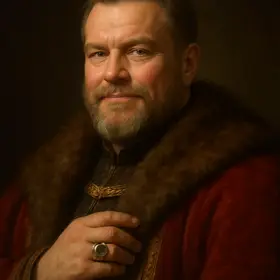 ClaudiusAntagonist
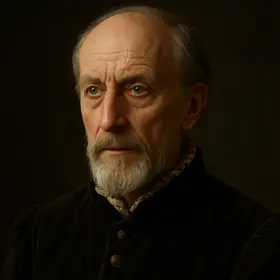 PoloniusMajor character
 GuildensternMinor character
 RosencrantzMinor character
 GertrudeMajor character
 LaertesMajor character
 OpheliaMajor character
All chapter summaries ›Characters ›
Read Hamlet illustrated
Every scene in these notes comes from the Book2Life reader, where the full public-domain text is illustrated as you read, with character portraits and narration. Free in your browser and on iPhone.
