
The Ghost in Hamlet
Major character
The dead King of Denmark’s ghost who returns to demand justice and drive Hamlet toward vengeance.
Who is The Ghost?
The Ghost first appears as a silent, armored apparition pacing Elsinore’s battlements, startling the watch and prompting them to summon Horatio and then Hamlet. It resembles the recently deceased king so exactly that the courtiers fear portent and national unrest. When it finally speaks alone with Hamlet, the Ghost identifies himself as Hamlet’s father and reveals that he was murdered by his brother, who poured poison into his ear while he slept. The Ghost charges Hamlet with exacting revenge on the murderer but expressly forbids Hamlet from harming Gertrude, leaving her judgment to heaven. After this revelation the Ghost’s directive catalyzes Hamlet’s decision to feign madness and to stage The Murder of Gonzago in order to test Claudius’s conscience. The Ghost later returns in the private closet scene, unseen by Gertrude, to remind Hamlet of his purpose and to restrain him from greater violence against his mother. Across its appearances the Ghost functions as the inciting force that transforms Hamlet’s grief into a mission of vengeance and shapes key choices in the play’s intrigue.
In the book: We first meet him pacing the battlements of Elsinore, a silent, armored apparition that looks exactly like the dead King of Denmark. When he finally speaks to Hamlet, he declares himself the prince’s father and lays a grave charge on him, igniting Hamlet’s urgency and dread from the start.
Personality
- Apparitional
- He appears twice on the battlements in armor, first remaining silent before vanishing at cockcrow (Act 1, Scene 1).
- Revealing
- He tells Hamlet he was murdered by his brother with poison poured into his ear and explains the circumstances of his death (Act 1, Scene 5).
- Commanding
- He lays a grave charge on Hamlet to seek revenge, prompting Hamlet to swear to remember and obey (Act 1, Scene 5).
- Protective
- He expressly forbids Hamlet from harming Gertrude, telling him to leave her judgment to heaven (Act 1, Scene 5).
- Interruptive
- He appears in the closet scene to check Hamlet’s course and restrain him while Gertrude cannot see or hear him (Act 3, Scene 4).
Character arc
The Ghost enters the play as a silent, uncanny presence on the battlements, observed by the watch and first addressed by Horatio, who cannot make it speak. Its next, full appearance is a private revelation to Hamlet, where it transforms from an eerie sign into an active moral engine: it confesses fratricide, assigns a duty of revenge, and dictates a constraint regarding Gertrude. That commission reshapes Hamlet’s behavior—he vows to remember the command, to adopt an antic disposition, and to use theatrical means to test the king—so the Ghost’s appearance marks the turning point from passive mourning to purposeful action. The Ghost’s final recorded intervention occurs during Hamlet’s violent confrontation with his mother: it returns to admonish and remind Hamlet of his aim while remaining invisible and unheard by Gertrude, thereby steering Hamlet away from matricide. The Ghost does not change; it remains fixed as the voice of a wronged former king and a moral summons. Its role is catalytic rather than developmental: it sets in motion Hamlet’s choices and intermittently reins him in, but it itself neither seeks redemption on stage nor reveals further information beyond the initial charge.
Relationships
- Hamlet His son; the Ghost reveals its identity and charges Hamlet to avenge his murder.
- Claudius His brother and murderer; the Ghost accuses Claudius of pouring poison into his ear and stealing crown and queen.
- Gertrude His wife; the Ghost forbids Hamlet from harming her and leaves her judgment to heaven.
- Horatio A scholar and witness who first questions the apparition and later stands sworn to Hamlet about the Ghost’s appearance.
- Marcellus One of the watchmen who twice sees the Ghost on the battlements and helps summon Hamlet.
- Polonius Indirectly connected: Polonius hides in the closet where the Ghost later appears to Hamlet and influences the scene’s deadly turn.
Quotes by The Ghost
“Remember me.”
Act 1, Scene 5The Ghost’s final imperative to Hamlet, which becomes the moral and psychological anchor for Hamlet’s vow of vengeance.
“The serpent that did sting thy father’s life Now wears his crown.”
Act 1, Scene 5A concise accusation identifying the murderer and linking treachery, nature imagery, and usurpation.
Why The Ghost matters
The Ghost crystallizes the play’s central concerns: the unsettled boundary between life and death, the demand for moral reckoning, and the corrosive effects of betrayal. By revealing a secret murder and assigning revenge, the Ghost injects ethical urgency and sets the plot’s chain of retribution into motion. Its prohibition against harming Gertrude complicates the duty to avenge with a moral restraint, forcing Hamlet into paralysis and strategy rather than straightforward violence. The Ghost therefore embodies both the personal call for justice and the ambiguities of spectral testimony—its presence raises questions about truth, conscience, and the legitimacy of vengeance that the rest of the play must confront.
Chapters with The Ghost
More Hamlet characters
 HamletProtagonist
 ClaudiusAntagonist
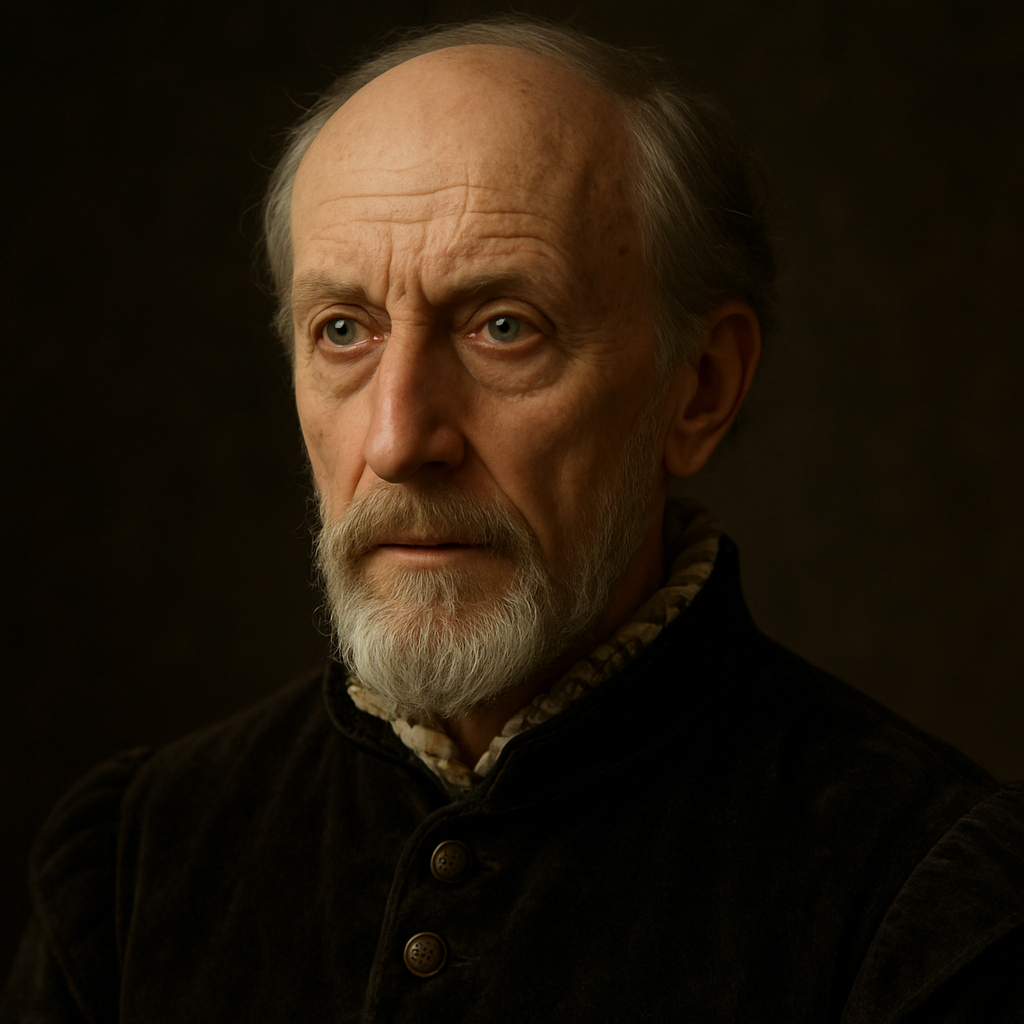 PoloniusMajor character
 GuildensternMinor character
 HoratioMajor character
 RosencrantzMinor character
 GertrudeMajor character
 LaertesMajor character
All chapter summaries ›Characters ›
Read Hamlet illustrated
Every scene in these notes comes from the Book2Life reader, where the full public-domain text is illustrated as you read, with character portraits and narration. Free in your browser and on iPhone.
