Moby-Dick Chapter 1 Summary
Loomings
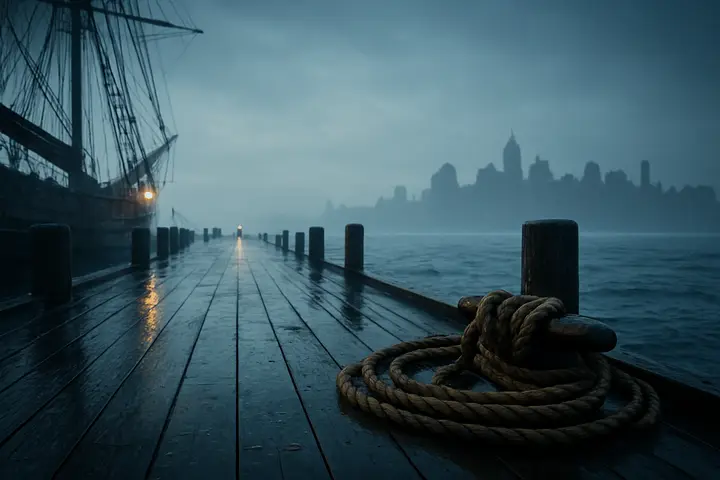
Ishmael explains why he goes to sea as a sailor whenever he feels gloomy and describes humanity’s innate pull toward water.
Summary
The chapter opens with the famous line, "Call me Ishmael," and establishes the narrator as a reflective, self-aware man who goes to sea whenever he feels depressed or restless. Ishmael describes his habit of escaping "the spleen" and "a damp, drizzly November" in his soul by taking passage on a ship, not as a passenger but as a simple sailor. He contrasts passengers, captains, and cooks with his chosen position "right before the mast," explaining practical reasons—pay, exercise, and the democratic roughness of shipboard life—that make the sailor’s lot appealing.
Ishmael broadens his personal confession into a meditation on human nature: people from cities to prairies are mysteriously drawn to water and to the sea. He offers examples and metaphors—city piers, pastoral painters, parched prairies, and the story of Narcissus—to argue that water reflects the "ungraspable phantom of life." He admits an "everlasting itch for things remote," a taste for adventure and the exotic, and says that curiosity about the whale and the dangerous, far-off oceans compels him to join a whaling voyage. The chapter ends with him envisioning an image of the whale, a "grand hooded phantom," as the central lure of his forthcoming journey.
Key events
- Ishmael announces himself with "Call me Ishmael" and frames his reason for going to sea.
- He explains that he sails to cure gloom and to regulate his spirits.
- Ishmael distinguishes going as a sailor from going as a passenger, captain, or cook.
- He reflects on humanity's universal attraction to water and uses literary and natural examples.
- Ishmael confesses an "itch for things remote" and names the great whale as his chief motivation.
- He pictures the whale as a mysterious, hooded phantom drawing him to the voyage.
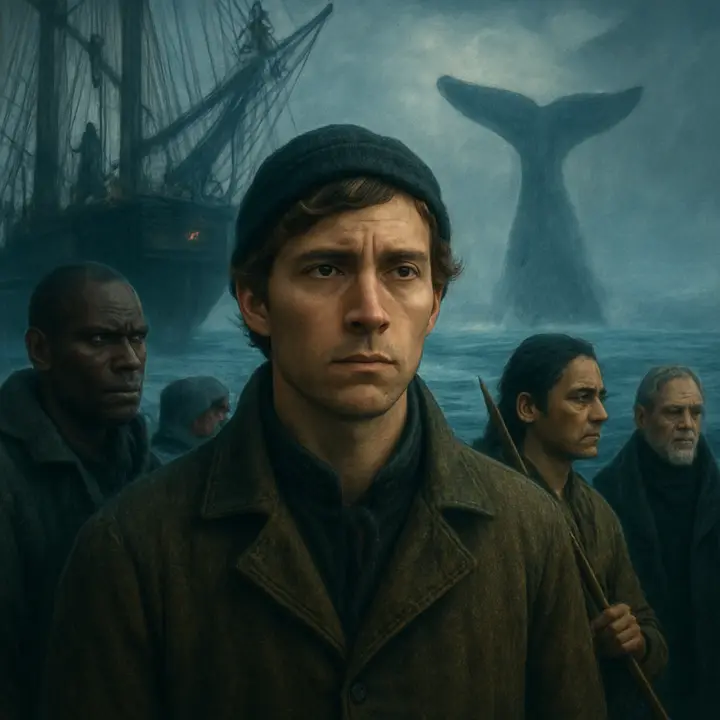
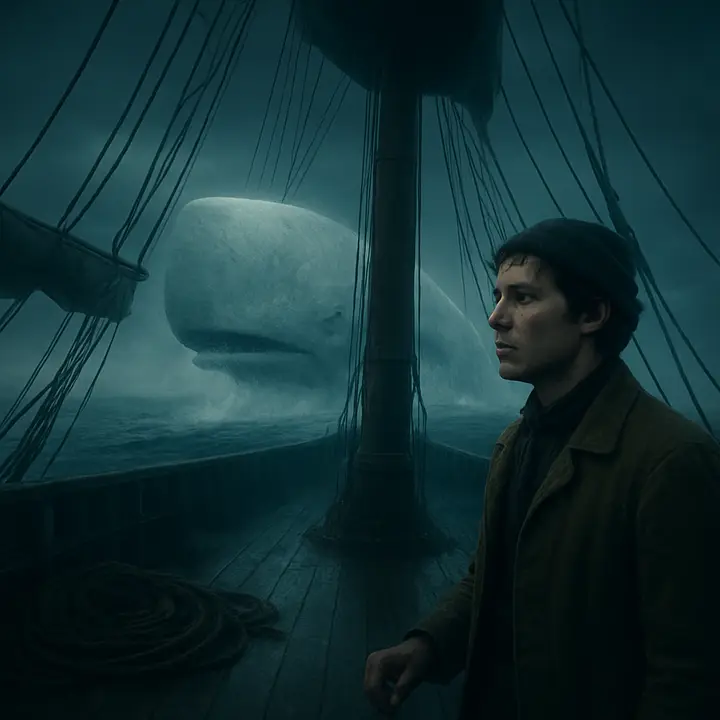
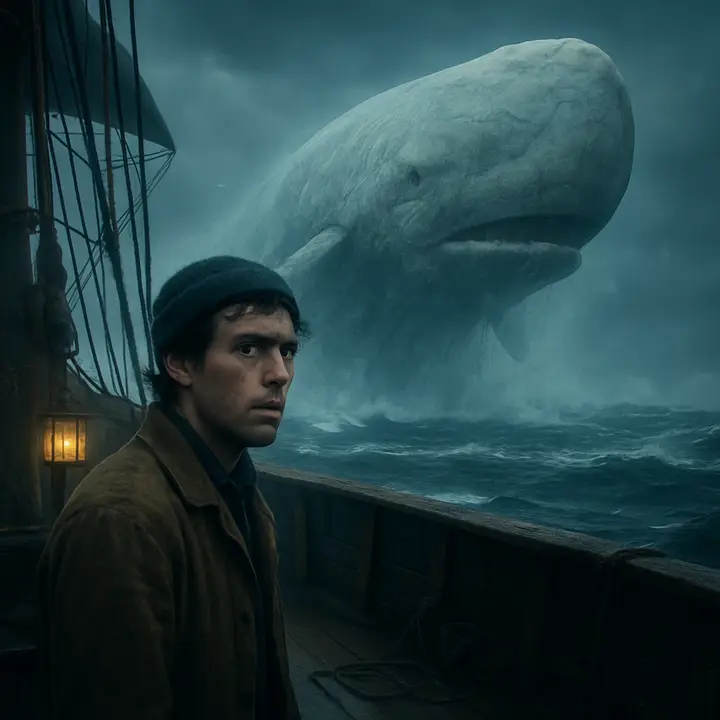
Chapter 1 in pictures


Analysis
This opening chapter performs multiple key functions for the novel. As narrative hook, the line "Call me Ishmael" immediately establishes an intimate, conversational narrator whose voice mixes plain speech, erudition, and irony. The chapter sets the tone—philosophical, digressive, darkly comic—and frames the story as a personal quest driven by psychic motives as much as by economic or social ones. Thematically, Ishmael’s attraction to the sea introduces central motifs: the sea as a mirror of the self, water as symbol for the "ungraspable phantom of life," and voyaging as a response to existential malaise. His references to literary, classical, and religious figures (Narcissus, Cato, Seneca, the archangel Gabriel) stage the novel’s frequent blending of high culture with seafaring realism.
Structurally, the chapter is expository but not merely informational: it establishes Ishmael’s reliability and bias, his tendency toward associative digression, and his philosophical frame for interpreting events. It also foreshadows tension between individual identity and broader cosmic forces—the Fates and Providence—that Ishmael hints govern his choices. Symbolically, the whale already appears as a central, almost metaphysical object: a "grand hooded phantom" that embodies danger, curiosity, and the unknowable. The narrator’s democratic sympathy for ordinary sailors and his relish for marginal, remote experiences prepares readers for a narrative that will oscillate between the quotidian work of whaling and expansive metaphysical rumination.
Important quotes
“Call me Ishmael.”
NarratorThe famous opening line that introduces the narrator and sets the conversational tone.
“Whenever I find myself growing grim about the mouth; whenever it is a damp, drizzly November in my soul; whenever I find myself involuntarily pausing before coffin warehouses...”
NarratorIshmael lists the depressive signs that drive him to go to sea, framing the voyage as a cure for melancholy.
“It is the image of the ungraspable phantom of life; and this is the key to it all.”
NarratorIshmael identifies the sea’s image as symbolizing the elusive essence of life, a central thematic claim.
Characters in Chapter 1
All chapter summaries ›Characters ›
Read Moby-Dick illustrated
Every scene in these notes comes from the Book2Life reader, where the full public-domain text is illustrated as you read, with character portraits and narration. Free in your browser and on iPhone.
