
Gabriel in Moby-Dick
Antagonist
A former Shaker prophet whose apocalyptic zeal and uncanny influence over the Jeroboam’s crew inflame fear about the White Whale.
Who is Gabriel?
Gabriel appears as an odd, fanatical figure encountered in the Jeroboam story. Once a Shaker prophet who proclaims himself an archangel, he becomes a charismatic and frightening presence aboard the Jeroboam, issuing dire prophecies about the White Whale and demanding that his warnings be heeded. When an epidemic strikes the Jeroboam and later the ship sights Moby Dick, Gabriel’s cries and prophetic language convince the superstitious crew that his pronouncements are true. His authority grows after the whale kills the mate Macey in the boat despite Gabriel’s denunciations, and his apocalyptic rhetoric intensifies the crew’s terror and obedience. Gabriel’s behavior culminates in a small but provocative act when he seizes a damp letter Ahab tries to pass and impales it on a knife, flinging it back aboard the Pequod and withdrawing his boat. He functions as a force of fanaticism and superstition that stands opposed to measured seamanship and reason.
In the book: Gabriel is a Shaker “prophet” aboard the Jeroboam whose apocalyptic warnings about the White Whale inflame fear and superstition. His influence over the crew and his zealotry make him a chilling counterpoint to rational seamanship, illustrating how fanaticism can steer men and ships as surely as wind and current.
Personality
- Zealous
- He proclaims himself an archangel and repeatedly issues apocalyptic warnings about the White Whale to the Jeroboam’s crew.
- Charismatic
- After the whale’s killing of Macey, Gabriel’s cries and denunciations convince the superstitious crew that his prophecy has come true, increasing his authority.
- Foreboding
- He cries out phrases like “The vial! the vial!” during the encounter with Moby Dick, framing events in apocalyptic terms.
- Provocative
- He snatches a damp letter Ahab tries to pass, impales it on a knife, and thrusts it back aboard the Pequod in a deliberately insulting gesture.
Character arc
Gabriel appears already established in his role as a Shaker prophet and archangel-figure when the Jeroboam story reaches the Pequod. His authority grows during the sequence of misfortunes that befall the Jeroboam: an epidemic isolates the ship, and when Moby Dick rises and kills mate Macey despite Gabriel’s denunciations of any attack, the crew reads this as confirmation of his prophecies. Rather than moderating or recanting, Gabriel doubles down on his apocalyptic rhetoric; his influence becomes more entrenched as fear and superstition spread among the men. He does not undergo a moral or psychological conversion; instead, his parting action—seizing Ahab’s letter and impaling it on a knife before withdrawing—marks the climax of his presence: a deliberate, unrepentant assertion of power that leaves tension between prophetic fanaticism and rational command unresolved. He remains a chilling, unsoftened emblem of religious zealotry to the end of his appearance.
Relationships
- Ahab Ahab interacts with Gabriel during the Jeroboam encounter and is the target of Gabriel’s provocation when Gabriel seizes and impales the letter Ahab tries to pass.
- Stubb Stubb recognizes Gabriel from town talk and notes him as a notorious, scaramouch-like figure when the Jeroboam is sighted.
- Pequod Gabriel’s actions and prophecies are recounted to the Pequod’s crew and create an uneasy, provocative exchange between the two ships.
- Moby Dick Gabriel frames Moby Dick in apocalyptic terms and claims prophetic authority about the whale’s acts, using the whale as the object of his warnings.
- Ishmael Ishmael learns Gabriel’s story indirectly through the Jeroboam account and includes it in his broader catalogue of whale lore and superstition.
Quotes by Gabriel
“"The vial! the vial!"”
Chapter 71Gabriel’s shriek after Macey’s death convinces the superstitious crew that his prophecy came true, increasing his authority.
Why Gabriel matters
Gabriel embodies the theme of superstition and fanaticism as a force that can steer human behavior as surely as natural elements. His prophetic certainty and charismatic grip on the Jeroboam’s crew contrast with the Pequod’s reliance on seamanship and command, dramatizing the clash between irrational belief and measured action. By presenting prophecy that seems vindicated by catastrophe, Melville uses Gabriel to show how fear and religious zeal can become self-legitimizing and destructive, complicating the novel’s investigations of fate, authority, and the human need to impose meaning on the indifferent sea.
Chapters with Gabriel
More Moby-Dick characters
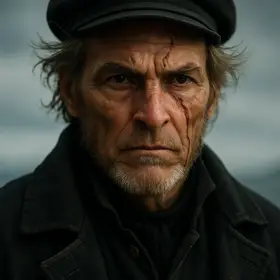 Ahab
Ahab Ishmael
 Stubb
Stubb Queequeg
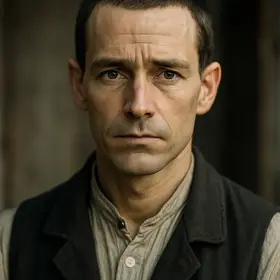 Starbuck
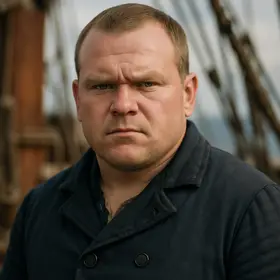 Flask
Flask Tashtego
 Moby Dick
All chapter summaries ›Characters ›
Read Moby-Dick illustrated
Every scene in these notes comes from the Book2Life reader, where the full public-domain text is illustrated as you read, with character portraits and narration. Free in your browser and on iPhone.
