
Desdemona in Othello
Major character
Brabantio’s daughter, Othello’s devoted wife whose calm grace and steadfast loyalty contrast with the violence that surrounds her.
Who is Desdemona?
Desdemona is introduced as Brabantio’s daughter who has secretly married Othello and then calmly defends that choice before the Venetian council. She wants to remain true to her husband and to help restore peace and order—most notably by advocating for Cassio’s reinstatement after his disgrace. Throughout the action at Cyprus she speaks plainly and kindly, offering intercession on Cassio’s behalf and responding to Othello with warmth even when he grows harsh. Desdemona acts from a combination of love, duty, and an independent moral certainty: she insists on accompanying Othello on campaign, presses him to forgive Cassio, and continues to profess her fidelity when accused. Her presence and behavior both fuel Iago’s manipulations (because her advocacy can be misread) and highlight Othello’s tragic decline from loving general to jealous murderer. She does not scheme or retaliate; instead, she remains compassionate and confused by Othello’s turn, singing the willow song and pleading innocence until her murder in her bedchamber.
In the book: We first meet Desdemona as Brabantio’s daughter who has secretly married Othello, and she steps into the Venetian council chamber calm and sure of herself. She speaks plainly about her love and chooses to stand with her husband, warm in manner yet quietly strong. Early on, she comes across as gracious, kind, and surprisingly independent for her station.
Personality
- Loyal
- She calmly tells the Duke and senators she will go with Othello and stands by him when he faces Brabantio’s accusations (Act 1, Scene 3).
- Compassionate
- She persistently intercedes for Cassio’s reinstatement, promising to keep pleading with Othello on his behalf (Act 3, Scene 3).
- Unassuming strength
- She meets the council with composed, plain speech and refuses to be shamed by Brabantio’s accusations (Act 1, Scene 3).
- Naive about intrigue
- She cannot fathom the depth of Iago’s plotting and expresses bewilderment at Othello’s jealous assaults, remaining trusting to the end (Act 4, Scene 2 and Act 5, Scene 2).
- Gentlely resolute
- When Othello demands proof, she kneels and pledges to win him back, determined to repair their marriage rather than fight (Act 4, Scene 2).
Character arc
Desdemona begins as a confident, self-possessed woman who quietly insists on her own choice to marry Othello and to accompany him to Cyprus. Early scenes emphasize her grace and agency: she defends the marriage before the Duke and later greets Othello with affectionate poetry after the storm. As the play progresses she becomes a sympathetic intermediary, repeatedly pleading Cassio’s case and demonstrating a moral consistency that contrasts with the scheming around her. She remains largely unchanged in outlook—still loving, still trusting—while the world around her darkens; her persistence in interceding becomes, through Iago’s manipulations, evidence against her in Othello’s mind. Rather than harden or retaliate, she retreats into sorrowful acceptance, singing the willow song and seeking to placate Othello. Her refusal to understand the conspiracy or to contest Othello’s accusations leaves her vulnerable; she dies maintaining her fidelity and bewilderment. Her arc is tragic not for inner corruption but for how unaltered virtue collides with escalating jealousy and deception, ending in her murder and the exposure of Iago’s treachery.
Relationships
- Othello Her husband; she is devoted to him, seeks to comfort and influence him, and becomes his murdered victim.
- Brabantio Her father; he feels betrayed by her secret marriage and angrily accuses Othello of bewitching her.
- Emilia Her attendant and confidante; Emilia helps her attend to domestic matters, listens to her doubts, and ultimately exposes Iago.
- Cassio The lieutenant for whom Desdemona pleas on grounds of fairness and compassion, unwittingly making her appear compromised.
- Iago The antagonist whose insinuations and theft of the handkerchief transform Desdemona’s advocacy into false proof of infidelity.
- Lodovico A Venetian noble and observer whose arrival witnesses Othello’s violent change and the public consequences for Desdemona.
Quotes by Desdemona
“My noble father, I do perceive here a divided duty:”
Act 1, Scene 3Desdemona states her filial and marital loyalties and explains why she chooses to live with Othello, asserting her agency before the council.
“Sing all a green willow must be my garland.”
Act 4, Scene 3Desdemona sings the refrain from the 'Willow' song, marking her melancholy and foreshadowing sorrow and abandonment.
“I do not think there is any such woman.”
Act 4, Scene 3Desdemona declares her sincere belief that no woman would betray her husband, revealing her moral certainty in contrast with Emilia's realism.
Why Desdemona matters
Desdemona embodies the play’s moral and emotional center: steadfast love, innocent virtue, and the personal cost of public and private corruption. Her kindness—especially her efforts to aid Cassio—becomes the pivot that Iago exploits to create appearance from action, showing how good intentions can be reinterpreted as guilt. Her tragic death exposes the destructive power of jealousy and the vulnerability of women who operate within limited social agency. By maintaining her composure and fidelity to the end, Desdemona highlights themes of trust, honor, and the catastrophic consequences when those values are undermined by deceit.
Chapters with Desdemona
More Othello characters
 Othello
 Cassio
 Iago
Iago Emilia
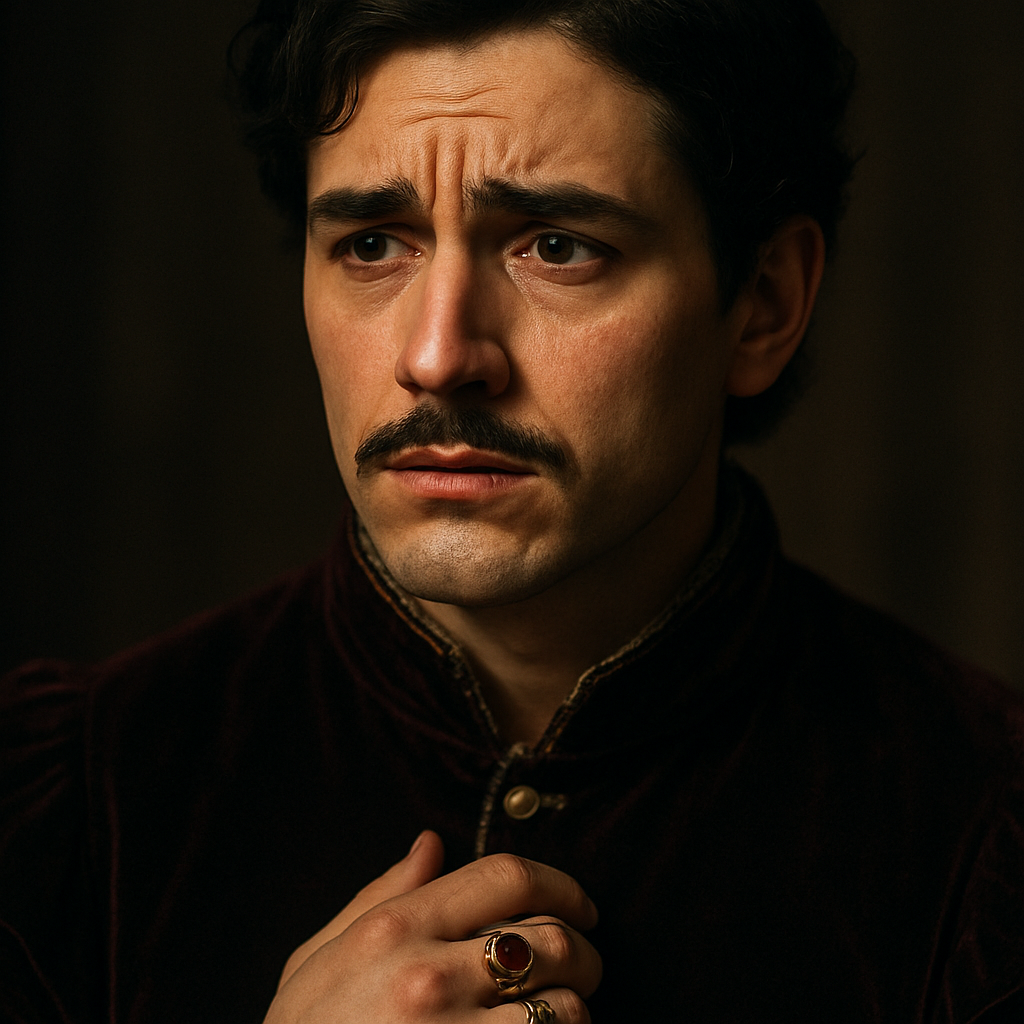 Roderigo
 Lodovico
 Bianca
 Gratiano
All chapter summaries ›Characters ›
Read Othello illustrated
Every scene in these notes comes from the Book2Life reader, where the full public-domain text is illustrated as you read, with character portraits and narration. Free in your browser and on iPhone.
