
Duke of Venice in Othello
Major character
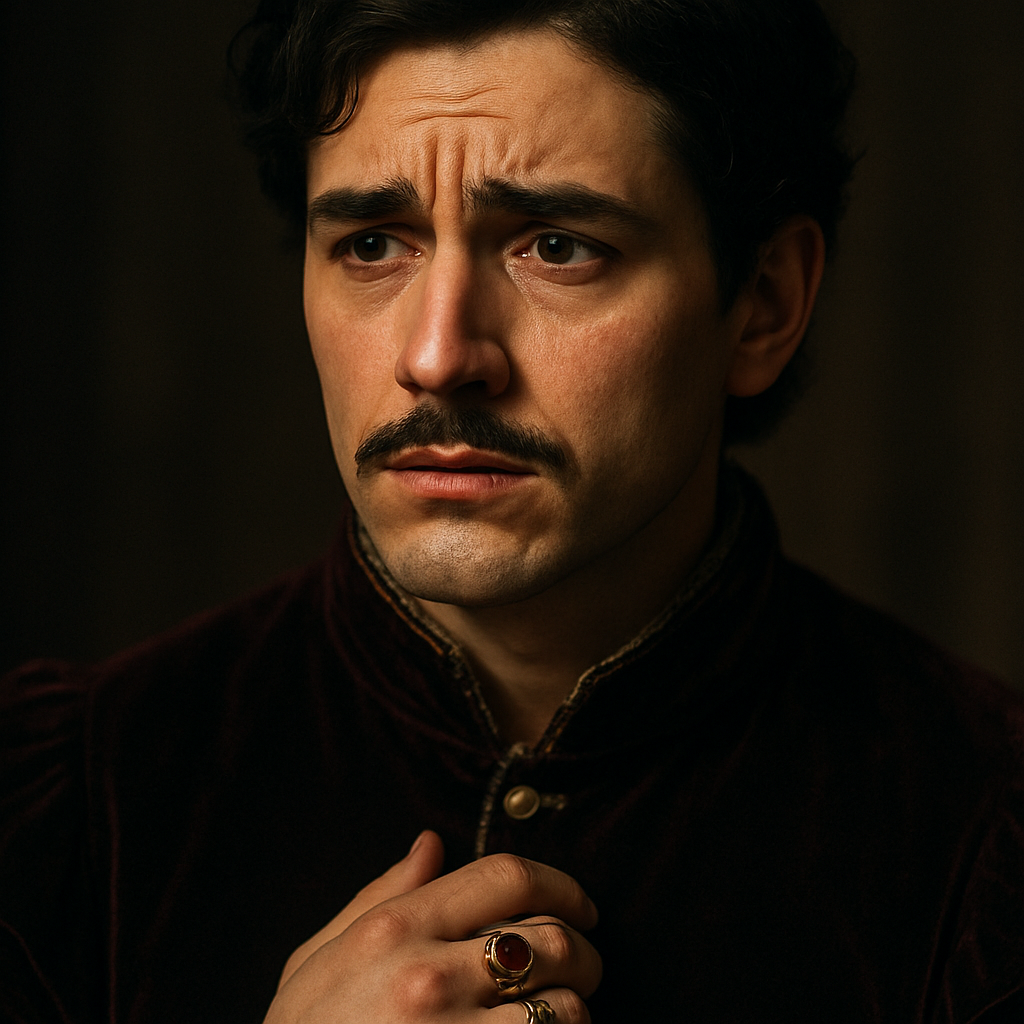
The measured Venetian magistrate who presides over the council and balances domestic complaint with urgent state business.
Who is Duke of Venice?
The Duke of Venice appears as the calm, authoritative head of the Venetian council during a crisis. He convenes senators and hears reports of an Ottoman fleet threatening Cyprus, urgently seeking a military response. When Brabantio bursts in accusing Othello of enchanting his daughter, the Duke listens patiently to both sides, summons Othello, and insists Desdemona be heard. We see him weigh Brabantio’s private grievance against the public need for competent leadership: after hearing Othello’s explanation and Desdemona’s testimony, he appoints Othello to lead the defense of Cyprus and allows Desdemona to accompany him. The Duke’s priority is the security of the republic; he manages personal disputes with procedure and restraint so Venice can respond to the external threat.
In the book: We meet him presiding over the Venetian council, hearing Brabantio’s complaint and then turning to urgent state business. He’s the calm center of the room—measured, fair, and practical—listening to Othello and making the call on how Venice will respond to the brewing threat.
Personality
- Measured
- He calmly hears Brabantio’s explosive accusation in council rather than reacting with anger or immediate punishment (Act 1, Scene 3).
- Practical
- He shifts attention from Brabantio’s complaint to the urgent naval threat and promptly summons Othello to command the defense (Act 1, Scene 3).
- Fair-minded
- He insists Desdemona be brought forward so she can speak for herself before deciding how to rule on Brabantio’s charge (Act 1, Scene 3).
- Authoritative
- He issues the decision to grant Othello command of the Cyprus expedition and permits Desdemona to accompany him (Act 1, Scene 3).
Character arc
The Duke’s role is brief but consistent: he arrives as the stable center of governance and remains so through his last appearance. In his first moments we see an official whose chief concern is the city’s safety—he convenes the council on learning of the Turkish threat and seeks factual reports from messengers and sailors. When Brabantio interrupts with a personal and racially charged accusation against Othello, the Duke refuses to let private outrage derail public business: he summons the accused, demands testimony, and calls for Desdemona’s voice to be heard. Rather than changing emotionally or politically, he consistently prioritizes law, evidence, and state necessity. By the end of his appearance he has made a pragmatic judgment—entrusting Othello with the military command while resolving the domestic dispute through orderly hearing—thereby reinforcing his role as an impartial arbiter who holds the republic’s needs above individual fury.
Relationships
- Brabantio The Duke listens to Brabantio’s complaint against Othello and treats it seriously enough to summon the accused and require testimony.
- Othello He summons Othello to council, hears his defense, and grants him command of the defense of Cyprus.
- Desdemona He insists Desdemona be called to speak for herself and permits her to accompany Othello on the voyage.
- Senators He presides over the council, marshals reports from messengers and sailors, and leads the deliberation about the Turkish threat.
- Cassio He is aware of Cassio’s appointment as Othello’s lieutenant and accepts that military competence factors into the council’s decisions.
Why Duke of Venice matters
The Duke embodies the state’s authority and the rule of law, showing how public duty can override private prejudice. By handling Brabantio’s charge with procedure and insisting on testimony, he highlights themes of judgment, truth, and the tension between personal grievance and communal security. His pragmatism also underscores the play’s concern with appearances and reputation: the council must act on evidence and capability rather than rumor, a stance that contrasts with later characters who act on suspicion and manipulation.
Chapters with Duke of Venice
More Othello characters
 Othello
 Cassio
 Desdemona
 Iago
Iago Emilia
 Roderigo
 Lodovico
 Bianca
All chapter summaries ›Characters ›
Read Othello illustrated
Every scene in these notes comes from the Book2Life reader, where the full public-domain text is illustrated as you read, with character portraits and narration. Free in your browser and on iPhone.
