
Ajax the Greater in The Iliad
Major character
Foremost Achaean champion, son of Telamon, famed for impenetrable defense and brute strength on the battlefield.
Who is Ajax the Greater?
Ajax the Greater is a principal Greek warrior whose priority is holding the line and defending the ships rather than seeking glory through speech or trickery. Across the narrated episodes he performs as a bulwark in pitched combat: he kills the Trojan Simoeisius in the general mêlée, steadies the Achaean defense when the Trojans press to the ships, and in a pivotal moment strikes and stuns Hector during a renewed Achaean counterattack. When Patroclus falls, Ajax protects the corpse against repeated Trojan attempts to carry it off and helps cover the retreat with Menelaus and others. He also takes part in the funerary ceremonies and athletic contests for Patroclus, showing his role in communal ritual as well as war. Ajax’s strengths are physical power, steady courage, and reliability under pressure; he rarely speaks at length in council and does not engage in cunning plans, preferring front-line action and service to the common defense.
In the book: Ajax the Greater, son of Telamon, is one of the foremost Achaean champions in the Iliad, renowned for his overwhelming strength, steadfast courage, and skill in defensive combat. Serving as a bulwark for the Greeks, he excels in duels and in holding the line, embodying disciplined might and reliability rather than eloquence or cunning.
Personality
- Steadfast
- He holds the line near the ships under intense pressure when Hector drives the Greeks back (Book 11).
- Formidable strength
- He slays the Trojan Simoeisius in the mêlée (Book 4).
- Protective
- He shields Patroclus' corpse and refuses to yield it while Trojans repeatedly press to carry it off (Book 17).
- Reliable
- He joins the embassy to Achilles as one of the envoys chosen to plead with him (Book 9), showing trusted status among the leaders.
- Action-oriented
- He strikes and stuns Hector during the counterattack led after Poseidon's intervention, changing the tide of fighting (Book 14).
Character arc
Ajax’s role is remarkably consistent from his first noted actions to his later deeds: he appears and is defined by physical prowess and dependability rather than by rhetorical or strategic shifts. Early on he proves himself in the chaotic mêlées, killing notable Trojans and answering calls to steady the army. As pressure mounts near the ships, he stands firm where leaders falter, embodying the defensive backbone the Achaeans need. His response to Patroclus’ death — physically contesting the body and ensuring its retrieval — reinforces his identity as protector of comrades and custodian of communal honor. At the funeral and games he participates in ritual closure rather than reflecting or transforming; he remains the same steadfast warrior to the end. The arc is therefore one of consistent demonstration rather than inner change: Ajax refuses or lacks a turning point toward diplomacy, cunning, or introspective grief, instead reaffirming his defining martial duties throughout the sequence of events.
Relationships
- Achilles Fellow great warrior whose absence from battle Ajax helps compensate for by defending the ships and fighting fiercely in Achilles' stead.
- Menelaus Comrades-in-arms at critical moments—Ajax fights alongside Menelaus in defense of Patroclus' body and in the line near the ships.
- Agamemnon High commander whose calls and crises Ajax answers on the field, demonstrating loyalty to the Achaean cause rather than political ambition.
- Ajax the Lesser Namesake and fellow Ajax who fights alongside him in the mêlées and during the struggle around Patroclus' corpse.
- Patroclus Comrade whose death Ajax helps to defend and whose funeral games Ajax competes in, showing respect and communal solidarity.
- Teucer Allied archer and comrade whose skirmishing and roles in battle complement Ajax's heavy defense on the front.
Why Ajax the Greater matters
Ajax the Greater embodies the Homeric ideal of solid, unflashy martial excellence: physical power, duty, and protection of the community. His presence stabilizes the Achaean line when leaders are wounded or morale falters, and his defense of Patroclus’ corpse emphasizes themes of comradeship, honor, and the sacredness of proper burial rites. By remaining action-focused rather than rhetorically persuasive, Ajax highlights a contrast in the poem between different forms of heroism—steadfast physical service versus eloquent leadership—and thus helps explore how collective survival depends on both kinds of figures.
Chapters with Ajax the Greater
More The Iliad characters
 Hector
 Achilles
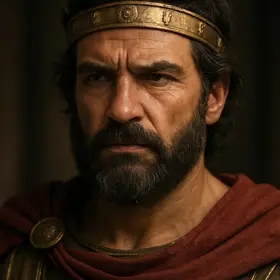 Agamemnon
 Apollo
 Menelaus
 Zeus
Zeus Nestor
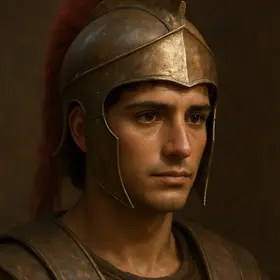 Patroclus
All chapter summaries ›Characters ›
Read The Iliad illustrated
Every scene in these notes comes from the Book2Life reader, where the full public-domain text is illustrated as you read, with character portraits and narration. Free in your browser and on iPhone.
