The Iliad Book 23 Summary
The Funeral of Patroclus
Achilles holds elaborate funeral rites and athletic games for Patroclus, burning the body, collecting his bones, and awarding contests to the Achaeans.
Summary
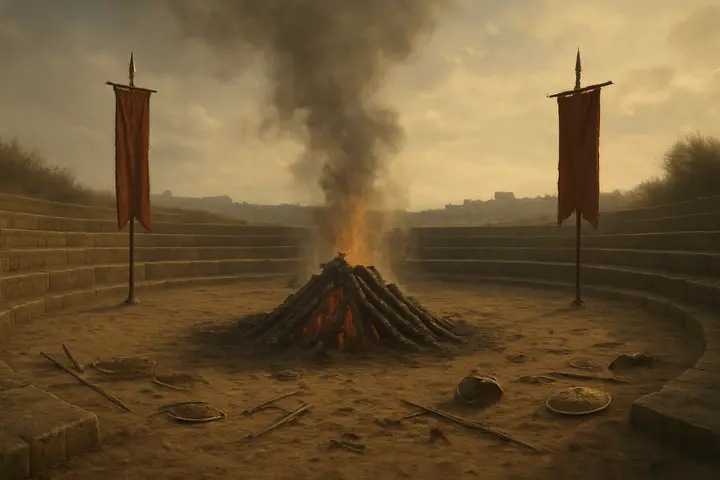
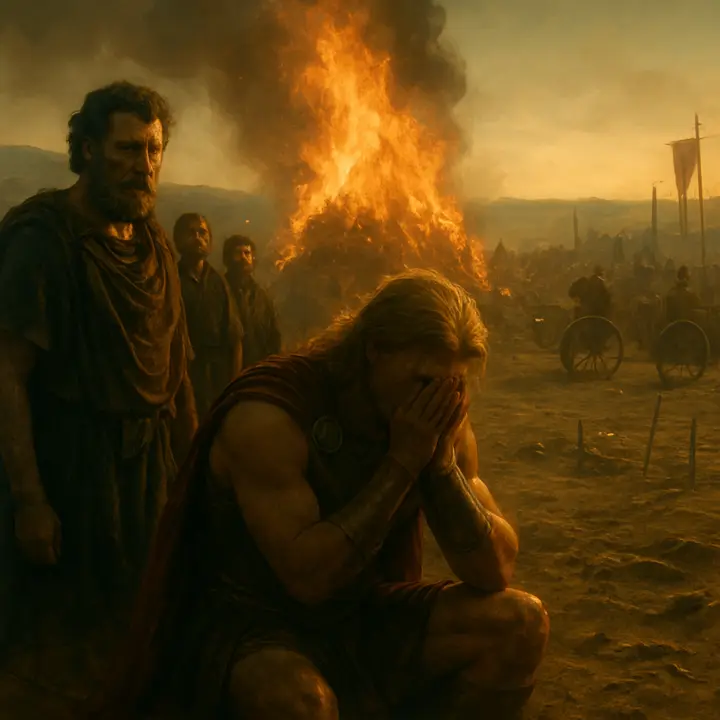
After the Greeks return to their ships, Achilles refuses to let his Myrmidons disperse and leads an intense period of mourning for Patroclus. The men circle the body, cut locks of hair, and lament. Achilles vows revenge on Hector and dishonours Hector’s corpse beside Patroclus. Agamemnon’s messengers try to persuade Achilles to wash the body, but Achilles swears to keep himself unclean until Patroclus is burned, his head shaved, and a barrow raised. That night Patroclus’ ghost appears to Achilles asking to be buried beside him in one urn; Achilles promises to honour his wishes but the ghost disappears. At dawn Agamemnon summons woodcutters; Meriones and others fetch timber from Ida and build a massive pyre where the Achaeans lay out animals, horses, Trojan captives, and finally Patroclus himself.
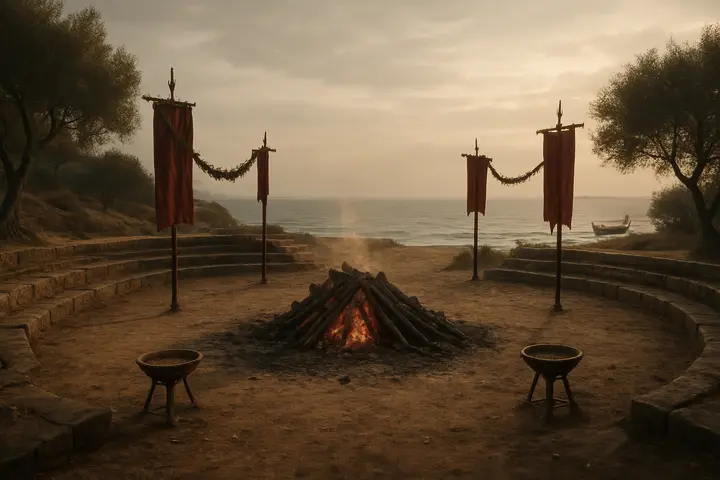
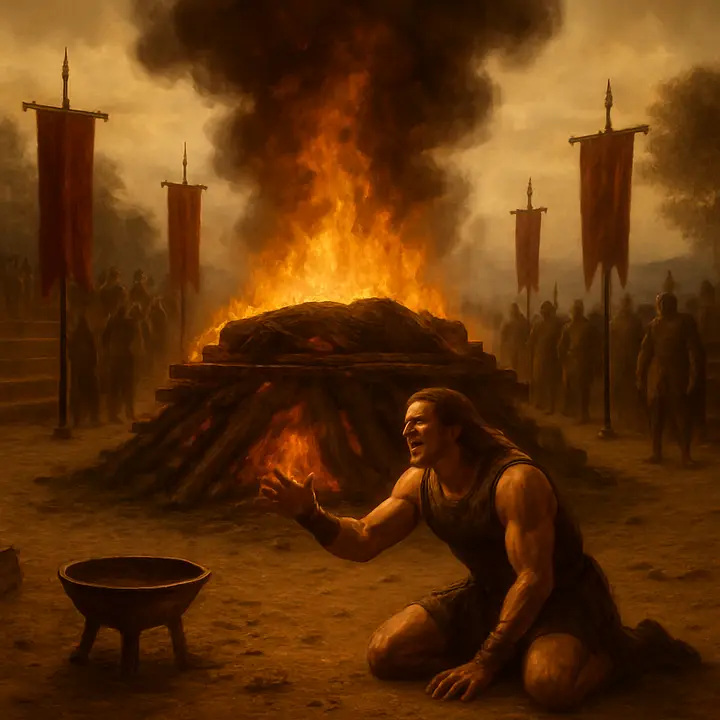
When the pyre struggles to catch, Achilles petitions the winds through Iris, and Boreas and Zephyrus blow the fire into life. Achilles pours libations, grieves like a father burning his son’s bones, and supervises the quenching and the collection of the whitened bones, which they place in a golden urn and wrap in fat. Achilles then organizes funeral games in Patroclus’ honour: chariot races, boxing, wrestling, footraces, spear-throwing, archery, javelin, and other tests. Key figures compete (Diomedes, Antilochus, Menelaus, Eumelus, Ajaxes, Odysseus, Nestor’s sons, Teucer, Meriones, and others). Gods intervene at moments—Apollo and Athena/Minerva affect outcomes—while Achilles judges disputes over prizes and distributes awards. The book closes with prizes being assigned after contests, and friendships, rivalries, and the authority of Achilles being displayed amid the ritual closure for Patroclus.
Key events
- Nightly lament and Patroclus’ ghost appears requesting burial and to have his bones with Achilles’
- Agamemnon organizes cutting and transport of timber; a huge pyre is built
- Achilles places animals, horses, captive Trojans, and personal locks on the pyre and lights it with the help of the winds
- Bones are collected, placed in a golden urn and buried under a mound
- Achilles organizes a sequence of funeral games with prizes
- Contests (chariot race, boxing, wrestling, footrace, archery, javelin, quoit, and armed duel) occur; gods intervene and prizes are awarded
Book 23 in pictures
Analysis
This book functions as a ritual and social centerpiece, moving the narrative from immediate vengeance to communal mourning and structured remembrance. The funeral rites formalize Patroclus’ death into an occasion that binds the Achaean army, displaying social hierarchy (Agamemnon, Achilles, Nestor) and the code of heroic reciprocity: gifts, prizes, public adjudication. Achilles’ grief is both private and performative—his vows of revenge and his care over the pyre reveal rage transformed into ritual action. The appearance of Patroclus’ ghost personalizes loss and foreshadows the inescapability of fate by reminding Achilles of his own doom while cementing the bond between the two men.
Symbolically, the pyre and the urn compress life, death, and memory: the burning consumes flesh while the bones, wrapped in fat and placed in a golden urn, preserve identity for the future. The games reproduce warlike skill in regulated form, channeling martial energies into contests that expose rival pride and divine favoritism—Athena and Apollo intervene, showing how gods calibrate human honor. Structurally the book serves a pause between battles: it completes one hero’s arc (Patroclus) and reasserts social order and Achilles’ leadership while also preparing the stage—through ritual, oath, and gift exchange—for what the hero will do next.
Important quotes
““Fare well,” he cried, “Patroclus, even in the house of Hades. I will now do all that I erewhile promised you; I will drag Hector hither and let dogs devour him raw; twelve noble sons of Trojans will I also slay before your pyre to avenge you.””
AchillesAchilles vows vengeance and publicly declares his intentions while mourning Patroclus beside the corpse.
““You sleep, Achilles, and have forgotten me; you loved me living, but now that I am dead you think for me no further.”
Patroclus (Ghost)Patroclus’ spirit appears at night to urge Achilles to bury him so he can pass to Hades and to ask that their bones lie together.
““Son of Atreus, and all other Achaeans, these are the prizes that lie waiting the winners of the chariot races.”
AchillesAchilles announces the funeral games and lays out the prizes, shifting mourning into structured communal contests.
Characters in Book 23
- Achilles
- Patroclus
- Agamemnon
- Myrmidons
- Thetis
- Meriones
- Achaeans
- Phoenix
- Spercheius
- Iris
- Boreas
- Zephyrus
- Apollo
- Venus
- Diomedes
- Eumelus
- Menelaus
- Antilochus
- Nestor
- Idomeneus
- Meriones
- Sthenelus
- Euryalus
- Epeus
- Ajax the Greater
- Ajax the Lesser
- Odysseus
- Teucer
- Polypoetes
- Leonteus
- Sarpedon
- Asteropaeus
- Automedon
- Talthybius
- Aeneas
- Poseidon
- Zeus
- Athena
- Hephaestus
All chapter summaries ›Characters ›
Read The Iliad illustrated
Every scene in these notes comes from the Book2Life reader, where the full public-domain text is illustrated as you read, with character portraits and narration. Free in your browser and on iPhone.
