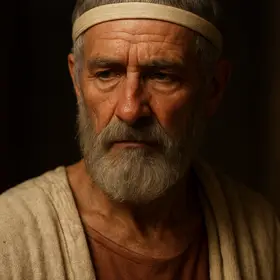
Chryses in The Iliad
Minor character
A priest of Apollo from Chryse who comes to ransom his daughter and invokes Apollo's wrath when dishonoured.
Who is Chryses?
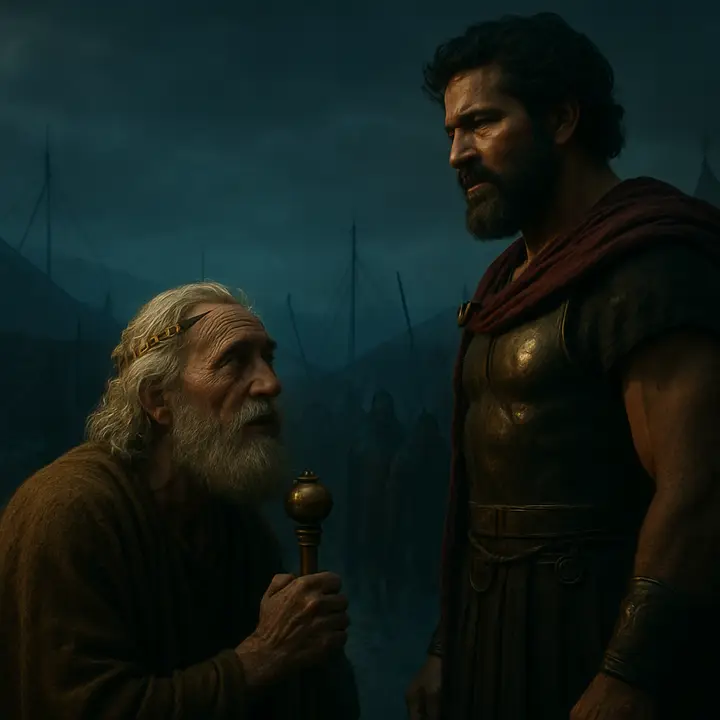
Chryses is a Cretan priest (from the town of Chryse) who appears at the Achaean ships to ransom his captive daughter, Chryseis. When Agamemnon refuses the ransom and rebuffs him, Chryses turns from human plea to divine appeal: he prays to Apollo to punish the Greeks for the dishonour done to a priest. Apollo answers by sending a terrible plague on the Greek camp, killing men for nine days and forcing the Achaeans to seek the cause. Chryses himself does not remain long in the narrative, but his supplication and the god's response set in motion the central quarrel of Book 1 — the seer Calchas names Agamemnon's insult to Apollo's priest as the cause, precipitating Agamemnon's demand for compensation, Achilles' withdrawal, and Thetis' appeal to Zeus. Though his appearance is brief, Chryses' actions bring the gods directly into the immediate political and moral disputes of the Greek leaders.
In the book: Chryses is a priest of Apollo from the town of Chryse and the father of Chryseis. When his plea to have his daughter returned is refused, he appeals to Apollo, setting in motion the tensions that shape the Greek camp and ignite a pivotal quarrel among its leaders. Though he appears briefly, his actions trigger key events and reveal the power of the gods in mortal affairs without focusing the story on himself.
Personality
- pious
- He appeals directly to Apollo after Agamemnon refuses his ransom, prompting the god to send a plague.
- resolute
- When rebuffed at the ships he persists by invoking divine justice rather than abandoning his cause.
- vulnerable
- He comes to the Greek camp as an emissary seeking the return of his captive daughter, placing himself before hostile leaders.
- catalytic
- His prayer to Apollo leads to the plague that forces the Achaeans to hold an assembly and reveal the cause of their suffering.
Character arc
Chryses enters the poem with a single, focused purpose: to ransom his daughter and secure her return. He confronts Agamemnon and experiences a public rebuff; rather than escalate violence himself, he transfers the burden of redress to the divine by praying to Apollo. That prayer produces immediate, far-reaching consequences—the god inflicts a deadly plague on the Greek camp for nine days—yet Chryses himself does not reappear to witness the wider fallout. In terms of character change he remains constant: a devout, wronged supplicant who relies on the god he serves. His role is not to develop psychologically but to trigger moral and political responses among the Greek leaders; through his single act of prayer he shifts the action from a personal plea to a crisis of honor, leadership, and piety that reshapes the Achaean camp and provokes the central quarrel between Agamemnon and Achilles.
Chryses in pictures
Relationships
- Chryseis His daughter, the captive whose ransom he seeks.
- Apollo The god to whom he prays and who answers by sending a plague on the Greek camp.
- Agamemnon The Achaean leader who denies his ransom plea and dishonours him, triggering his appeal to Apollo.
- Calchas The seer who later identifies Chryses' dishonour as the reason for Apollo's plague when the Achaeans assemble.
- Achilles An indirectly affected figure: Agamemnon's refusal to return Chryseis leads to the chain of events that prompt Achilles' withdrawal.
- Thetis She becomes involved later in the consequences of Chryses' prayer when Achilles asks her to intercede with Zeus after his quarrel with Agamemnon.
Why Chryses matters
Chryses embodies the poem's theme that mortals' treatment of sacred duties and priests provokes divine intervention. His humble but firm appeal shows how piety and honor are social as well as religious obligations; his humiliation by Agamemnon exposes leaders' hubris and the fragile balance between private desire and communal reverence. By setting the gods' punishment in motion, Chryses demonstrates that even peripheral figures can catalyze fate and force the heroism, pride, and political choices of central characters into crisis.
Chapters with Chryses
More The Iliad characters
 Hector
 Achilles
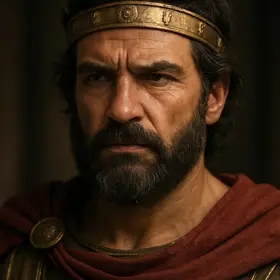 Agamemnon
 Apollo
 Menelaus
 Zeus
Zeus Nestor
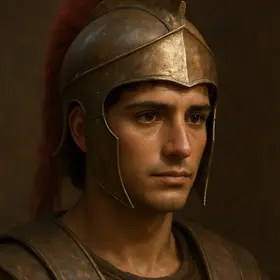 Patroclus
All chapter summaries ›Characters ›
Read The Iliad illustrated
Every scene in these notes comes from the Book2Life reader, where the full public-domain text is illustrated as you read, with character portraits and narration. Free in your browser and on iPhone.
