
Thetis in The Iliad
Major character
A sea-nymph (Nereid) and the devoted divine mother of Achilles who petitions the gods and secures aid for her son.
Who is Thetis?
Thetis is a Nereid who acts as Achilles’ primary divine ally and maternal counselor. When Achilles is dishonored and withdraws from battle in Book 1, Thetis agrees to petition Zeus to tip the war’s balance so her son’s grievance is avenged. She visits Olympus twice: first to persuade Zeus to honor Achilles and later to beseech Hephaestus to forge new armor after Patroclus’ death. Thetis consoles and comforts Achilles in his grief, anoints Patroclus with ambrosia, and physically returns divine armor to her son, enabling his return to slaughter on the field. She moves between the human encampment and the council of gods, using her intimacy with immortals to alter divine decisions and to prepare Achilles for the climactic confrontations that follow Patroclus’ death. Across the narrative she embodies a link between mortal suffering and divine intervention, repeatedly acting to shield Achilles’ honor and to equip him for vengeance while also warning him of his fate.
In the book: A Nereid and the divine mother of Achilles, Thetis serves as a crucial bridge between mortals and Olympians. She counsels and consoles her son, petitions the gods on his behalf, and helps steer the conflict’s tides through her influence and foresight, embodying both maternal devotion and the power of the sea.
Personality
- Devoted
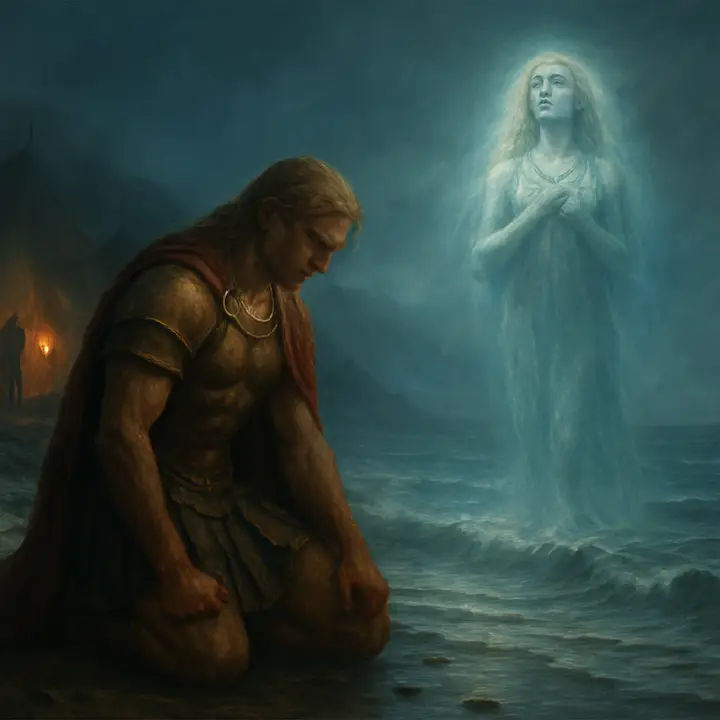
- She leaves the sea to comfort Achilles at his ships after Patroclus’ death and stays with him in his grief (Book 18).
- Intercessory
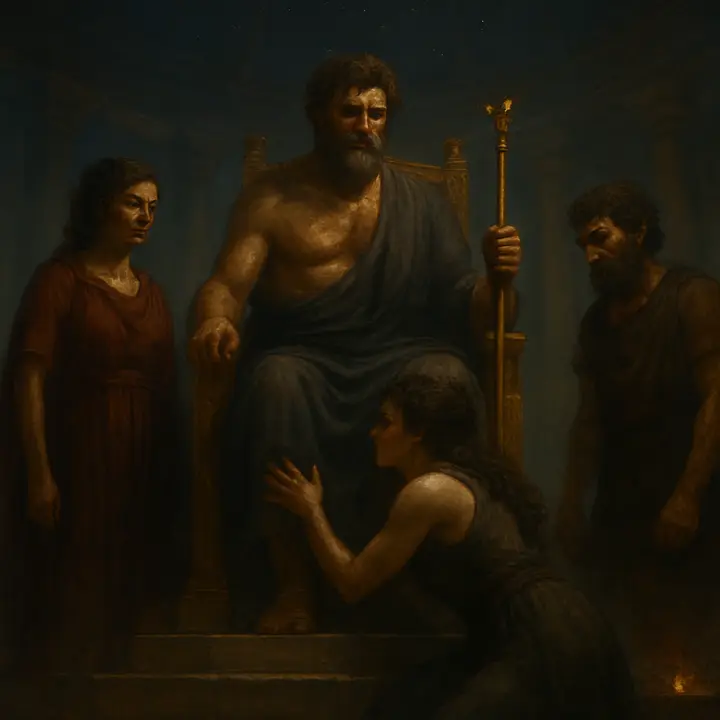
- She ascends to Olympus in Book 1 to beg Zeus to honor Achilles and again in Book 18 to ask Hephaestus for new armor.
- Influential
- Her appeal to Zeus in Book 1 causes the god to tilt fate in the Trojans’ favor, changing the course of the war.
- Protective
- She preserves Patroclus’ body with ambrosia and nectar and returns Hephaestus’ forged weapons to Achilles to ensure his safety and vengeance (Books 19, 18).
- Foresighted
- She warns Achilles that his vengeance will lead to his own death when she comforts him after Patroclus is slain (Book 18).
Character arc
Thetis appears from the poem’s opening crisis to its conciliatory end as a steady divine force whose actions shape mortal fate without becoming changed herself. In Book 1 she answers Achilles’ plea and secures Zeus’ favor, initiating a sequence that withdraws Achilles from battle and shifts the war’s momentum. She remains constant in purpose: protecting and elevating her son’s honor. After Patroclus is killed (Book 16) Thetis responds with intensified agency—calling the Nereids, consoling Achilles, and going to Hephaestus to request new armor (Books 18–19). Her interventions enable Achilles’ return to slaughter (Books 20 onward) and she performs funerary tenderness by anointing Patroclus. In Book 24 she again acts within divine channels to achieve a humane outcome, obeying Zeus’ command to persuade Achilles to accept Priam’s ransom. Throughout the poem Thetis does not undergo an internal transformation; rather, she consistently exercises maternal devotion and divine influence, moving from petitioning for Achilles’ honor to facilitating reconciliation over Hector’s body while never relinquishing her protective role.
Thetis in pictures
Relationships
- Achilles Her son; she comforts, counsels, anoints Patroclus, and brings forged armor to him to enable his return to battle.
- Zeus She petitions Zeus in Book 1 to honor Achilles and later follows his command in Book 24 to tell Achilles to accept Priam's ransom.
- Hephaestus She beseeches Hephaestus to craft magnificent new armor for Achilles and collects it to give to her son (Book 18–19).
- Iris Acts alongside divine messengers: Iris carries Zeus’ commands and participates in the chain of events that lead Thetis to secure Achilles’ compliance in Book 24.
- Patroclus Though not his mother, she treats his body with divine care—anointing him with ambrosia and preserving him for burial after his death (Book 19).
- Hector Her influence shapes events that lead to Hector’s death and, later in Book 24, she helps bring about Hector’s respectful return to Troy.
Quotes by Thetis
“My son, woe is me that I should have borne or suckled you.”
Book 1Thetis laments Achilles' fate and expresses a mother's sorrow, setting up her plea to Zeus on his behalf.
“My son, why are you thus weeping? What sorrow has now befallen you? Tell me; hide it not from me.”
Book 18Thetis arrives from the sea to comfort Achilles and hears of Patroclus’ fate, leading her to seek armour from Vulcan.
“My son, grieve as we may we must let this man lie, for it is by heaven’s will that he has fallen; now, therefore, accept from Vulcan this rich and goodly armour, which no man has ever yet borne upon his shoulders.”
Book 19Thetis consoles Achilles over Patroclus and presents the divine armour made by Hephaestus, prompting Achilles to prepare for battle.
“My son, how long will you keep on thus grieving and making moan? You are gnawing at your own heart, and think neither of food nor of woman's embraces; and yet these too were well, for you have no long time to live, and death with the strong hand of fate are already close beside you.”
Book 24Thetis reproaches Achilles and relays Zeus' command that he must accept Priam's ransom for Hector.
Why Thetis matters
Thetis embodies the poem’s tension between human honor and divine agency. As a bridge between Olympus and the camps, she makes the gods’ will felt in human affairs, showing how personal grievances are amplified into epic consequences. Her maternal devotion exposes Achilles’ vulnerability and motivates much of the poem’s violence and reconciliation, while her petitions and obedience to Zeus highlight fate’s dominance over individual desire. By enabling both vengeance (through armor and divine favor) and closure (by securing Hector’s return), Thetis underscores themes of loyalty, the limits of heroism, and the interplay of compassion and inevitability in the Iliad.
Chapters with Thetis
More The Iliad characters
 Hector
 Achilles
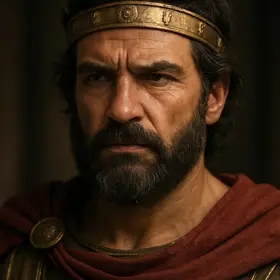 Agamemnon
 Apollo
 Menelaus
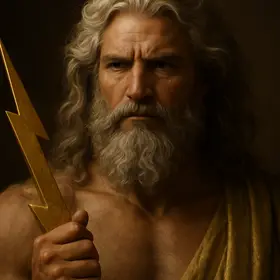 Zeus
Zeus Nestor
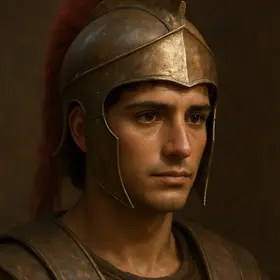 Patroclus
All chapter summaries ›Characters ›
Read The Iliad illustrated
Every scene in these notes comes from the Book2Life reader, where the full public-domain text is illustrated as you read, with character portraits and narration. Free in your browser and on iPhone.
