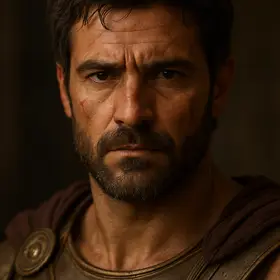
Sarpedon in The Iliad
Major character
Lycians' prince and commander, son of Zeus, a prominent Trojan ally who exemplifies heroic valor and leadership.
Who is Sarpedon?
Sarpedon commands the Lycians fighting with Troy as one of the poem’s most notable foreign allies and a son of Zeus. He appears among the Trojan-led contingents in the catalogue and then repeatedly on the battlefield, where he presses attacks on the Achaean wall and rallies Trojan comrades. In Book 12 he leads a company with Glaucus and Asteropaeus and helps tear away part of the Achaean battlement, playing a key role in the assault that nearly breaks the Greek defense. He fights fiercely while gods and signs attend the contest, embodying the heroic code of honor, courage, and risking life for glory. In Book 16 Patroclus strikes him down during his great push toward the ships, and a chaotic struggle ensues over his corpse until Zeus orders Apollo to rescue and return Sarpedon’s body to Lycia. Throughout his appearances he influences the morale of both men and gods, and his death prompts divine action that underlines the poem’s concerns with fate, honor, and the costs of warfare.
In the book: Sarpedon is the prince and commander of the Lycians fighting on the Trojan side and a son of Zeus, making him one of the poem’s most prominent foreign allies. He embodies the heroic code—valor, leadership, and the acceptance of risk—and his speeches and actions highlight the Iliad’s themes of honor, mortality, and the tension between fate and divine involvement, influencing both men on the battlefield and the gods who watch them.
Personality
- courageous
- In Book 12 Sarpedon attacks fiercely and helps tear away part of the Achaean battlement during the assault on the wall.
- leaderly
- He commands the Lycians in the five-company assault (Book 12) and fights at the head of his contingent with Glaucus and Asteropaeus.
- honorable
- He embodies the heroic code by pressing the battle and accepting mortal risk, shown by his prominent, front-line role in Books 12 and 16.
- influential
- His presence and action at the wall help create a breach that shifts the fighting toward the Achaean ships (Book 12).
- fated
- His mortal fall at Patroclus’ hand in Book 16 triggers Zeus’ direct intervention over his corpse, emphasizing fate’s hold.
Character arc
Sarpedon appears as a confident, high-ranking ally whose role is to lead, inspire, and press the Trojan attack. From the catalogue’s naming to the pitched fighting at the ships, he consistently takes the field at the front, sharing command with Glaucus and other leaders and personally driving assaults on the Achaean defenses. His momentum peaks in Book 12 when he helps rip away part of the battlement and in subsequent clashes where his valor is evident. That forward action continues through Book 14’s ebb and flow of battle until Book 16, where his heroic advance meets Patroclus’ counter-charge and he falls in combat. His death does not mark simple erasure: Zeus intervenes, commanding Apollo to retrieve Sarpedon’s body, ensuring his return to Lycia. Thus Sarpedon’s arc moves from honored living commander to prestigious, divinely reclaimed corpse—his personal bravery intact, his heroic status affirmed by divine concern even as the human cost of war is made plain.
Relationships
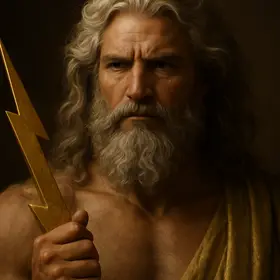
- Zeus Sarpedon is a son of Zeus; Zeus watches the fighting and ultimately orders Apollo to rescue and return Sarpedon’s body after his death.
- Glaucus Glaucus fights alongside Sarpedon as a fellow Lycian leader in the assault on the Achaean wall (Book 12).
- Asteropaeus Asteropaeus is one of the leaders grouped with Sarpedon during the attack on the wall (Book 12).
- Hector Hector leads the broader Trojan effort of which Sarpedon’s attacks form an important part; they fight on the same side pressing the ships and wall.
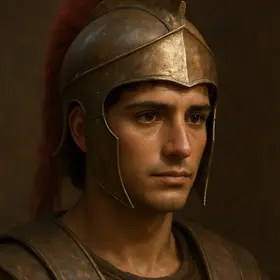
- Patroclus Patroclus slays Sarpedon during his fierce drive toward the ships in Book 16, an act that precipitates the struggle over the corpse.
- Apollo At Zeus’ command Apollo rescues Sarpedon’s body from the battlefield and ensures its return to Lycia after his death.
Why Sarpedon matters
Sarpedon crystallizes key Iliadic themes: the heroic code (valor, leadership, honor), the inevitability of mortality, and the uneasy interplay of fate and divine will. As a son of Zeus who nonetheless dies on the field, his story dramatizes how even divine lineage cannot override death, while Zeus’ reclamation of his body highlights the gods’ active role in human fate. His prominent, honorable death also reinforces the poem’s focus on glory won in battle and the rituals of recovery and burial that follow, deepening the narrative’s meditation on human cost and divine attention.
Chapters with Sarpedon
More The Iliad characters
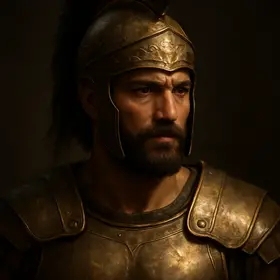 Hector
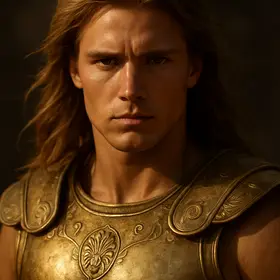 Achilles
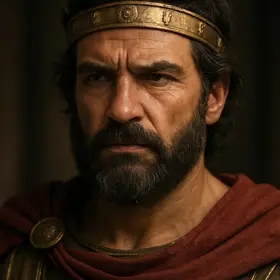 Agamemnon
 Apollo
 Menelaus
 Zeus
Zeus Nestor
 Patroclus
All chapter summaries ›Characters ›
Read The Iliad illustrated
Every scene in these notes comes from the Book2Life reader, where the full public-domain text is illustrated as you read, with character portraits and narration. Free in your browser and on iPhone.
