
Argos in The Odyssey
Minor character
Odysseus’s elderly hunting dog on Ithaca who recognizes his master and dies after that recognition.
Who is Argos?
Argos is the once-proud hunting dog of Odysseus, left to waste away on the road near the palace as Ithaca’s household decays. He lies neglected on a pile of dung and waits years for his master’s return. When Odysseus, disguised as a beggar, approaches the hall escorted by Eumaeus, Argos suddenly lifts his head, recognizes Odysseus immediately, wags weakly, and then dies. Argos does not speak, but his single lucid act—recognizing the disguised hero—makes him a powerful, wordless witness to both Odysseus’s identity and the moral decline inside his home. He receives no care from the suitors or many servants; only Eumaeus and, implicitly, Odysseus remain connected to him. Argos’s brief, quiet resurrection at sight of his master provides emotional weight to Odysseus’s secret homecoming and highlights the cost of the long absence.
In the book: Argos is Odysseus’s old hunting dog, left back on Ithaca, now lying neglected near the palace while the household’s gone downhill. He matters because he’s pure loyalty on four legs—the kind of companion who still knows his master and tells you everything about the state of home without a speech.
Personality
- Loyal
- Argos recognizes Odysseus immediately upon his return, despite Odysseus being disguised as a beggar.
- Neglected
- He lies neglected on a pile of dung near the palace while the household has fallen into disrepair and the suitors feast.
- Perceptive
- Though old and dying, Argos discerns Odysseus’s true identity when the disguised stranger arrives at the hall.
- Patient
- He endures long years of abandonment, waiting outside the palace until his master returns.
Character arc
Argos appears as a physical measure of Ithaca’s decline: once a vigorous hunting dog, he now lies neglected and close to death. In the chapters where he appears he does not speak or act beyond instinct, but his condition tells a story—he has been left uncared-for while the suitors overrun the hall. At the critical moment when Odysseus returns in disguise, Argos rouses himself, recognizes his master immediately, and displays a brief, unmistakable sign of joy and recognition. Having fulfilled that loyal duty of recognition, Argos dies. His arc is compressed and symbolic rather than developmental: he moves from long-suffering neglect to a final, dignified moment in which his loyalty is affirmed. He does not change in outlook or behavior; rather, his final action reframes the household’s moral state and provides a small restoration of dignity through recognition before his death.
Relationships
- Odysseus Argos is Odysseus’s old hunting dog who recognizes him upon his secret return and dies shortly after.
- Eumaeus Eumaeus, the loyal swineherd, escorts Odysseus into town and is the one who cares for and brings Argos into view of the stranger.
- Telemachus Argos lies neglected during Telemachus’s return and the household reunions, marking the cost of Odysseus’s absence on the family.
- The Suitors The suitors ignore and abuse the household, contributing to the neglect Argos suffers outside the palace.
- Melanthius Melanthius mocks the beggar and the household’s state; his cruelty underscores the environment that allows Argos’s neglect.
Why Argos matters
Argos functions as a silent emblem of loyalty, decay, and the human cost of Odysseus’s long absence. His immediate recognition of Odysseus proves the hero’s identity without words and contrasts pure fidelity with the corruption inside the hall. Argos’s neglected body makes visible the decline of domestic order under the suitors; his death after recognition offers a quiet, poignant restoration of honor that foreshadows the larger reckoning to come. In thematic terms, Argos condenses ideas about homecoming, loyalty, and the consequences of neglect into a single, affecting episode.
Chapters with Argos
More The Odyssey characters
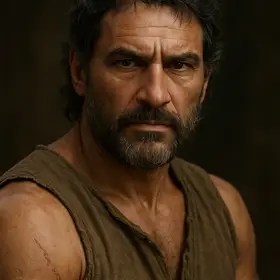 OdysseusProtagonist
 TelemachusMajor character
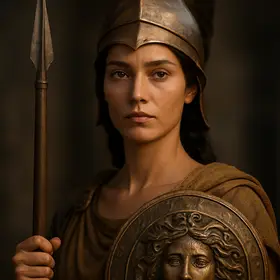 AthenaMajor character
 PenelopeMajor character
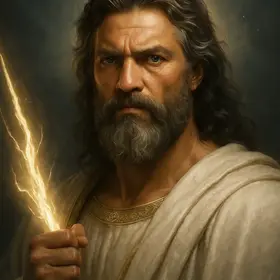 ZeusMajor character
 LaertesMinor character
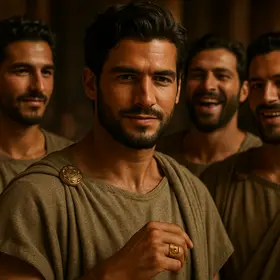 The SuitorsAntagonist
 AntinousAntagonist
All chapter summaries ›Characters ›
Read The Odyssey illustrated
Every scene in these notes comes from the Book2Life reader, where the full public-domain text is illustrated as you read, with character portraits and narration. Free in your browser and on iPhone.
