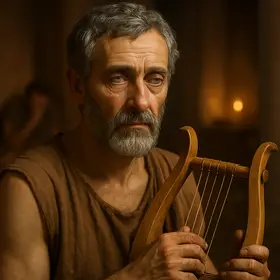
Demodocus in The Odyssey
Minor character
The celebrated blind Phaeacian bard whose songs about Troy move Odysseus to tears and entertain Alcinous' court.
Who is Demodocus?
Demodocus is the honored blind singer at King Alcinous's banquet in the Phaeacian hall. Called forth to perform, he delivers polished heroic lays about the Trojan War—the quarrel between Odysseus and Achilles and the stratagem of the Trojan Horse—winning the complete attention of the court. His artistry and the emotional power of his songs deeply affect his audience, especially the disguised and grieving guest, who hides his face and weeps during the minstrel's performance. The Phaeacians recognize and reward Demodocus's gift: he is given the best seat, rich food, and the full respect of the assembly. Demodocus also sings a lighter myth (Mars and Venus ensnared by Vulcan) that charms the company and helps shift the mood from grief to amusement. Through his role as storyteller, Demodocus sets the scene for Alcinous to observe Odysseus's distress and ultimately to press the guest to reveal his identity and travels so that the Phaeacians can help him home.
In the book: We meet Demodocus in the hall of King Alcinous as the esteemed blind singer everyone hushes to hear. He performs heroic lays of the Trojan War with such skill that the incognito guest at the feast quietly covers his face, and the Phaeacians honor the bard with the best seat and rich food.
Personality
- Masterful
- He sings the Trojan lays with such skill that the entire hall falls silent and the Phaeacians honor him with the best seat and rich food.
- Blind
- The notes introduce him explicitly as the blind bard in Alcinous's hall whose presence commands quiet when he performs.
- Emotive
- His recounting of the quarrel between Odysseus and Achilles moves Odysseus to tears, prompting the guest to hide his face beneath his cloak.
- Versatile
- He shifts from tragic, moving epic to the comic myth of Mars and Venus, charming the company and altering the mood of the feast.
Character arc
Demodocus appears and remains essentially the same throughout his scene in Alcinous's court: a revered, blind singer who shapes the feelings of his audience by the power of his performance. He opens the banquet with a moving lay of the Trojan quarrel, causing the disguised Odysseus to show uncontrolled grief; this reaction reveals the depth of the stranger's past and prompts Alcinous to change the evening's course. Later Demodocus performs a lighter myth that restores merriment and, finally, he sings the story of the Trojan Horse, again overwhelming the guest. Demodocus does not undergo personal change or self-revelation; his function is consistent—he is the instrument through which memory and emotion are summoned into the hall. The consequences of his singing, however, propel the plot: Odysseus's visible sorrow spurs the king's curiosity and ultimately leads to the decision to aid the stranger's return home. Demodocus's constancy underscores his role as a catalyst rather than a developing character.
Relationships
- Alcinous King and host who summons and honors Demodocus, providing him the platform and rewards at the banquet.
- Odysseus The incognito guest whose hidden grief is provoked by Demodocus's songs about Troy.
- Phaeacians The courtly audience who revere, feed, and seat Demodocus in the place of honor while he performs.
- Laodamas A young Phaeacian noble present at the games and feast where Demodocus performs; Laodamas participates in the same assembly that applauds the bard.
- Arete Queen in whose household Demodocus sings; she takes part in the ceremonial hospitality that accompanies his performances.
- Nausicaa The princess whose actions earlier enable Odysseus's presence at the banquet where Demodocus sings and is thus indirectly connected to the minstrel's audience.
Why Demodocus matters
Demodocus embodies the Homeric power of song to summon memory, wound, and reconcile. His performances bring the past into the present, forcing Odysseus to confront his trauma and prompting Alcinous and the Phaeacians to act. As a blind singer, he also models the theme of insight versus sight: he cannot see, yet his voice reveals inner truths, while the seerless guest conceals his identity. Demodocus therefore highlights storytelling as both consolation and danger—the means by which nostos is remembered and made possible, and the mechanism that exposes pain that must be addressed before homecoming can proceed.
Chapters with Demodocus
More The Odyssey characters
 OdysseusProtagonist
 TelemachusMajor character
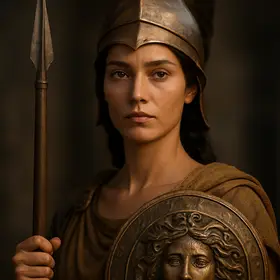 AthenaMajor character
 PenelopeMajor character
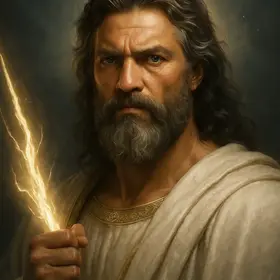 ZeusMajor character
 LaertesMinor character
 The SuitorsAntagonist
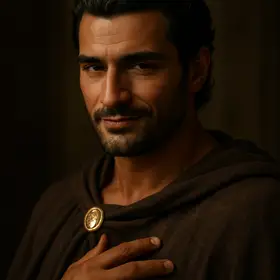 AntinousAntagonist
All chapter summaries ›Characters ›
Read The Odyssey illustrated
Every scene in these notes comes from the Book2Life reader, where the full public-domain text is illustrated as you read, with character portraits and narration. Free in your browser and on iPhone.
