Minerva in The Odyssey
Major character
The goddess who guides and protects Odysseus and Telemachus, often appearing in disguise to influence events toward homecoming.
Who is Minerva?
Minerva (Athena) is a protective, strategic deity who mentors Telemachus and assists Odysseus throughout the episodes recorded in these chapter notes. She appears in multiple disguises—encouraging Telemachus at Pylos and Sparta, bolstering Odysseus’s appearance and courage among the Phaeacians, and strengthening him in Ithaca’s hall to defeat Irus. Minerva both provokes bold action (urging Telemachus to speak with Nestor and to travel to Menelaus) and provides subtle manipulations (shrouding Odysseus in mist at Alcinous’s court, enhancing his looks during the Phaeacian banquet). She also intervenes to delay Dawn after Odysseus and Penelope reunite so they may share a private night. Across these scenes she seeks the restoration of Odysseus to his household and the reestablishment of rightful order in Ithaca, working through counsel, disguise, and direct divine aid to guide mortal choices and outcomes.
Personality
- Strategic
- She urges Telemachus to approach Nestor boldly at Pylos and later directs him to visit Menelaus for fuller news, shaping his coming-of-age journey.
- Protective
- She cloaks Odysseus in a mist at Alcinous’s city and enhances his appearance in the assembly so he receives favorable treatment and safe passage.
- Discreet
- She repeatedly uses disguises—appearing as a girl to Odysseus in Scheria and prompting visions for Penelope—so her influence is often unseen or indirect.
- Empowering
- She physically strengthens Odysseus in the fight with Irus, enabling him to defeat the beggar and withstand the suitors’ mockery.
- Paternal counselor
- She calms and emboldens Telemachus, directing his questions and travel and thus guiding his transition into action and leadership.
Character arc
Minerva’s role in these chapters is consistent in purpose though varied in method: she begins as a mentor to Telemachus at Pylos, urging him to claim his name and seek information about his father, and continues by guiding his travel to Menelaus. Parallel to that, she adopts disguises to shepherd Odysseus through Scheria—first masking him in mist and then improving his appearance at Alcinous’s court—so he can secure a ship home. At the Phaeacian games she steers events so Odysseus is honored and pushed to reveal his story; later in Ithaca she takes a more interventionist stance, physically bolstering Odysseus in the fight with Irus and prompting Penelope to present herself to the suitors. Finally, after the slaughter of the suitors and Penelope’s recognition, Minerva delays Dawn to grant the reunited couple a private night and then aids Odysseus’s final preparations to visit Laertes. She does not undergo a personal transformation; rather, she consistently moves from indirect counsel to increasingly direct protection as the crisis at home intensifies, maintaining her role as the guiding force that enables the restoration of Odysseus’s household and rights.
Relationships
- Telemachus Minerva mentors and encourages him, directing his journey to Pylos and Sparta and strengthening his resolve.
- Odysseus She is his divine protector—cloaking him, enhancing his appearance, empowering him in the hall, and helping secure his return.
- Arete Minerva guides Odysseus to petition Arete and ensures Arete’s recognition and hospitable response at Alcinous’s court.
- Alcinous She arranges favorable circumstances in his assembly so Alcinous will promise escort and aid to Odysseus.
- Penelope She prompts Penelope into key moments—encouraging composure before the suitors and delaying Dawn to prolong Penelope’s reunion with Odysseus.
- Irus She directly empowers Odysseus to overcome Irus, turning a potential humiliation into a demonstration of Odysseus’s retained strength.
Quotes by Minerva
“Telemachus, you must not be in the least shy or nervous; you have taken this voyage to try and find out where your father is buried and how he came by his end; so go straight up to Nestor that we may see what he has got to tell us.”
Book 3Athena (as Mentor/Minerva) encourages Telemachus to approach Nestor boldly and asks him to seek truth about Odysseus.
“This is the house, father stranger, which you would have me show you.”
Book 7Athena (as Minerva) identifies Alcinous' palace and urges Odysseus to seek out Queen Arete as the best route to help.
“Aldermen and town councillors of the Phaeacians, come to the assembly all of you and listen to the stranger who has just come off a long voyage to the house of King Alcinous; he looks like an immortal god.”
Book 8Athena, disguised as a servant, summons the Phaeacians to hear and honor Odysseus, ensuring a warm reception and an escort.
Why Minerva matters
Minerva embodies the poem’s concerns with wisdom, justice, and the moral order: she guides rightful action, protects cleverness over brute force, and helps restore household and civic balance. Her interventions show how divine intelligence shapes human fate while respecting human choice—she prompts and strengthens but rarely forces full decisions. Through mentorship of Telemachus and protection of Odysseus, she links generational continuity and the recovery of home; by orchestrating recognition scenes and delaying dawn, she stages moments of truth and reconciliation essential to the story’s theme of nostos (return) and the reestablishment of rightful rule.
Chapters with Minerva
More The Odyssey characters
 OdysseusProtagonist
 TelemachusMajor character
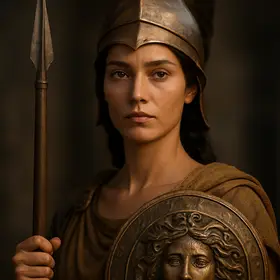 AthenaMajor character
 PenelopeMajor character
 ZeusMajor character
 LaertesMinor character
 The SuitorsAntagonist
 AntinousAntagonist
All chapter summaries ›Characters ›
Read The Odyssey illustrated
Every scene in these notes comes from the Book2Life reader, where the full public-domain text is illustrated as you read, with character portraits and narration. Free in your browser and on iPhone.
