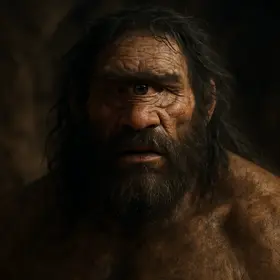
Polyphemus in The Odyssey
Antagonist
a solitary, one-eyed Cyclops shepherd whose lawless strength threatens Odysseus and his men
Who is Polyphemus?
Polyphemus is a giant Cyclops who lives alone in a cave with his flocks and stores of cheese. He cares little for the Greek rules of hospitality: when Ulysses and twelve companions enter his cave exploring by daylight, Polyphemus seals the entrance with a huge stone and begins to eat the visitors. Physically dominant and lacking regard for guest-right, he becomes the immediate and mortal threat that turns a routine stop into a crisis. Ulysses survives Polyphemus’s brute force through cunning: he gets the Cyclops drunk, tells him his name is “Noman,” blinds his single eye with a sharpened olive beam, and then escapes with his men by clinging under the bellies of the giant’s sheep. After the escape, Ulysses foolishly reveals his true identity, and Polyphemus prays to his father Poseidon, prompting the god’s enduring grudge against Ulysses that the gods later discuss on Olympus. Polyphemus’s violence and his subsequent prayer set in motion Poseidon’s vengeance, which shapes Ulysses’ long wanderings.
In the book: When we first meet Polyphemus, he’s a solitary Cyclops shepherd living in a cave, more interested in his flocks and his own rough routine than in the rules of hospitality. He matters because Odysseus and his men stumble into his home and have to deal with his brute power and disregard for strangers, which quickly turns their stop into a deadly test of wits.
Personality
- Brutal
- He seals the cave and eats several of Ulysses’ companions instead of offering hospitality.
- Solitary
- He lives alone as a shepherd in a cave stocked with cheeses and flocks, with no apparent household or social law.
- Physically imposing
- He moves an enormous stone to seal his cave’s entrance, trapping Ulysses and his men inside.
- Proud
- After being outwitted and blinded, he boasts and curses Ulysses, then prays to Poseidon for vengeance when he learns Ulysses’ true name.
- Lawless
- He disregards the Greek custom of xenia by killing and eating his guests rather than welcoming them.
Character arc
Polyphemus appears as an almost elemental force: a lawless solitary giant whose first act on meeting Ulysses’ party is to deny hospitality and to consume some of the strangers. He remains essentially unchanged in moral outlook—he never repents or recognizes guest-right—but the episode records a reversal of physical dominance. Initially he controls the men completely, sealing them in and threatening their lives; by the end he is blinded and helpless, deprived of his greatest advantage. His last significant action is an appeal to divine justice: when Ulysses taunts him and reveals his name, Polyphemus shifts from immediate predator to supplicant, invoking his father Poseidon to punish the man who harmed him. Thus his role moves the narrative from a localized conflict—giant versus sailors—to a cosmic consequence, because his prayer activates Poseidon’s long-term enmity that complicates Ulysses’ voyage. Polyphemus himself does not develop ethically or socially; he functions as an enduring source of divine wrath after his personal defeat.
Relationships
- Poseidon Polyphemus is Poseidon’s son, and he prays to his father to avenge the wound done to him.
- Ulysses Ulysses is Polyphemus’s enemy: Ulysses blinds him and escapes, and Polyphemus’s subsequent prayer brings Poseidon’s curse down on Ulysses.
- Odysseus As the same man counted among the survivors, Odysseus is the central antagonist to Polyphemus in the cave episode, suffering losses at the giant’s hands and ultimately outwitting him.
- The Cyclopes Polyphemus belongs to the race of Cyclopes, who react to his cry but are fooled when he claims that 'Noman' harms him.
- Zeus Zeus (Jove) later presides over the gods’ council that acknowledges Poseidon’s grudge—an outcome set in motion by Polyphemus’s plea.
Why Polyphemus matters
Polyphemus embodies the dangers of barbarism opposed to Greek social norms: his refusal of hospitality and his cannibalism mark him as outside the civilized order. His brute strength forces Ulysses to rely on cunning rather than force, showcasing the poem’s valuation of metis (craft) over mere brawn. Moreover, Polyphemus’s prayer to Poseidon transforms a private crime into a divine vendetta, linking individual actions to the wider theme of divine influence on human fate and making his encounter pivotal for Ulysses’ prolonged wandering.
Chapters with Polyphemus
More The Odyssey characters
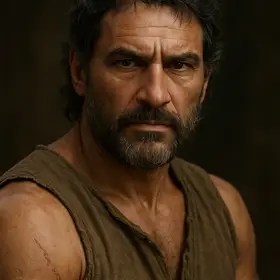 OdysseusProtagonist
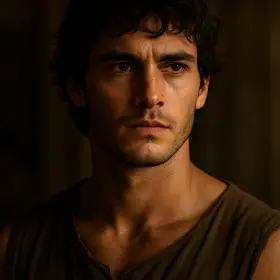 TelemachusMajor character
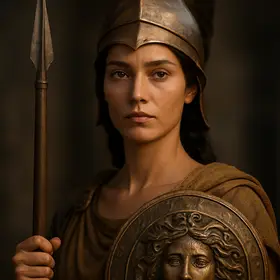 AthenaMajor character
 PenelopeMajor character
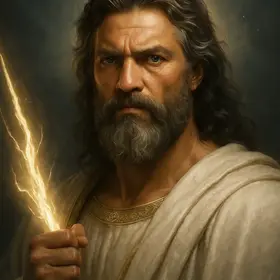 ZeusMajor character
 LaertesMinor character
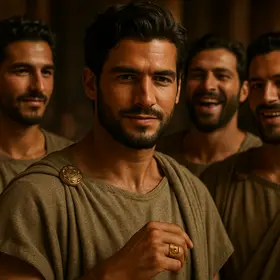 The SuitorsAntagonist
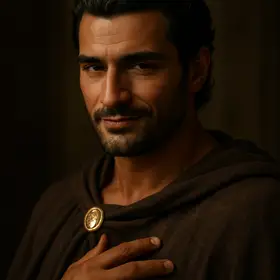 AntinousAntagonist
All chapter summaries ›Characters ›
Read The Odyssey illustrated
Every scene in these notes comes from the Book2Life reader, where the full public-domain text is illustrated as you read, with character portraits and narration. Free in your browser and on iPhone.
