
The Laestrygonians in The Odyssey
Antagonist
A hidden harbor people who reveal themselves as man-eating giants and violently attack visiting strangers.
Who is The Laestrygonians?
The Laestrygonians are inhabitants of a concealed harbor who at first glance appear like ordinary townsfolk, but as soon as strangers arrive they disclose their true nature as cannibalistic giants. Their aim is simple and brutal: to protect their shore by destroying outsiders who come to anchor there. In the episode described, a seemingly routine stop for a visiting ship turns into sudden slaughter and chaos when the Laestrygonians attack, sinking ships and devouring men. They act quickly and without negotiation, turning a moment of respite into a desperate scramble for survival and forcing survivors to flee. In the narrative their presence underscores the mortal danger that lurks on unknown coasts and the precariousness of hospitality in a world where appearances can conceal deadly hostility.
In the book: When we first meet them, they’re the people of a hidden harbor—seemingly ordinary townsfolk at a glance—who reveal themselves as man-eating giants the moment strangers arrive. Their sudden, brutal hostility turns a routine stop into a desperate scramble, showing just how treacherous unknown shores can be.
Personality
- Predatory
- They reveal themselves as man-eating giants the moment strangers arrive and immediately attack.
- Deceptive
- At first they seem like ordinary townsfolk, concealing their monstrous nature until newcomers are within reach.
- Impetuous
- Their sudden and brutal hostility turns a routine stop into instant slaughter and chaos.
- Territorial
- They violently defend their hidden harbor against visiting ships and strangers.
Character arc
The Laestrygonians show no development over the course of their appearance: they are introduced as a hidden community that seems ordinary and immediately reveal their true identity as cannibalistic giants. From first contact onward they refuse any diplomacy or restraint, acting instantly to attack and destroy visiting ships and men. Their role is static but catalytic: rather than changing, they provoke change in others by forcing fleeing and survival decisions among the survivors. They do not undergo moral reflection, soften, or integrate into the wider world; instead they remain an immutable embodiment of sudden, local danger that interrupts and redirects the voyagers' journey. Their brief, violent episode ends with them still firmly in place as a deadly obstacle to seafarers.
Relationships
- Odysseus An indirect, hostile obstacle to Odysseus's voyage—his crew suffers from their sudden attack on a visiting ship.
- Telemachus No direct contact, but they exemplify the kind of external dangers that threaten Telemachus's world as news of distant perils reaches Ithaca.
- The Suitors Contrast with the suitors: the Laestrygonians' blatant savagery highlights failures of hospitality elsewhere in the epic.
- Poseidon Functionally aligned with the sea's hostility that Poseidon manifests, as they make a harbor deadly for sailors.
Why The Laestrygonians matters
The Laestrygonians dramatize two central themes: the peril of the unknown and the collapse of xenia (hospitality). Their deceptive normalcy and sudden violence warn that appearance and ritual civility can hide mortal threat, reinforcing the epic's repeated lesson that seafaring life depends on constant vigilance. They also serve as a foil to more structured forms of hospitality elsewhere, sharpening the contrast between civilized exchange and raw, territorial brutality, and reminding the audience that not every shore will receive strangers with generosity or law.
Chapters with The Laestrygonians
More The Odyssey characters
 OdysseusProtagonist
 TelemachusMajor character
 AthenaMajor character
 PenelopeMajor character
 ZeusMajor character
 LaertesMinor character
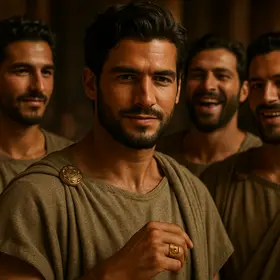 The SuitorsAntagonist
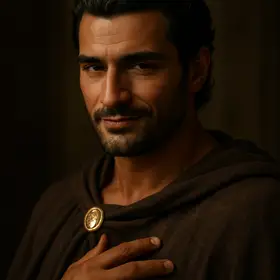 AntinousAntagonist
All chapter summaries ›Characters ›
Read The Odyssey illustrated
Every scene in these notes comes from the Book2Life reader, where the full public-domain text is illustrated as you read, with character portraits and narration. Free in your browser and on iPhone.
