The Prince Chapter 2 Summary
Concerning Hereditary Principalities
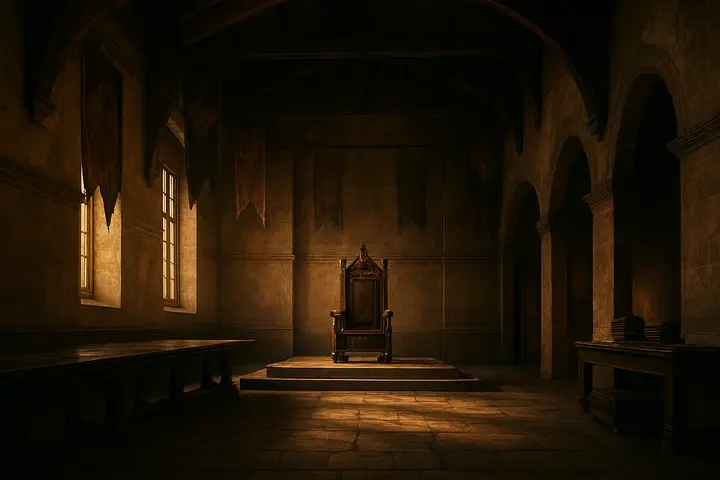
Machiavelli argues that hereditary principalities are easier to maintain than new ones because tradition and habit stabilize rule.
Summary
The chapter opens with Machiavelli narrowing his focus from republics to principalities, stating he will discuss how different kinds of principalities should be governed and preserved. He immediately distinguishes hereditary states from new principalities, asserting that those governed by a ruling family face fewer difficulties. The hereditary prince benefits from established customs and the ingrained loyalty or acceptance of his subjects.
Machiavelli then explains why hereditary rule is more secure: a prince need only avoid violating ancestral customs and respond prudently to events as they occur. Even a ruler of average abilities can retain power in such a state unless overwhelmed by exceptional force. If a hereditary prince is temporarily deprived of his state, Machiavelli contends that circumstances often allow him to regain it when the usurper falters. He gives a brief contemporary example from Italy — the Duke of Ferrara — noting that long establishment in his dominions enabled him to withstand serious threats such as attacks from the Venetians and Pope Julius. Finally, Machiavelli argues that because hereditary princes have less reason to offend their subjects and because memories of past grievances fade over time, the populace is naturally inclined to accept and support the established family, making revolutionary change less likely.
Key events
- Machiavelli limits his discussion to principalities rather than republics.
- He declares hereditary states are easier to hold than new ones.
- Explains why hereditary princes need only respect ancestors' customs.
- Argues average ability suffices to maintain hereditary rule barring extraordinary force.
- If a hereditary prince is deposed, he often regains power when the usurper fails.
- Gives the Duke of Ferrara as an Italian example resisting Venice and Pope Julius.
- Concludes that habit and fewer reasons to offend make subjects predisposed to the ruling family.
Chapter 2 in pictures
Analysis
This chapter performs a foundational role in the book’s structure by establishing a basic typology of principalities and setting up a contrast that will inform later, more detailed prescriptions. Thematically, it introduces Machiavelli’s pragmatic, empirical approach: he values established institutions and social habit as sources of political stability more than ideological legitimacy. The chapter minimizes moralizing language and emphasizes causes and effects—tradition, public memory, and the balance of force—over abstract principles. Narratively, the short, declarative statements function like axioms that the rest of the work will test and complicate. The brief case of the Duke of Ferrara serves as a concrete anchor that exemplifies the general rule without developing a full historical argument; it signals Machiavelli’s method of drawing lessons from contemporary Italian events. Symbolically, the contrast between 'hereditary' and 'new' highlights a recurrent Machiavellian concern: novelty breeds instability. The chapter foreshadows later, more detailed guidance on the vulnerabilities of newly founded states and the tactics required to secure them. The tone is didactic and authoritative, positioning the author as a practical analyst rather than a moral philosopher.
Important quotes
“there are fewer difficulties in holding hereditary states, and those long accustomed to the family of their prince, than new ones;”
NarratorStates the central claim that hereditary principalities are easier to govern than newly acquired ones.
“for it is sufficient only not to transgress the customs of his ancestors, and to deal prudently with circumstances as they arise, for a prince of average powers to maintain himself in his state, unless he be deprived of it by some extraordinary and excessive force;”
NarratorExplains why hereditary princes can retain power through respect for tradition and prudent reaction to events.
Characters in Chapter 2
- Duke of Ferrara
- Venetians
- Pope Julius
All chapter summaries ›Characters ›
Read The Prince illustrated
Every scene in these notes comes from the Book2Life reader, where the full public-domain text is illustrated as you read, with character portraits and narration. Free in your browser and on iPhone.
