The Prince Summary
A chapter-by-chapter summary of The Prince by Niccolò Machiavelli, with analysis, key quotes and illustrations of the scenes.
Plot overview
The Prince is a concise political treatise by Niccolò Machiavelli, written in the early 16th century after his removal from Florentine office. Framed as advice to a new ruler, it surveys types of principalities, the mechanics of power, and measures a prince must take to acquire, consolidate, and preserve rule. The voice is practical and unsentimental, grounded in examples from ancient Rome, contemporary Italian states, and notable individuals.
Across its chapters Machiavelli distinguishes hereditary and new states, examines the hazards of ruling free cities and composite realms, and stresses the necessity of armed strength, wise counsel, and adaptable conduct. He profiles figures such as Cesare Borgia (the Duke Valentino) as an exemplar of ruthless political calculation, compares rulers who rise by fortune and by skill (e.g., Francesco Sforza), and recounts violent usurpations like Agathocles and Oliverotto as cautionary tales. The work also invokes Alexander and Darius, the popes’ temporal power, and case studies like Castruccio Castracani to illustrate how strategy, cruelty, reputation, and military preparedness interact.
Machiavelli’s premise is that political life follows its own rules; virtue must be measured by effectiveness, and fortune can be shaped by bold, prepared action. The Prince remains a compact manual of power, blending history, anecdote, and blunt prescription for rulers and observers of statecraft.
Chapter summaries
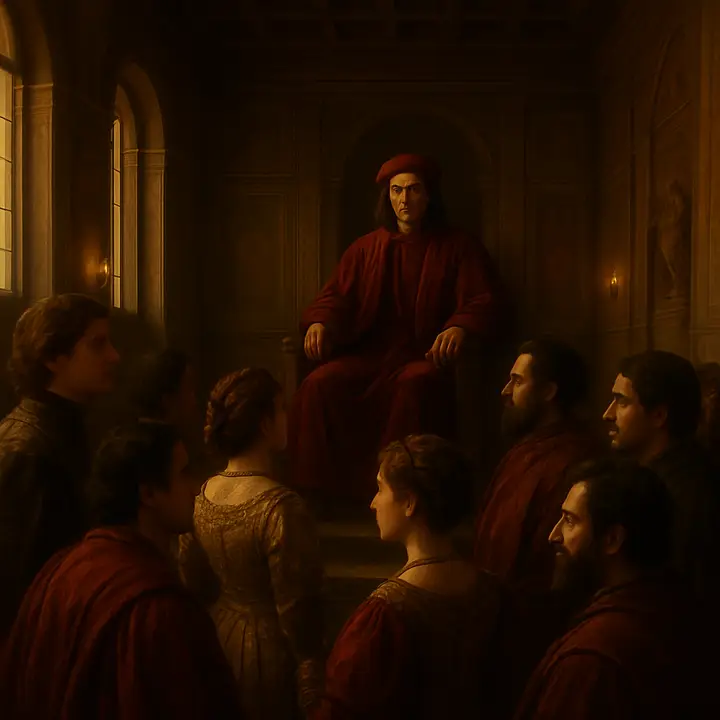 YOUTH — Æt. 1-25—1469-94: Machiavelli's youthSketch of Machiavelli's early life in Florence, the city's divided culture, and a sample of his advice to his son about study.
 Office — Age 25-43 — 1494-1512: Service to the RepublicMachiavelli spends his major public career serving the Florentine Republic, undertaking missions and witnessing Italian power struggles until the Medici return ends his office.
 LITERATURE AND DEATH — Æt. 43-58—1512-27: Machiavelli's late lifeAfter dismissal and imprisonment, Machiavelli retires to San Casciano, writes The Prince and other works, briefly returns to politics, and dies in 1527.
 THE MAN AND HIS WORKS: Life and legacy of MachiavelliA biographical and editorial introduction assesses Machiavelli’s life, reputation, methods, and works, and explains the translator’s approach.
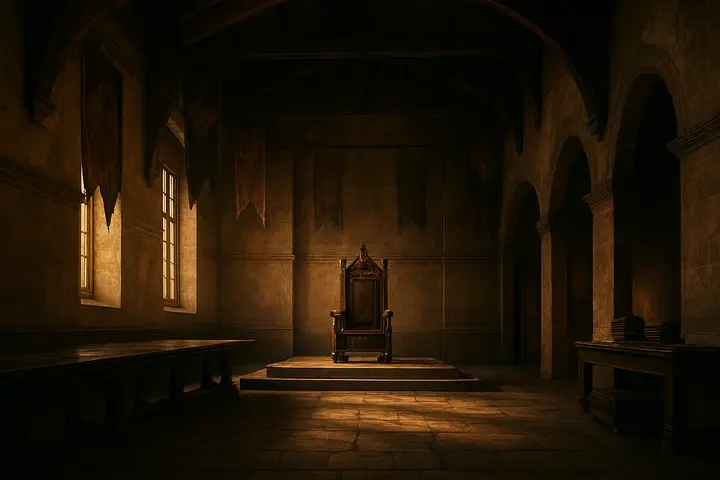 Chapter 2: Concerning Hereditary PrincipalitiesMachiavelli argues that hereditary principalities are easier to maintain than new ones because tradition and habit stabilize rule.
- Chapter 3: Concerning Mixed PrincipalitiesMachiavelli explains the challenges of ruling newly acquired or composite states and gives practical measures to retain them.
- Chapter 4: Why Darius' Realm StayedMachiavelli argues that Alexander held Darius's empire easily because it was governed centrally like the Turk, unlike feudal kingdoms that rebel more readily.
- Chapter 5: Governing Free CitiesMachiavelli explains three ways to hold formerly free cities—destroy them, live there, or set up a loyal oligarchy—and argues demolition is safest.
- Chapter 6: New Principalities by AbilityMachiavelli argues that princes who found states by their own skill, not fortune, face hard ascent but easier rule once established.
- Chapter 7: New Principalities by FortuneMachiavelli compares rulers who rise by fortune to those who rise by ability, using Cesare Borgia and Francesco Sforza as examples.
- Chapter 8: Obtaining Principalities by WickednessMachiavelli recounts two violent usurpations—Agathocles in ancient Syracuse and Oliverotto in Fermo—and draws lessons about cruelty and consolidation.
- Chapter 9: Civil PrincipalityMachiavelli analyzes how a private citizen becomes prince through the people or nobles and how to secure such rule.
- Chapter 10: Measuring a Principality's StrengthMachiavelli argues that a prince's true power lies in whether he can defend himself with his own resources rather than relying on others.
- Chapter 11: Ecclesiastical PrincipalitiesMachiavelli explains why ecclesiastical principalities are uniquely secure, recounting how recent popes strengthened the Church's temporal power in Italy.
- Chapter 12: Kinds of soldieryMachiavelli argues that princes must rely on their own arms, not mercenaries or auxiliaries, because foreign troops are untrustworthy.
- Chapter 13: Auxiliaries, Mixed, and One’s OwnMachiavelli argues that relying on auxiliaries or mercenaries is dangerous and a prince must prefer and cultivate his own forces.
- Chapter 14: On the Art of WarMachiavelli argues that a prince must make the study and practice of war his primary focus, through action and study, to gain and keep power.
- Chapter 15: Praise and Blame for PrincesMachiavelli argues that princes must judge which virtues to practice and which vices to accept for the sake of maintaining power.
- Chapter 16: Concerning Liberality and MeannessMachiavelli argues that a prince should prefer a reputation for stinginess to ruinous generosity because generosity can deplete resources and provoke hatred.
- Chapter 17: Cruelty, Clemency, Love vs FearMachiavelli argues a prince should prefer to be feared rather than loved but must avoid being hated, using historical examples.
- Chapter 18: Keeping Faith (Princely Deceit)Machiavelli argues that princes must sometimes break promises and use deceit, appearing virtuous while knowing when to act like a fox and a lion.
- Chapter 19: Avoiding Hatred and ContemptMachiavelli argues a prince must avoid being hated or despised, favor the people over nobles or soldiers, and shows this with Roman examples.
- Chapter 20: Fortresses and Other MeansMachiavelli examines whether fortresses, disarming, factions, and other measures help or harm princes in keeping power.
- Chapter 21: Conduct to Gain RenownMachiavelli argues a prince gains esteem through grand deeds, decisive alliances, patronage, and public spectacle.
- Chapter 22: Concerning the SecretariesMachiavelli argues that a prince’s choice and management of servants—especially secretaries—reveals his wisdom and determines his security.
- Chapter 23: Avoiding FlatterersMachiavelli warns princes about flatterers and prescribes how to gather truthful counsel without losing authority.
- Chapter 24: Why princes lost statesMachiavelli explains why Italian princes lose their states, blaming sloth, poor arms, and failure to secure popular and noble support.
- Chapter 25: Fortune and Free WillMachiavelli argues that Fortune controls about half of outcomes but can be resisted by preparation and bold action.
- Chapter 26: An Exhortation to Liberate ItalyMachiavelli urges the Medici to free Italy from foreign domination by raising a native prince and army.
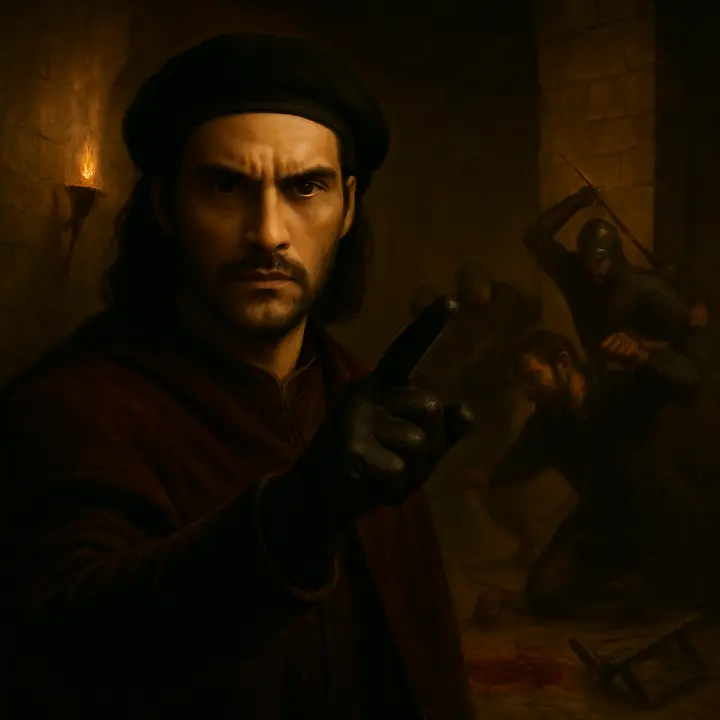 DESCRIPTION OF THE METHODS ADOPTED BY THE DUKE VALENTINO WHEN MURDERING VITELLOZ: Duke Valentino’s PlotCesare Borgia lures rival captains into a false reconciliation at Sinigalia and has them seized and strangled.
- CASTRUCCIO CASTRACANI 1284-1328: Castruccio's Rise and RuleCastruccio rises from foundling to Lucca's lord through skill, daring battles, intrigue, and is felled by sudden illness after a great victory.
Characters
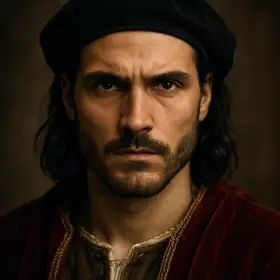 Cesare BorgiaMajor character
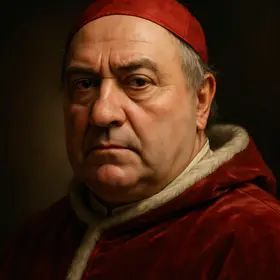 Pope Alexander VIMajor character
 Francesco SforzaMajor character
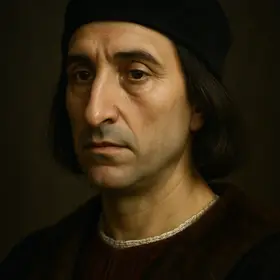 Ferdinand II of AragonMajor character
- AAlexander the GreatMajor character
- FFlorentinesMajor character
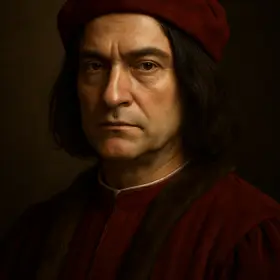 Lorenzo de' MediciMajor character
 Louis XIIMajor character
- PPope JuliusMajor character
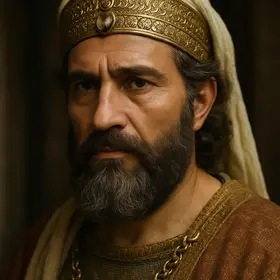 Cyrus the GreatMajor character
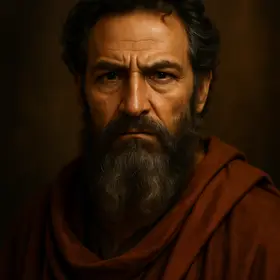 MosesMajor character
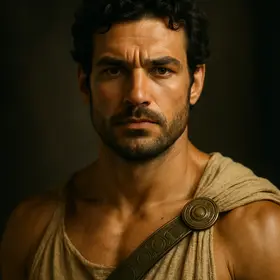 TheseusMajor character
Read The Prince illustrated
Every scene in these notes comes from the Book2Life reader, where the full public-domain text is illustrated as you read, with character portraits and narration. Free in your browser and on iPhone.
