
Ernest Defarge in A Tale of Two Cities
Major character
Paris wine‑shop keeper of Saint Antoine; organizer of the Jacques and husband of Madame Defarge, caught between loyalty and revolution.
Who is Ernest Defarge?
Ernest Defarge keeps a wine‑shop in Saint Antoine that doubles as a hub for the revolutionary Jacques. He once served Dr. Manette and now shelters him in the garret, assisting Mr. Jarvis Lorry and Lucie with Dr. Manette’s removal from solitude. Outside his domestic loyalty, Defarge quietly builds revolutionary networks: he receives and questions recruits, ushers informants to the conspirators, and participates in mass action such as the assault on the Bastille. He is present at tribunals and prison procedures, where he watches trials and hands prisoners like Charles Darnay to the authorities when required. Defarge wants an end to aristocratic abuses and participates in measured, organized preparations for upheaval, even as his wife pursues a more personal, implacable vengeance. He therefore functions as both protector of an individual past connection and as a practitioner of collective political action.
In the book: Ernest Defarge is the Paris wine‑shop keeper of Saint Antoine and a key organizer among the common people. Formerly a servant to Dr. Manette, he helps shelter and protect him while quietly building networks that feed the coming revolutionary fervor. As husband to the formidable Madame Defarge, he stands at the crossroads between personal loyalty and political commitment, shaping the novel’s depiction of collective unrest without centering the story on himself.
Personality
- Practical
- He organizes travel papers, conveyances, and provisions to remove Dr. Manette from the garret and secure the party’s passage (The Wine‑shop; The Shoemaker).
- Organized
- He conducts meetings in his wine‑shop, ushers recruits upstairs for questioning, and helps register and mobilize Jacques in deliberate fashion (Knitting; Still Knitting).
- Loyal
- He shelters and protects Dr. Manette, guiding Lorry and Lucie to the garret and maintaining the Doctor’s safety (The Wine‑shop; The Shoemaker).
- Reserved
- He often observes with composure while others act—watching the spilled wine scene and the knitting of his wife without dramatic display (The Wine‑shop; Monseigneur in Town).
- Compromised
- He surrenders Charles Darnay to the authorities at the barrier and later participates in revolutionary acts that endanger his own personal ties (Escort to La Force; Echoing Footsteps).
Character arc
Defarge opens as the sober, capable wine‑shop keeper who answers Lorry’s call and helps Lucie recover her father; his first appearances emphasize practical care and a debt of loyalty to Dr. Manette. As the narrative progresses, his role shifts from local proprietor and guardian of a single household to an active revolutionary organizer: he presides over Jacques gatherings, questions recruits, and helps mobilize the Saint Antoine quarter into collective violence. He escorts Darnay to the guard‑house and later takes part in the Bastille assault where the Doctor’s old cell is discovered, showing his commitment to revolutionary justice. Though personally connected to the Manettes by the past, he rarely contests his wife’s ruthlessness; he is increasingly positioned between private obligation and public cause. By the time of the mass uprisings and public executions, Defarge’s practical loyalty to the Revolution outweighs the protective intimacy of his earlier acts, and he stands as a figure who compromises earlier personal loyalties in service of collective retribution.
Relationships
- Madame Defarge His wife and political partner whose implacable vengeance and secret knitting both direct and exceed his own revolutionary activity.
- Dr. Manette Former master and ward; Defarge shelters and protects him in the garret and helps arrange his removal and care.
- Charles Darnay The husband of Lucie and a man Defarge escorts to the guard‑house and later observes at trial, a connection that disturbs him as the Revolution targets aristocratic lines.
- Jarvis Lorry An associate in Dr. Manette’s removal and a practical correspondent when arranging papers and travel for the Doctor and his family.
- The Vengeance A militant female lieutenant and ally in Saint Antoine with whom Defarge coordinates crowd action and delivers news of captures.
- Lucie Manette Recipient of his help and information about her father’s condition; she experiences unease under the Defarges’ shadowy presence.
Quotes by Ernest Defarge
“The Bastille!”
Chapter 21A single shouted word that signals the moment the mob turns its fury on the fortress and the narrative erupts into violent action.
“At last it is come, my dear!”
Chapter 22Defarge’s hoarse, triumphant remark to Madame Defarge after the day’s violent triumphs.
Why Ernest Defarge matters
Defarge embodies the Revolution’s transition from suffering to organized force: he links personal grievance (his past service to Manette) with collective political action. Through his wine‑shop as meeting place and his steady, managerial presence, the novel shows how ordinary civic structures become instruments of insurrection. His compromise between private loyalty and public cause highlights Dickens’s exploration of justice, vengeance, and the dangers when communal wrath overwhelms individual mercy. Defarge’s measured activism also contrasts with Madame Defarge’s fanaticism, clarifying debates in the text about method, motive, and moral responsibility in revolutionary change.
Chapters with Ernest Defarge
More A Tale of Two Cities characters
 Dr. ManetteMajor character
 Lucie ManetteMajor character
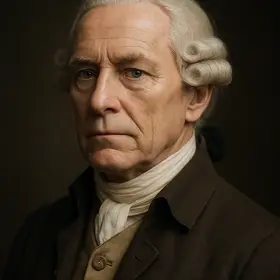 Jarvis LorryMajor character
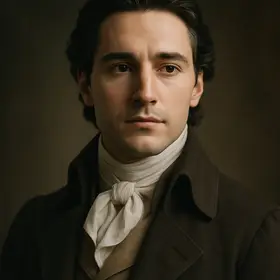 Charles DarnayProtagonist
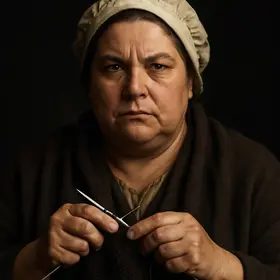 Madame DefargeAntagonist
 Miss ProssMajor character
 Sydney CartonProtagonist
 Jerry CruncherMajor character
All chapter summaries ›Characters ›
Read A Tale of Two Cities illustrated
Every scene in these notes comes from the Book2Life reader, where the full public-domain text is illustrated as you read, with character portraits and narration. Free in your browser and on iPhone.
Read A Tale of Two Cities free
