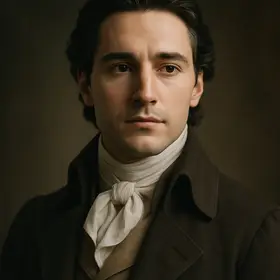
Charles Darnay in A Tale of Two Cities
Protagonist
A French-born gentleman who renounces his aristocratic name and seeks an honorable life in England, married to Lucie Manette.
Who is Charles Darnay?
Charles Darnay is a French-born gentleman who rejects the cruelties of his Evrémonde heritage and builds an honest life in England as a tutor and husband to Lucie Manette. He wants to live with integrity, protect those loyal to him, and shield his new family from the past, yet duty and conscience repeatedly draw him back to France. In London he faces a treason trial and wins acquittal; he marries Lucie and becomes part of the Manette household. When a former steward, Gabelle, is imprisoned and pleads for help, Darnay, motivated by guilt and obligation toward former retainers, returns to revolutionary France. There he is arrested, tried, provisionally acquitted, later denounced, and finally condemned; his final fate is determined through Sydney Carton’s self-sacrifice and a daring escape plan orchestrated in the Conciergerie. Throughout, Darnay acts with calm dignity, prioritizes family and duty, and repeatedly encounters the violent consequences of his family’s past.
In the book: Charles Darnay is a French-born gentleman who rejects the cruelties of his aristocratic heritage and seeks an honorable life in England. His quiet integrity and compassion connect him closely with the Manette family, and his past and identity pull him into the upheavals of the French Revolution, where questions of loyalty, justice, and personal sacrifice converge around him.
Personality
- Conscientious
- He reads Gabelle’s desperate letter and, believing duty requires it, secretly decides to return to Paris to help (Drawn to the Loadstone Rock).
- Resigned courage
- At his second trial he accepts the court’s proceedings with composed dignity and prepares farewell letters while awaiting execution (Prison and Escape Plan; A Last Embrace).
- Compassionate
- He seeks Dr. Manette’s blessing before proposing to Lucie and shows gratitude to those who aided him after his first trial (Two Promises; Congratulatory).
- Principled
- He publicly renounces the Evrémonde title and family property in the chateau conversation with the Marquis, rejecting the family’s legacy (The Gorgon's Head).
- Duty-bound
- Despite danger, he returns to France because Gabelle, his old steward, begs for aid, acting from obligation rather than self-interest (Drawn to the Loadstone Rock).
Character arc
Darnay first appears as a calm, honorable man already having renounced his aristocratic title and seeking a modest, moral life in England; he endears himself to the Manette household and proves his character in the Old Bailey treason trial where he is acquitted. Married to Lucie, he settles into domestic happiness but remains haunted by obligation to those connected to his birth family. The letter from Gabelle awakens guilt and a sense of responsibility that override his desire for safety; he secretly returns to France and is arrested at the barrier, imprisoned in La Force and later the Conciergerie. He endures the Revolution’s legal machinery with dignity, experiences a terrifying acquittal turned triumphal procession, then later denunciation and condemnation. Throughout, his fundamental character—honor, compassion, and duty—remains steady; he does not become hardened or vengeful. In the end, his fate depends on others’ actions: he is saved by Carton’s substitution, which completes Darnay’s arc from a private, conscience-driven actor to a beneficiary of selfless sacrifice, preserving his family and life through another’s gift.
Relationships
- Lucie Manette Wife whose love and household anchor Darnay and whose presence stabilizes his life and public testimony.
- Dr. Manette Father-in-law and moral authority whose testimony and relapse shape Darnay’s trials and fortunes.
- Sydney Carton A friend and fellow lawyer’s associate whose pity and final sacrifice secure Darnay’s escape from execution.
- Gabelle Former steward whose letter and imprisonment compel Darnay to return to France out of duty.
- Ernest Defarge Revolutionary and former shelterer of Dr. Manette who helps detain Darnay at the barrier and figures in his Paris ordeal.
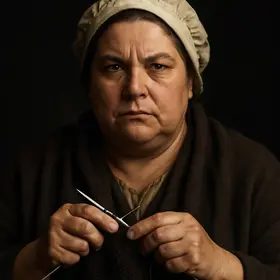
- Madame Defarge A silent, hostile presence whose knitting records names and whose hostility contributes to the denunciation that imperils Darnay.
Quotes by Charles Darnay
“I love your daughter fondly, dearly, disinterestedly, devotedly. If ever there were love in the world, I love her.”
Chapter 10Darnay declares the depth and purity of his love for Lucie to her father, stressing selflessness and respect for the filial bond.
“I know the fellow.”
Chapter 24Darnay’s quiet admission upon hearing Stryver’s insults and seeing the letter addressed to his true name, triggering his inward turmoil.
“Emigrant, my friends! Do you not see me here, in France, of my own will?”
Chapter 1Darnay appeals to the crowd at Beauvais to show that he is not a returning traitorous emigrant but a voluntary traveller.
“Five paces by four and a half, five paces by four and a half, five paces by four and a half.”
Chapter 1Alone in his small cell, Darnay paces and counts repeatedly, a sign of confinement, anxiety, and the beginnings of psychological strain.
““I send it to her by you. I kiss her by you. I say farewell to her by you.””
Chapter 11Darnay presses blessings and farewell through Lucie to their child during their brief embrace, demonstrating calm resignation and paternal concern.
Why Charles Darnay matters
Darnay embodies the novel’s exploration of conscience, inherited guilt, and the possibility of moral renewal. By renouncing his title yet answering calls of duty, he shows a tension between personal ethics and collective historical forces. His trials—legal and revolutionary—highlight the instability of justice during political upheaval and dramatize how private nobility collides with public vengeance. His survival through another’s sacrifice also emphasizes themes of redemption and interconnected human responsibility: individual choices reverberate and sometimes depend on others’ compassion to overcome institutional violence.
Chapters with Charles Darnay
More A Tale of Two Cities characters
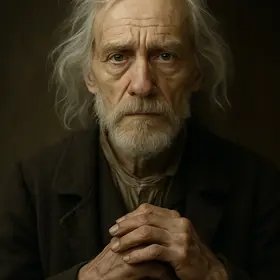 Dr. ManetteMajor character
 Lucie ManetteMajor character
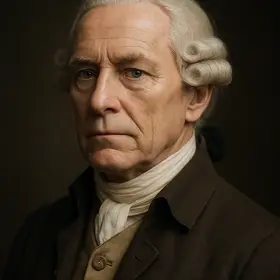 Jarvis LorryMajor character
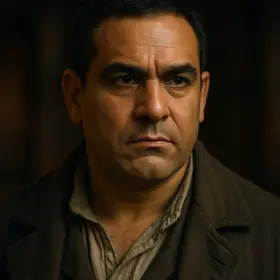 Ernest DefargeMajor character
 Madame DefargeAntagonist
 Miss ProssMajor character
 Sydney CartonProtagonist
 Jerry CruncherMajor character
All chapter summaries ›Characters ›
Read A Tale of Two Cities illustrated
Every scene in these notes comes from the Book2Life reader, where the full public-domain text is illustrated as you read, with character portraits and narration. Free in your browser and on iPhone.
Read A Tale of Two Cities free
