Crime and Punishment Chapter 5 Summary
Dream, Resolve, Chance Meeting
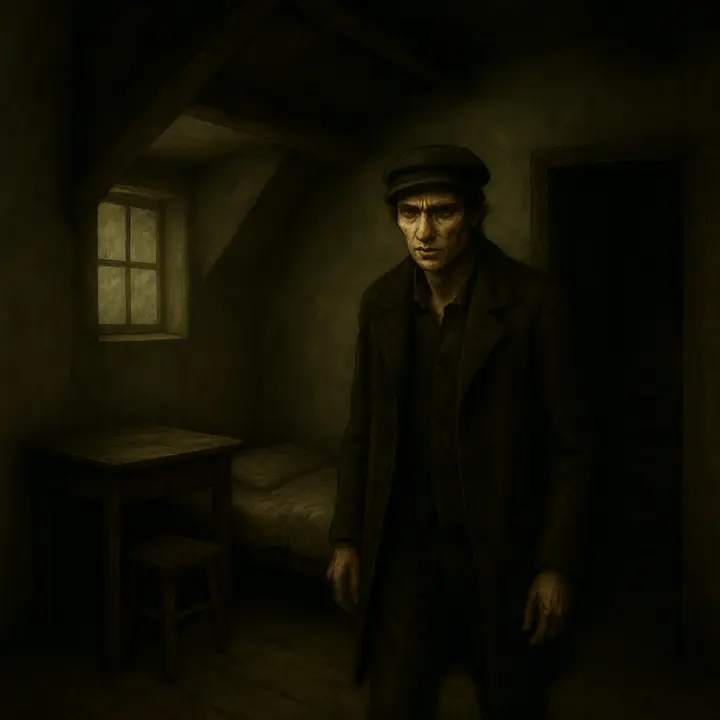
Raskolnikov wanders in a feverish state, dreams of a brutal scene with a starving child and a dead mare, then unexpectedly learns Lizaveta will be away — leaving the pawnbroker alone.
Summary
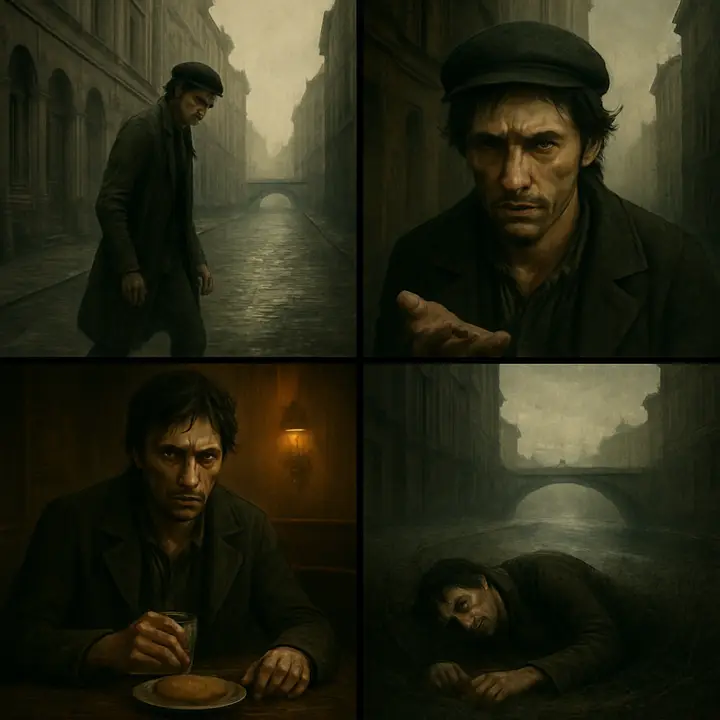
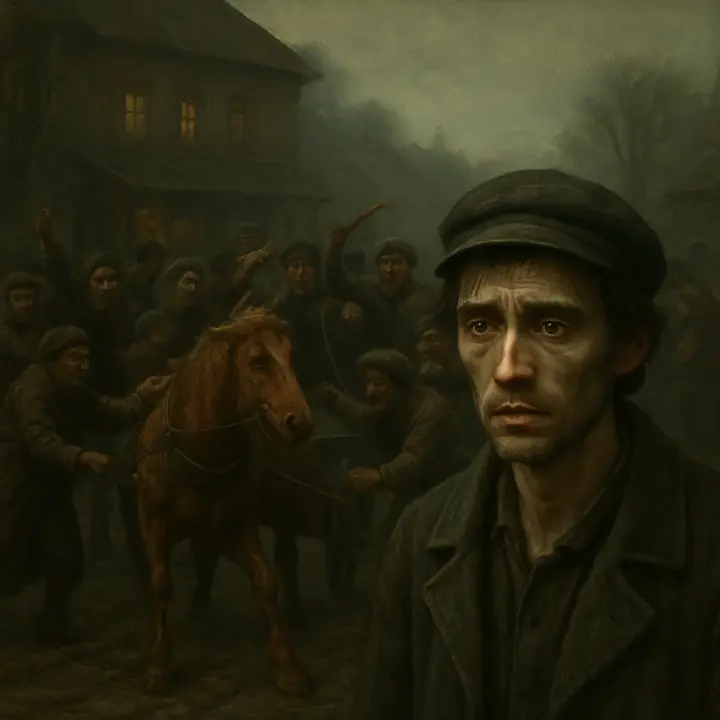
Raskolnikov leaves his garret in a restless, fevered state, thinking of Razumihin and then resolving to visit him only after “It” — a disturbing, undefined action — is over. He wanders across Vassilyevsky Ostrov, feels both briefly soothed and then increasingly irritable by sights of comfortable life, eats and drinks, and falls asleep in the grass on Petrovsky Ostrov. In a vivid, hallucinatory dream he revisits a childhood scene: a holiday walk with his father past a tavern to a graveyard, interrupted by a shocking episode in which a drunken crowd forces a frail mare into a heavy cart and brutally beats it to death while townspeople laugh. The dream focuses on the child's horror, his desperate attempts to save the animal, and the helpless pull of his father who drags him away.
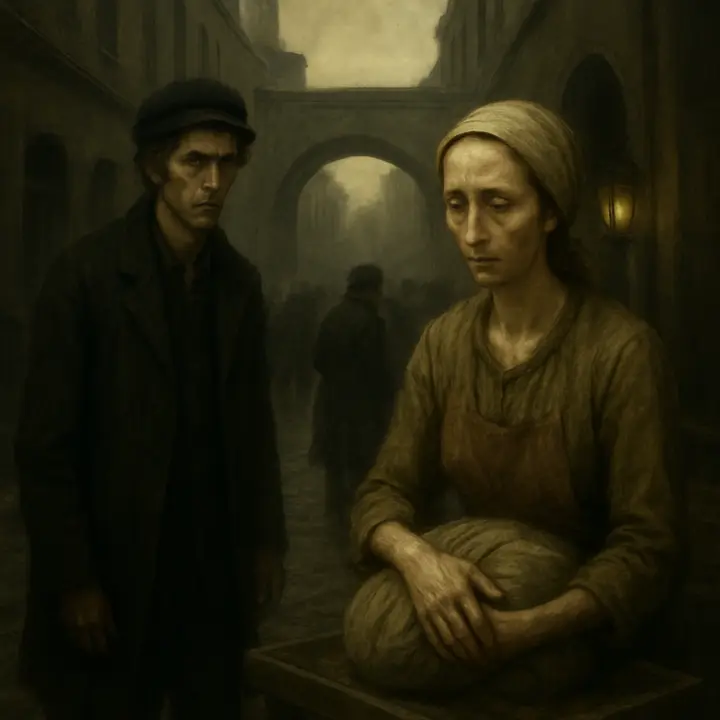
He wakes shaken, haunted by the dream’s violence and by a renewed, almost paralyzing doubt about his own recent murderous fantasies: he tells himself he could not, would not commit such an act, and prays for guidance as he feels a sudden lightness as if an inner burden has lifted. Walking home by an unnecessary route through the Hay Market, he happens upon Lizaveta Ivanovna speaking with hawkers; overhearing that she will be away at seven the next morning, he realizes the old pawnbroker, Alyona Ivanovna, will then be alone. The chance information crystallizes instantly into a decisive practical advantage for whatever plan he has been turning over: an opportunity he had not expected and cannot ignore.
Key events
- Raskolnikov debates visiting Razumihin but postpones until after “It.”
- He wanders through the islands, eats and drinks, and falls asleep on Petrovsky Ostrov.
- He dreams of a childhood scene where a mare is brutally beaten to death by a drunken crowd.
- He wakes terrified, questions his own resolve about committing violence, and prays to renounce his ‘dream.’
- By an unnecessary detour through the Hay Market he overhears Lizaveta say she will be away at seven the next morning.
- He recognizes this as a precise, low-risk opportunity because Alyona Ivanovna will be alone then.
Chapter 5 in pictures
Analysis
This chapter intensifies Raskolnikov’s psychological turbulence and moves the plot from abstract theory to a concrete, time-bound possibility. The fevered wanderings and the grotesque dream externalize his inner conflict: childhood sensitivity to cruelty (the boy’s horror at the mare’s fate) contrasts with the cold, calculating rationality that has produced the idea of a violent ‘experiment.’ The dream functions as symbolic foreshadowing — animal suffering, public cruelty, and a helpless child link to themes of innocence, brutality, and moral rupture. Narrative technique blends interior monologue, dream-vision, and omniscient description to keep readers inside Raskolnikov’s disturbed consciousness while also offering an objective world that supplies a real, chance opportunity. The Hay Market encounter is structured as a near-fatal coincidence that the narrator later frames as predestined — this raises questions about agency, fate, and the role of chance in moral consequence. The chapter tightens suspense: Raskolnikov vacillates between revulsion and sudden practical resolution, and the overheard fact about Lizaveta creates a precise temporal hinge. Symbolically, the dead mare and the jeering crowd echo the novel’s concerns with social indifference and the cost of violence, and the child’s helplessness mirrors the narrator’s own trapped, neurotic state. Overall, the chapter shifts the novel from psychological exposition toward imminent action while deepening themes of guilt, empathy, and the banality of communal cruelty.
Important quotes
“"Thank God, that was only a dream," he said, sitting down under a tree and drawing deep breaths.”
NarratorRaskolnikov wakes from the horrific dream about the mare, trying to reassure himself though still deeply shaken.
“In any case, it would have been difficult to find out beforehand and with certainty, with greater exactness and less risk, and without dangerous inquiries and investigations, that next day at a certain time an old woman, on whose life an attempt was contemplated, would be at home and entirely alone.”
NarratorAfter overhearing Lizaveta, Raskolnikov instantly recognizes the practical significance: a precise, low-risk opportunity regarding the pawnbroker.
Characters in Chapter 5
All chapter summaries ›Characters ›
Read Crime and Punishment illustrated
Every scene in these notes comes from the Book2Life reader, where the full public-domain text is illustrated as you read, with character portraits and narration. Free in your browser and on iPhone.
Read Crime and Punishment free
