Don Quixote Chapter 10 Summary
Sancho's Device for Dulcinea
Sancho pretends three peasant girls are Don Quixote’s beloved Dulcinea so as to satisfy and deceive his master and avoid further errands.
Summary
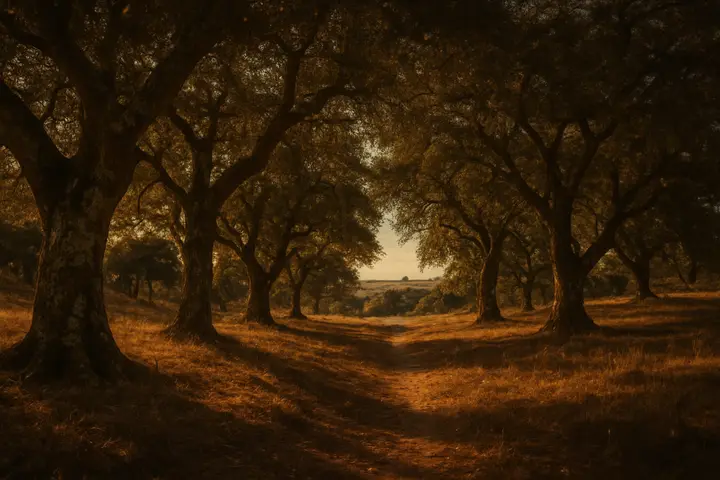
Don Quixote remains in the woods near El Toboso and charges Sancho to seek out Dulcinea and report back every gesture or sign that might reveal her feelings, instructing him to notice the smallest motions and inflections as proof of love. Sancho agrees and departs, but soon sits down to worry aloud: he questions whether the townspeople will beat him for presuming to look for a noble lady and debates how to handle his master's extravagant expectations. He resolves that the simplest remedy is to pretend—if a village girl will do as Dulcinea's image, he will present her as such, swear to it, and thereby free himself from future humiliating errands.
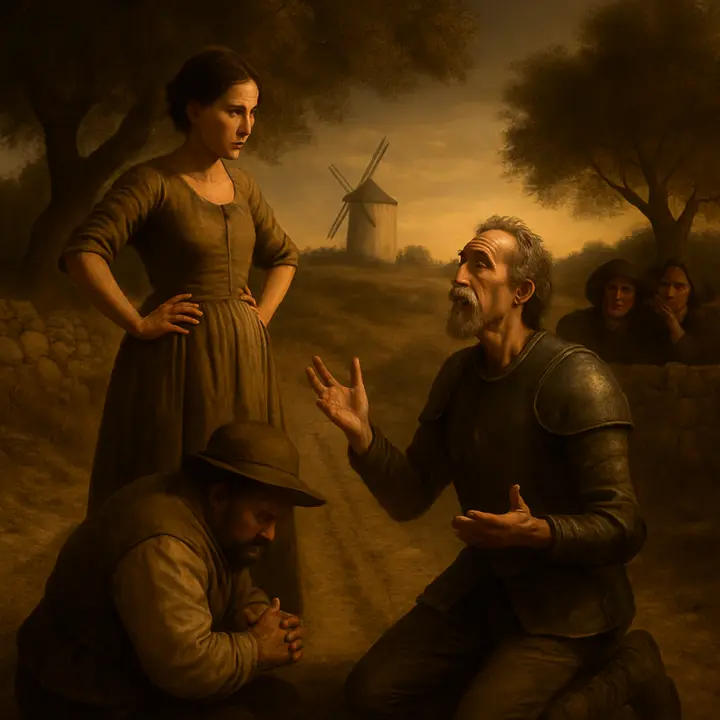
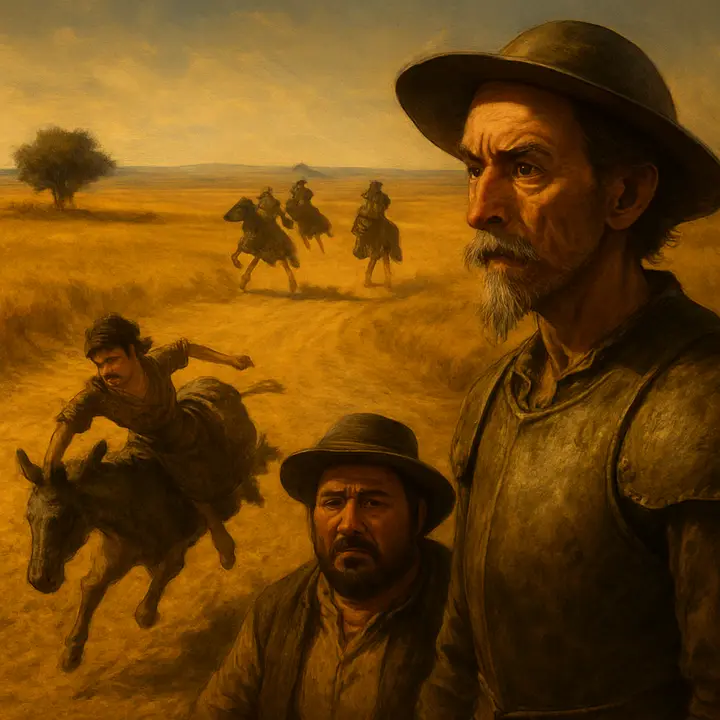
Sancho's luck changes when three country girls appear riding toward him. He races back to Don Quixote and announces that Dulcinea and two attendants are approaching in splendid attire. Don Quixote eagerly approaches, already convinced by Sancho's report, and both men kneel before the foremost girl. The peasant resists and speaks roughly, but Sancho persists in courtly flattery; Don Quixote, seeing only a peasant in place of his idealized lady, attributes the disparity to enchanters who have transformed Dulcinea’s appearance. After the girl’s ass bucks, she falls then remounts with skill; Don Quixote helps her, laments again at his misfortune, and Sancho privately smothers his amusement at having deceived his master. They ride off toward Saragossa, with Don Quixote still convinced of Dulcinea’s hidden perfection and Sancho content with his successful stratagem, though he anticipates more adventures and troubles ahead.
Key events
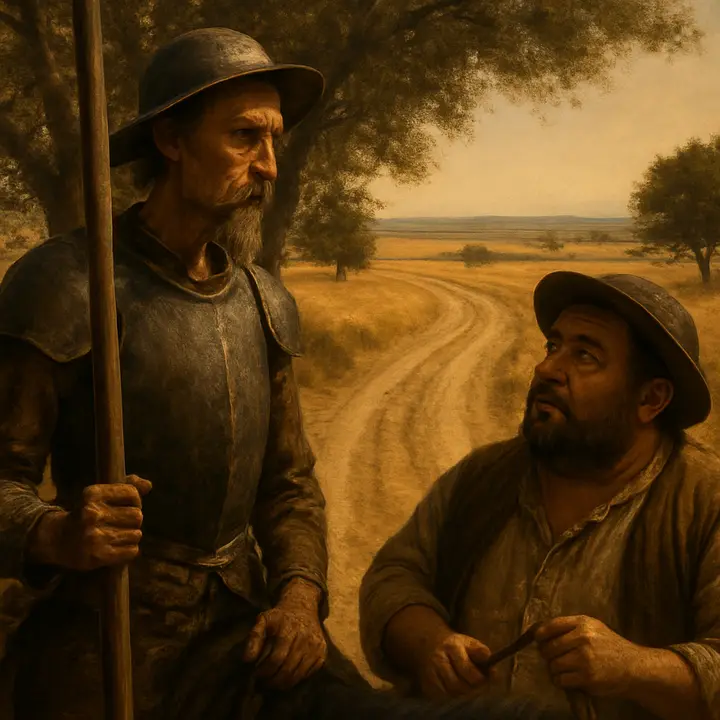
- Don Quixote orders Sancho to visit Dulcinea and observe her every gesture.
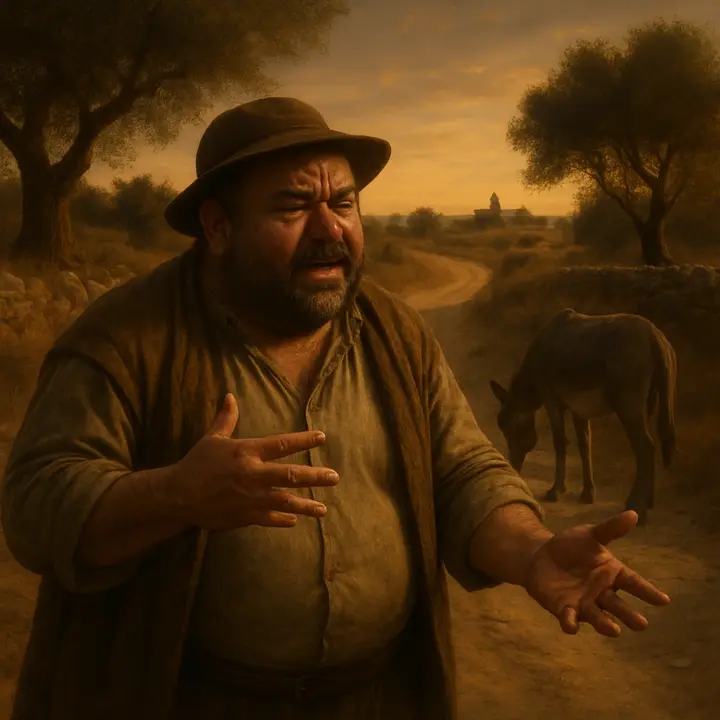
- Sancho worries about the danger and propriety of the errand and decides to fake Dulcinea if necessary.
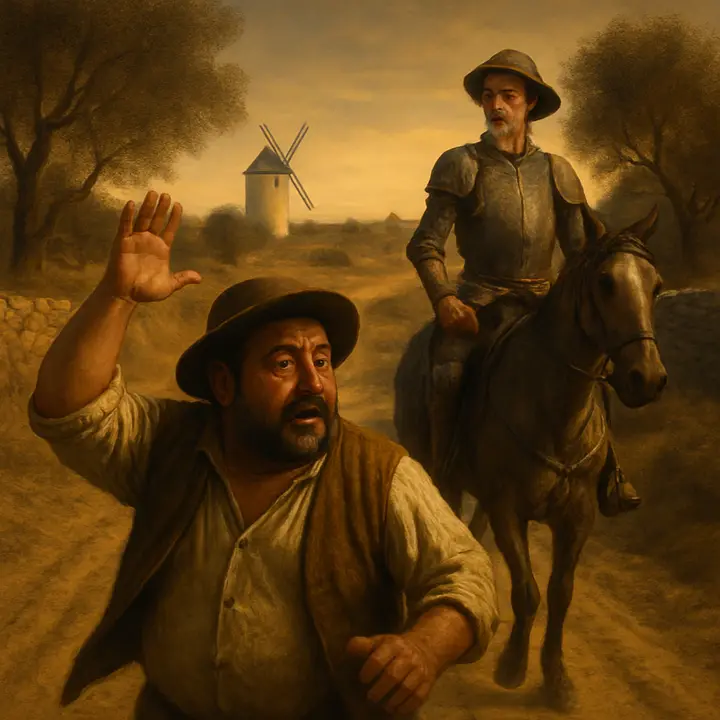
- Three peasant girls approach; Sancho seizes the chance and claims one is Dulcinea.
- Don Quixote kneels and addresses the peasant as his enchanted lady, blaming enchanters for her plainness.
- An ass bucks, the girl falls and remounts skillfully; Don Quixote laments his fate while Sancho conceals his laughter.
- They remount and set out for Saragossa, Don Quixote still convinced of Dulcinea’s hidden glory.
Chapter 10 in pictures
Analysis
This chapter stages a comic but telling reversal: Sancho’s resourceful deceit accommodates Don Quixote’s delusions while revealing the practical bond between them. The episode reinforces two central themes — the tension between appearance and reality, and the interplay of idealism and pragmatic cunning. Don Quixote’s persistent ascription of enchantment to explain discrepancies (ugliness, plain smell, rustic behaviour) shows how his chivalric ideology filters perception: he refuses ordinary explanations and interprets the world to preserve his narrative. Sancho’s willingness to fabricate Dulcinea demonstrates his survival strategy and his deepening role as interpreter and mediator; he manipulates appearances to protect himself and mollify his master, while secretly enjoying the irony. Structurally, the chapter functions as a small set-piece that both lightens the novel’s tone with slapstick and deepens characterization: Don Quixote’s lofty rhetoric about moles and moons contrasts with the earthy realism of the peasant girls and the bawdy details (garlic, a spike, a bucking donkey). Symbolically, Dulcinea’s transformation into a village girl highlights the novel’s recurring motif that names and titles (Dulcinea, knight-errant) can persist independent of empirical reality. Narratively, the episode advances plot by binding the pair together through complicity and setting them en route to new adventures, while Cervantes’ narrator self-consciously notes the scene’s improbability, inviting readers to question truth, authorship, and folly.
Important quotes
“"Go, my son," said Don Quixote, "and be not dazed when thou findest thyself exposed to the light of that sun of beauty thou art going to seek."”
Don QuixoteDon Quixote charges Sancho to seek Dulcinea and to observe every sign of her feeling, instructing him with grandiose language.
“"I am Sancho Panza, his squire, and he the vagabond knight Don Quixote of La Mancha, otherwise called 'The Knight of the Rueful Countenance.'"”
Sancho PanzaSancho theatrically addresses the foremost peasant girl, presenting his master and begging favour, part of his ruse to pass the village girl off as Dulcinea.
“"I see nothing, Sancho," said Don Quixote, "but three country girls on three jackasses."”
Don QuixoteDespite Sancho's flattering description, Don Quixote openly reports the plain appearance before invoking enchantment to explain the mismatch.
Characters in Chapter 10
- Don Quixote
- Sancho Panza
- Dulcinea del Toboso
- Rocinante
- Dapple
- three peasant girls
- enchanters
All chapter summaries ›Characters ›
Read Don Quixote illustrated
Every scene in these notes comes from the Book2Life reader, where the full public-domain text is illustrated as you read, with character portraits and narration. Free in your browser and on iPhone.
