Don Quixote Chapter 11 Summary
The Cart of Death
Don Quixote confronts a company of players on a cart dressed as Death and other figures, leading to a comic fracas and the rescue of Dapple.
Summary
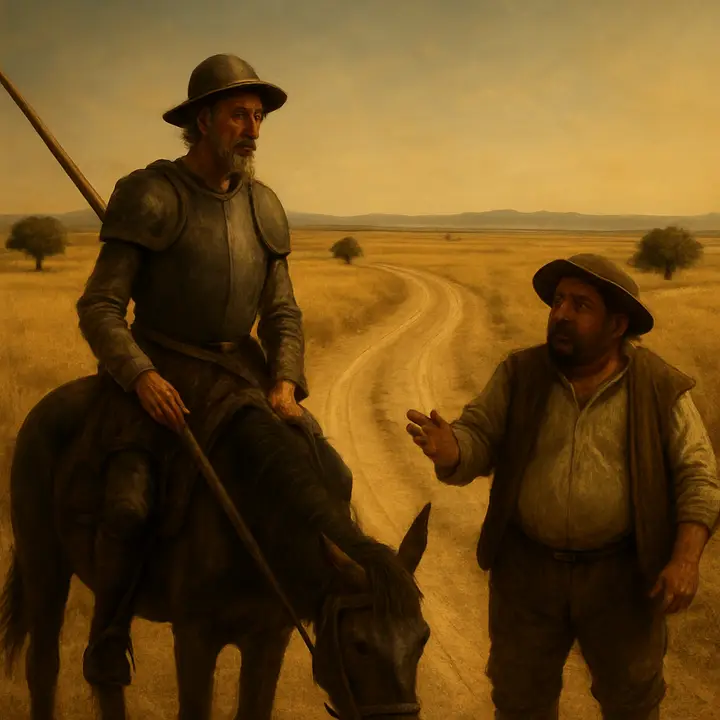
Don Quixote rides dejectedly, brooding over the enchantment that has transformed Dulcinea into a village girl; Sancho tries to cheer him and they debate whether others will recognize Dulcinea if presented to her. Their conversation ranges from proposals to test conquered knights’ recognition to Sancho’s practical worries about how giants and vanquished knights will find Dulcinea.
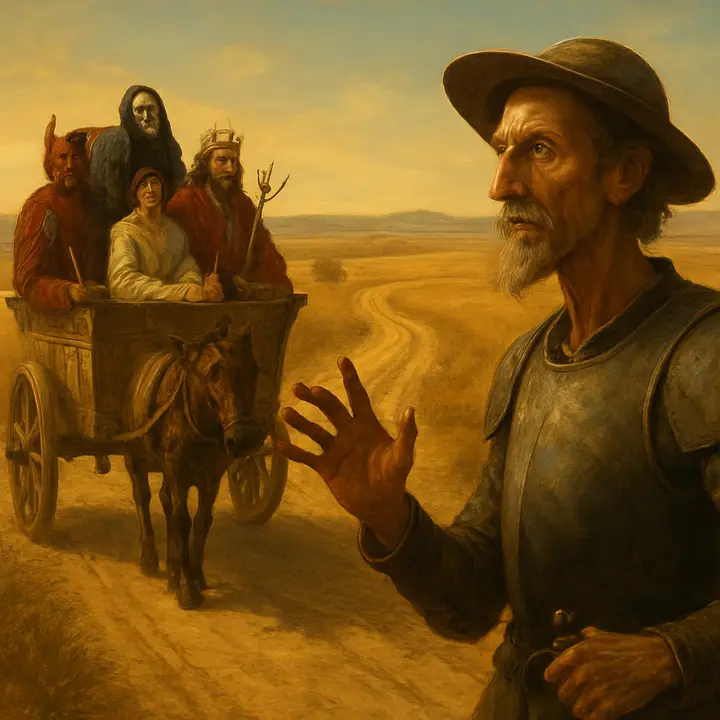
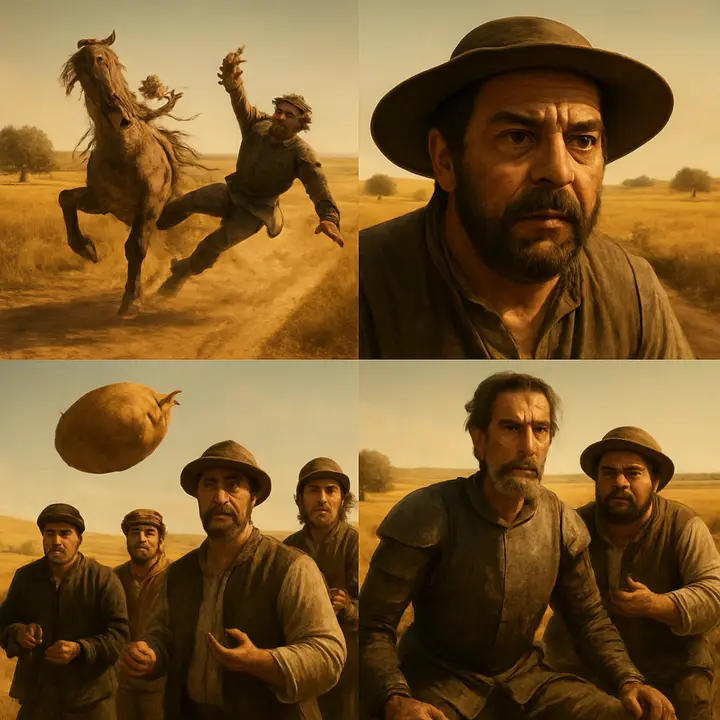
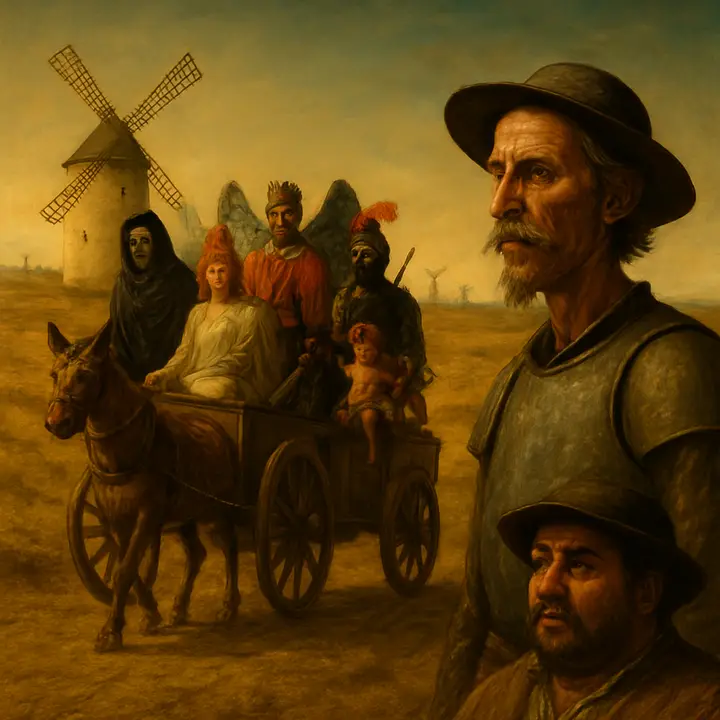
Their talk is interrupted by a cart crossing the road full of figures in theatrical costume — Death with a human face, an angel, an emperor, Cupid, a knight, and a devil who drives the mules — all actors on their way to perform “The Cortés of Death.” Don Quixote, expecting a true adventure, addresses the cart as if it were a dangerous apparition. A merry-andrew with bells and ox-bladders startles Rocinante and Dapple: Rocinante bolts and throws Don Quixote; Sancho chases to help but the jester leaps onto Dapple and drives him off toward the village. Sancho chooses to aid his master first; Don Quixote vows to recover Dapple but then sees the ass return and the jesting devil go on foot into town.
Angered, Don Quixote advances to punish the players; they leap down and arm themselves with stones. Sancho wisely counsels restraint, pointing out that actors are protected by public favor and that Don Quixote should not attack a group that includes Death and emperors. Convinced, Don Quixote withdraws, and the actors resume their journey as the two ride away to seek further adventures.
Key events
- Don Quixote and Sancho discuss Dulcinea’s enchantment and whether others can recognize her.
- A theatrical cart appears carrying figures representing Death, an angel, an emperor, Cupid, and a devil carter.
- A merry-andrew with bells and ox-bladders startles Rocinante; Don Quixote is thrown and Dapple is driven off.
- Sancho aids Don Quixote; Dapple returns while the merry-andrew continues to the village.
- Don Quixote threatens the actors; they arm themselves with stones, but Sancho persuades him to desist.
- Don Quixote withdraws; the players resume their journey and the pair continue seeking adventures.
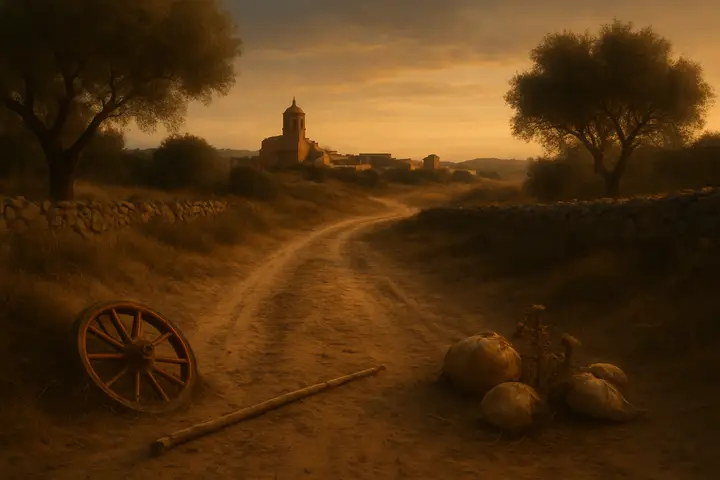
Chapter 11 in pictures
Analysis
This chapter juxtaposes Don Quixote’s chivalric seriousness and melancholy with comic, social reality represented by travelling actors. The theatrical cart — a miniature stage on wheels — forces Don Quixote to misread performance as supernatural menace, underlining Cervantes’s persistent theme: the blurred boundary between fiction and reality. The episode also develops the master–squire relationship: Sancho repeatedly plays the voice of pragmatic common sense, tempering Don Quixote’s impulsive honor-code with everyday wisdom (e.g., actors’ immunity through popular favor). The incident with Rocinante and Dapple provides physical comedy that exposes the absurd consequences of Don Quixote’s misapplied ideals; his eagerness to punish the players reveals his need to enact justice even where none is due.
Structurally, the episode functions as a self-contained adventure that both entertains and illustrates recurring motifs — performance, disguise, and the social complicity that protects performers. The cart’s figures (Death, angel, emperor, Cupid) are symbolic: a rudimentary danse macabre that mocks rank and suggests mortality’s democratic reach, yet here they are revealed as mere actors, tempering metaphysical dread with human artifice. Cervantes’s narrator remains largely unobtrusive, allowing dialogue and action to reveal character, while the chapter’s comic realism foreshadows further collisions between Don Quixote’s chivalric universe and the evolving social world around him.
Important quotes
“Señor, we are players of Angulo el Malo’s company; we have been acting the play of ‘The Cortés of Death’ this morning, which is the octave of Corpus Christi, in a village behind that hill, and we have to act it this afternoon in that village which you can see from this;”
the devilThe devil (the carter) calmly explains that the frightening figures are merely actors on their way to perform a play, deflating Don Quixote’s assumption of supernatural peril.
“I want to teach you how to treat asses and animals that serve the squires of knights-errant for steeds.”
Don QuixoteDon Quixote loudly threatens the theatrical troupe after believing they have mistreated Dapple, prompting them to arm themselves with stones.
Characters in Chapter 11
- Don Quixote
- Sancho Panza
- Rocinante
- Dapple
- Death
- Angel
- Cupid
- Emperor
- the devil
- the merry-andrew
- players of Angulo el Malo’s company
- Angulo el Malo
- Dulcinea del Toboso
All chapter summaries ›Characters ›
Read Don Quixote illustrated
Every scene in these notes comes from the Book2Life reader, where the full public-domain text is illustrated as you read, with character portraits and narration. Free in your browser and on iPhone.
