Don Quixote Chapter 2 Summary
First Sally from Home
Don Quixote leaves at dawn in patched armour, imagines an inn as a castle, courts two girls, and is lodged and fed there while fretting he is not yet a knight.
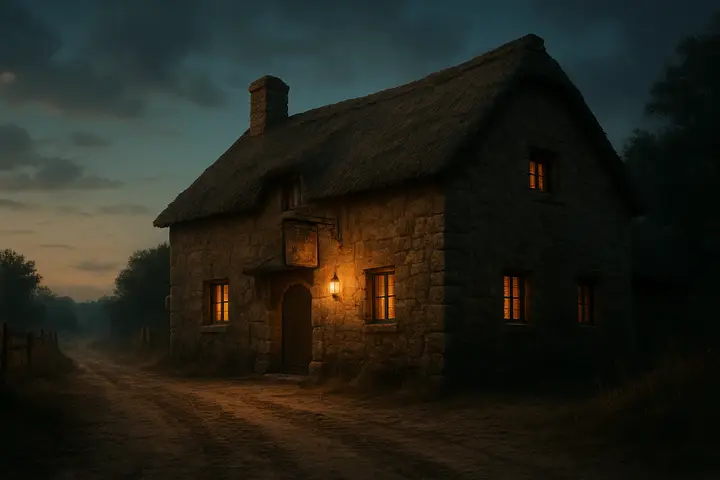
Summary
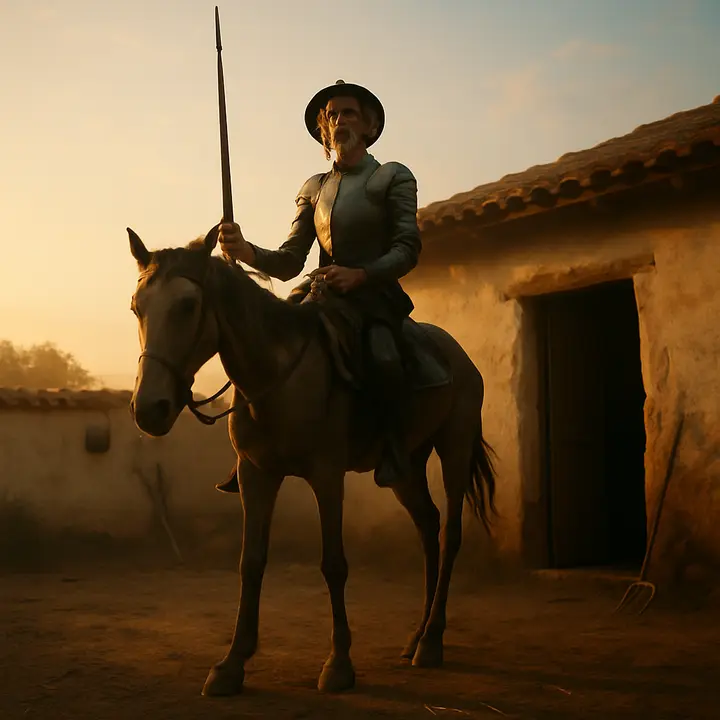
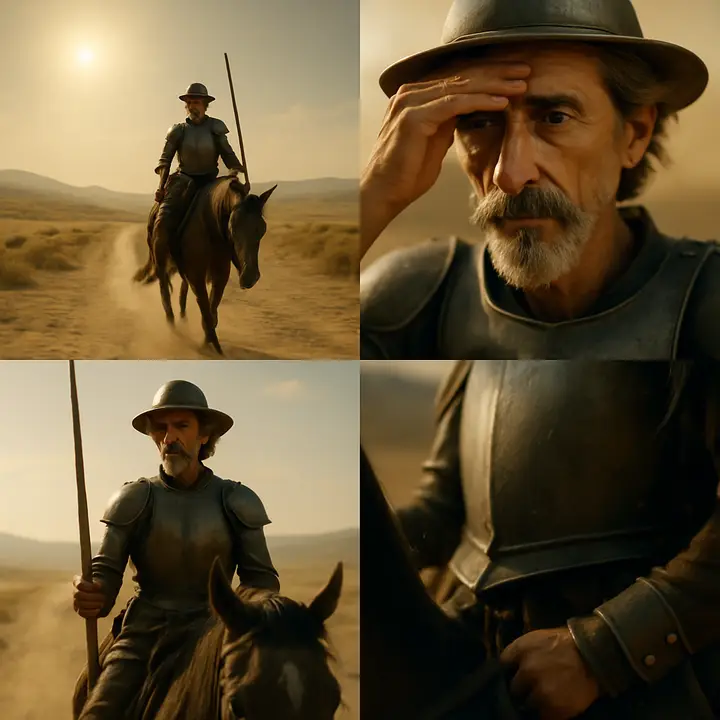
After deciding he must begin his career at once, the would-be knight dresses in his improvised armour, mounts his old horse Rocinante, and rides out before dawn on a July morning. He quickly worries that he has not yet been dubbed and that chivalric rules might forbid his actions; still, his obsession with the books that made him resolves him to improvise a knighting when the opportunity comes and to polish his armour later. He talks grandly to himself as he rides across the plain, picturing how a future chronicler will celebrate his departure and addressing vows and compliments to an imagined lady, Dulcinea.
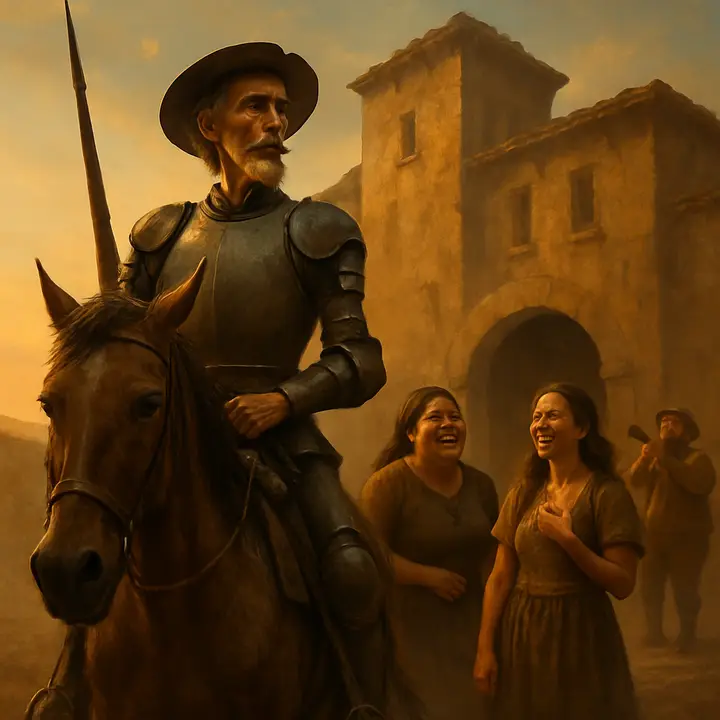
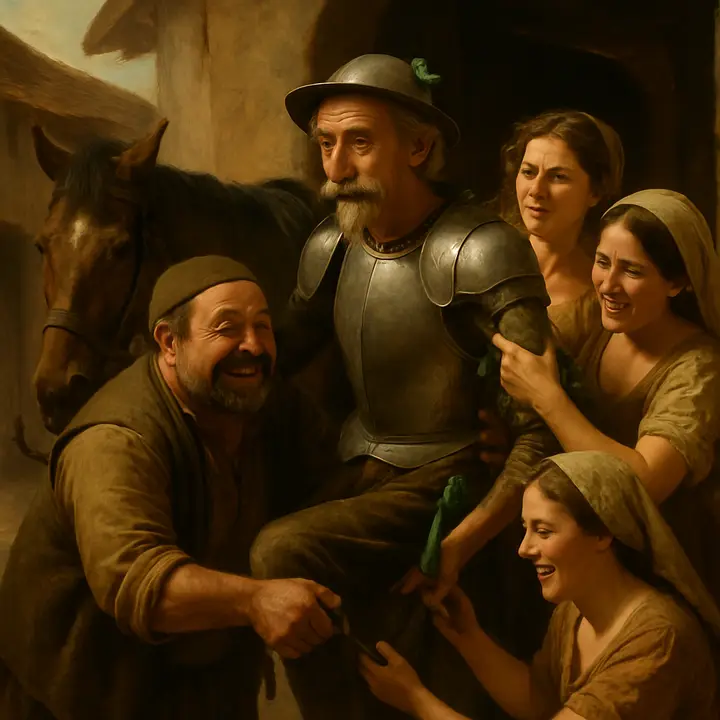
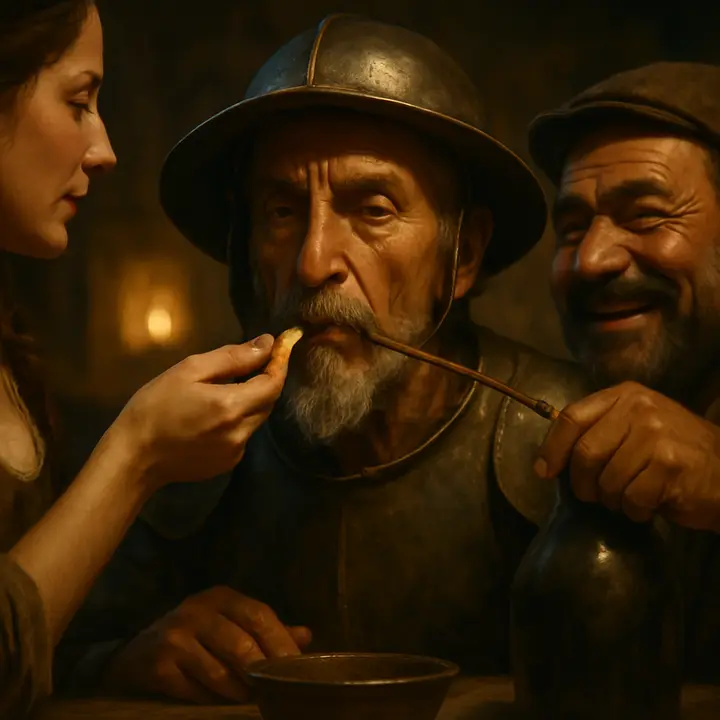
After a long, uneventful day on the road he and Rocinante arrive tired and hungry at a humble inn which, to Don Quixote's inflamed imagination, becomes a noble castle. Two local girls at the doorway appear to him as highborn ladies; a swineherd's horn sounds like a trumpet. He dismounts awkwardly, proclaims himself a knight and offers service, and his odd dress and language provoke laughter from the girls. The innkeeper, amused but cautious, treats him with a mixture of mock respect and practicality, showing him the meagre provisions (stockfish and coarse bread). Don Quixote keeps his helmet fastened with green ribbons and is obliged to be fed and watered through small devices because he will not let the knots be cut. He accepts the hospitality as if it were a lordly reception, and yet remains preoccupied by the fact that he has not been formally dubbed a knight and therefore cannot properly undertake adventures.
Key events
- Don Quixote leaves home at dawn wearing patched armour and mounts Rocinante.
- He worries he has not been dubbed and vows to be knighted by the first person he meets.
- He travels all day, addressing Dulcinea and imagining himself in epic prose.
- At dusk he finds an inn which he envisions as a castle and mistakes two girls for ladies.
- The innkeeper receives him; Don Quixote keeps his helmet tied and is awkwardly served stockfish and bread.
- Despite the poor lodging, he treats the inn as a castle and frets about not being a knight.
Chapter 2 in pictures
Analysis
This chapter establishes the comic mismatch between Don Quixote's romantic, book-learned idealism and the prosaic reality of 17th-century rural life. Cervantes uses free indirect style and long, mock-eloquent monologues to show how Don Quixote's inner narrative reshapes the world: ordinary details (an inn, a swineherd, stockfish) are transposed into the language and expectations of chivalric romance. That transposition both generates humor and begins to define the novel's central irony — the tension between representation and reality. The episode also introduces key structural patterns: Don Quixote's self-fashioning through language (he composes his own origin-scenes and petitions a chronicler), his ritualized behavior (armor, oath, address to a lady), and his persistent obedience to bookish rules (the need to be dubbed). The inn-as-castle motif becomes a recurring symbol of his delusion, and his refusal to remove the helmet—despite practical inconvenience—signals how firmly his invented identity controls his actions. Cervantes also foreshadows social responses to Don Quixote: laughter, tolerant manipulation by pragmatic figures (the innkeeper), and the small kindnesses that enable his quest. Narratively, the chapter moves the hero from private obsession into public exposure, initiating the pattern of episodic encounters that will structure the novel.
Important quotes
“My armour is my only wear, My only rest the fray.”
Don QuixoteHe declares a knight's identity and willingness to endure hardship, asserting chivalric values to the innkeeper.
“Your ladyships need not fly or fear any rudeness, for that it belongs not to the order of knighthood which I profess to offer to anyone, much less to highborn maidens as your appearance proclaims you to be.”
Don QuixoteDon Quixote courteously addresses the two girls at the inn, mistaking them for noble ladies and revealing his delusional role-playing.
“Oh, never, surely, was there knight So served by hand of dame, As served was he, Don Quixote hight, When from his town he came;”
Don QuixoteHe recites a mock-ballad adapting chivalric verse to announce his name and to dramatize his arrival at the 'castle' (the inn).
Characters in Chapter 2
All chapter summaries ›Characters ›
Read Don Quixote illustrated
Every scene in these notes comes from the Book2Life reader, where the full public-domain text is illustrated as you read, with character portraits and narration. Free in your browser and on iPhone.
