Don Quixote Chapter 21 Summary
Mambrino’s Helmet
Don Quixote mistakes a barber’s brass basin for the enchanted Helmet of Mambrino, claims it after charging the barber, and dreams aloud of fame and kingship.
Summary
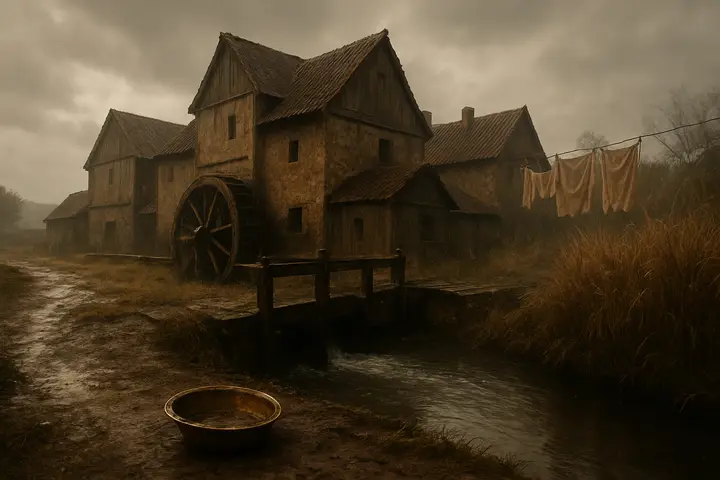
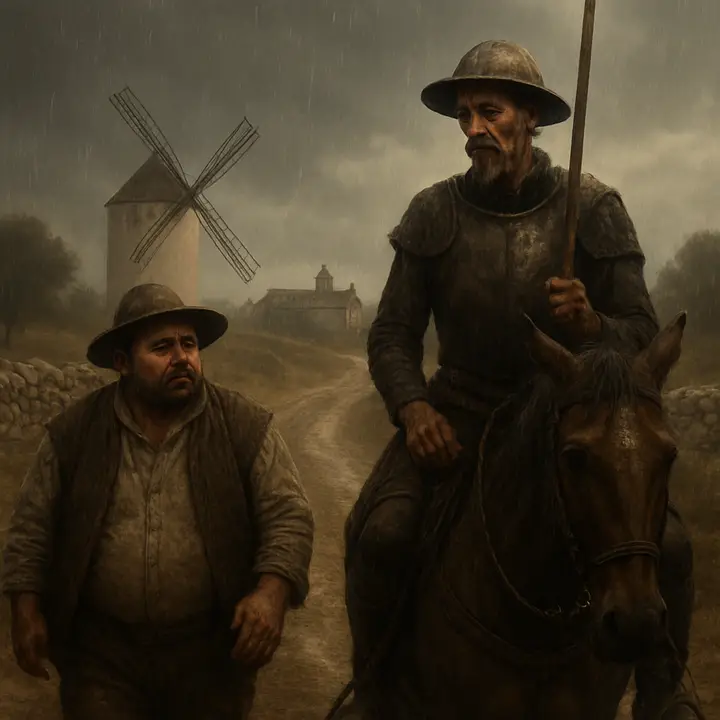
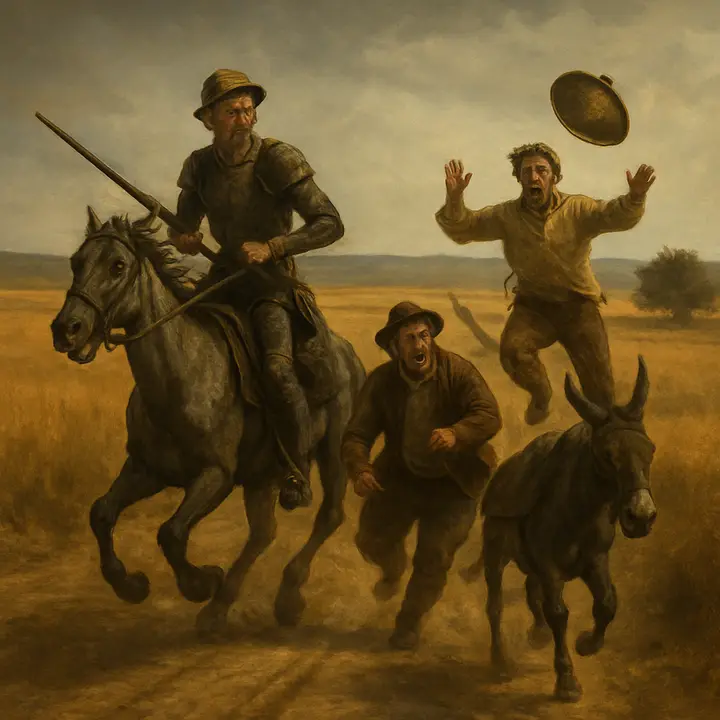
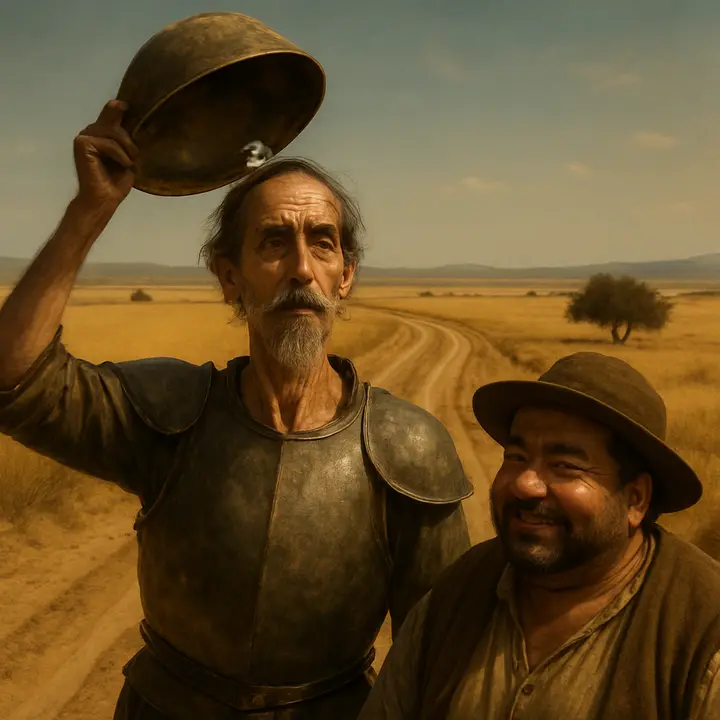
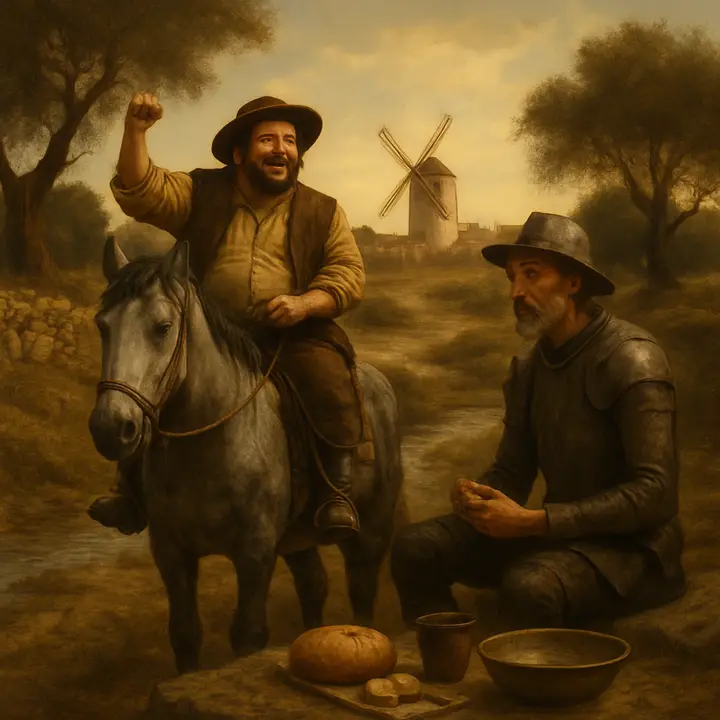
Don Quixote and Sancho leave the feared fulling mills and take a different road in the rain. Don Quixote spots a figure whose headpiece gleams like gold and, convinced he sees the legendary helmet of Mambrino on a noble steed, insists on charging at him. The fleeing figure proves to be a barber riding a grey ass with a brass basin on his head to keep off the rain; he leaps down and runs away, leaving the basin behind. Don Quixote proclaims the basin the famous helmet, places it on his head despite its imperfect fit, and explains how he will have it restored by a smith.
After the episode with the basin, Sancho debates taking the grey ass or its trappings; Don Quixote demurs on taking spoil but permits Sancho to change the trappings given the doubt. They eat from the earlier plunder and ride on. Sancho then voices a practical complaint: their solitary, obscure wanderings will not win fame or reward because no court chronicler will record their deeds. Don Quixote answers with an extended, idealized fantasy of the knight-errant’s rise—winning adventures, entering a royal court, gaining a princess’s love, fighting in wars, being recognized and elevated to royalty, and rewarding his squire with marriage and titles. Sancho eagerly accepts this vision, imagining himself made a count, and the two trade comic reflections on status, barbers, equerries, and appearances as they continue along the road.
Key events
- Don Quixote sees a shining headpiece and resolves to seize Mambrino’s helmet.
- He charges the unsuspecting barber, who flees, leaving a brass basin behind.
- Don Quixote crowns himself with the basin and declares it the enchanted helmet.
- Sancho debates taking the grey ass; Don Quixote allows changing the trappings.
- They eat, resume travel, and Sancho complains their exploits go unnoticed.
- Don Quixote spins an elaborate fantasy of fame, kingship, and rewards for his squire.
Chapter 21 in pictures
Analysis
This chapter blends comic incident and idealized fantasy to highlight the gap between Don Quixote’s chivalric imagination and mundane reality. The misrecognition of the barber’s basin as Mambrino’s helmet is a recurring device in the novel: ordinary objects become instruments of illusion under Don Quixote’s gaze, demonstrating how perception shapes his identity as a knight-errant. The scene satirizes both the hero’s delusions and social pretensions—Don Quixote insists on ritual propriety (not taking spoil) even as he fabricates grandeur, while Sancho represents earthy practicality and opportunism, willing to profit from trappings when given license.
Narratively, the basin episode offers a compact comic set-piece that sustains character dynamics: Don Quixote’s authoritative rhetoric and dramatic gestures versus Sancho’s skeptical, prosaic commentary. The long dream-vision of courtly elevation that follows functions as a foil—an extended instance of chivalric fantasy that reveals Don Quixote’s motives (aspiration for honor and legacy) and offers Sancho hope (advancement and marriage). The chapter also advances structural motifs: performance and storytelling (the knight’s need for an audience and chronicling), social mobility (the promise of titles), and the interplay of small, concrete actions (changing trappings, eating spoils) with grand narratives of destiny. The brass basin/helmet serves as a symbol of transformed perspective—how meaning is conferred by belief—and foreshadows further collisions between illusion and the everyday world.
Important quotes
“I think, Sancho, there is no proverb that is not true, all being maxims drawn from experience itself, the mother of all the sciences, especially that one that says, ‘Where one door shuts, another opens.’”
Don QuixoteDon Quixote rationalizes their change of fortune on seeing the shining headpiece he believes is Mambrino’s helmet and prepares to engage the supposed knight.
“By God the basin is a good one, and worth a real of eight if it is worth a maravedis,”
Sancho PanzaSancho appraises the abandoned brass basin pragmatically, undercutting Don Quixote’s pretensions by calling it an ordinary barber’s object of modest value.
Characters in Chapter 21
All chapter summaries ›Characters ›
Read Don Quixote illustrated
Every scene in these notes comes from the Book2Life reader, where the full public-domain text is illustrated as you read, with character portraits and narration. Free in your browser and on iPhone.
