
The Barber in Don Quixote
Major character
Master Nicholas, the village barber: practical friend of the curate who helps scheme to restrain, retrieve, and prank Don Quixote.
Who is The Barber?
Master Nicholas, the barber of Don Quixote’s village, is a practical, commonsense man who collaborates closely with the curate to manage the knight’s madness. He takes part in the library scrutiny that determines which chivalric books are to be burned or spared, helping to shape the attempt to cure Don Quixote by attacking the literary source of his delusions. When Don Quixote begins his sallies, the barber joins ruses—disguising himself as a squire in a rescue plot and later assisting in the Princess Micomicona stratagem—playing a key role in theatrical deceptions that alternately comfort and control the knight. On the road and at inns he supplies comic grounding (for example, the basin-helmet episode) and intervenes in disputes, at times yielding to the jesting world around Don Quixote while protecting him from greater harm. He travels with the party that escorts the bound knight home, participates in debates about the value of romances, and returns to care for Don Quixote in his final illness. Throughout, the barber blends earthy humor with loyalty and practical action.
In the book: Known as Master Nicholas, the village barber is a down‑to‑earth friend of the priest who helps devise schemes to protect and retrieve Don Quixote from his misguided adventures. He serves as a pragmatic foil to the knight’s fantasies, assists in the infamous scrutiny of Don Quixote’s library, and joins comic ruses on the road and at inns, grounding the story’s satire through commonsense interventions without overshadowing its hero.
Personality
- Pragmatic
- He helps the curate inspect and purge Don Quixote’s library (Chapter 6) and wall up the book-room to explain its disappearance (Chapter 7).
- Loyal
- He accompanies the curate in disguises to fetch Don Quixote from the Sierra Morena and later follows in the escort that carries Don Quixote home (Chapters 27, 47).
- Comic
- He is the traveling barber whose brass basin is mistaken for Mambrino’s helmet and whose basin is at the center of jokes at inns (Chapter 21, 45).
- Resourceful
- He rigs disguises (beard of an ox-tail, squire’s costume) and rehearses parts in the rescue plan that persuades Don Quixote to leave his penance (Chapter 27).
- Grounding voice
- He takes part in debates with the canon and curate about the harm and absurdity of chivalric books, offering a sober perspective amid the company’s entertainments (Chapter 48).
Character arc
From his early appearances the barber is a sober, down-to-earth interlocutor who helps the curate confront Don Quixote’s obsession with romances: he participates in the mock-judicial scrutiny of the library and supports the concealment and theatrical explanations that follow. When Don Quixote embarks on further sallies, the barber moves from domestic intervention to active fieldwork—joining disguises and staged scenes designed to lure Don Quixote away from self-destructive penances and to reintegrate him into ordinary life. Along the road and at inns he oscillates between indulging the knight’s fantasies (playing along with the basin-as-helmet joke) and protecting him from humiliation or danger (helping restrain fights, assisting in the ox-cart return). In later episodes he continues to serve as a steady companion in the party that negotiates social conflicts and reconciliations (the Dorotea/Cardenio episodes) and ultimately attends Don Quixote in his last illness. He remains reliably pragmatic and affectionate throughout; he does not undergo dramatic moral change but deepens his role from adviser and critic to active caretaker, moving from intellectual remedy (burning books) to practical compassion at Don Quixote’s deathbed.
The Barber in pictures


Relationships
- The Priest Collaborator and close ally: they jointly inspect the library, plan deceptions, and escort Don Quixote back to the village.
- Don Quixote Object of his concern: he alternately corrects, deceives, and protects Don Quixote in attempts to cure or control his knightly mania.
- Sancho Panza Friend of convenience and fellow participant: he encounters Sancho on the road, joins in comic episodes, and helps manage incidents involving Sancho and his master.
- Samson Carrasco Co-conspirator in interventions: the barber coordinates with Samson and the curate in schemes meant to restrain or guide Don Quixote.
- Dorothea Participant in staged chivalric theatrics: he assists Dorothea’s Princess Micomicona ruse to rouse Don Quixote from his penitent solitude.
- Don Fernando Acquaintance in the inns’ company: he interacts with Don Fernando during inn disputes and reconciliations where the barber helps mediate and support the curate’s plans.
Quotes by The Barber
“Here, your worship, señor licentiate, sprinkle this room; don’t leave any magician of the many there are in these books to bewitch us in revenge for our design of banishing them from the world.”
Chapter 6The housekeeper offers holy water and a sprinkler, comically treating books as sources of witchcraft to be purged.
“Take it home with you and read it, and you will see that what I have said is true.”
Chapter 6After praising Tirante el Blanco at length, the curate instructs the barber to keep and read it, revealing his selective admiration.
“I cannot understand how that can be, for in truth to my mind there is no better reading in the world, and I have here two or three of them, with other writings that are the very life, not only of myself but of plenty more;”
Chapter 32The innkeeper defends books of chivalry as beloved entertainment for his workers and customers.
“We want my friend’s housekeeper and niece here now.”
Chapter 32The barber jokes about needing female accomplices to act out parts from their stratagems, highlighting the theatricality of their plot.
“Well then, attend to me everyone, for the novel begins thus.”
Chapter 32After finding a manuscript titled “Novel of the Ill-advised Curiosity,” the curate prepares to read it aloud to the assembled company, initiating a story-within-the-story.
“May I die," said the landlord at this, "if Don Quixote or Don Devil has not been slashing some of the skins of red wine that stand full at his bed’s head, and the spilt wine must be what this good fellow takes for blood;”
Chapter 35The landlord recognizes the damage Don Quixote has done to the wine-skins and explains Sancho's mistake about 'blood.'
Why The Barber matters
The barber functions as the novel’s practical corrective to romantic excess: he embodies everyday reason, humor, and communal resourcefulness that counterbalance Don Quixote’s fantasies. Through his participation in the library purge and the staged deceptions, the barber helps dramatize the book’s central tensions between fiction and reality, showing how social order copes with disruptive imagination. His comic role—especially in the basin-helmet episodes and inn scenes—exposes the performative nature of knighthood while his loyalty and care in later chapters underscore themes of friendship, responsibility, and humane management of madness. In short, the barber ties satire to compassion: he mocks and restrains without cruelty, keeping the narrative balanced between ridicule and protection.
Chapters with The Barber
More Don Quixote characters
 Don QuixoteProtagonist
 Sancho PanzaMajor character
 Dulcinea del TobosoMinor character
- RRocinanteMajor character
 The DukeMajor character
- DDappleMinor character
 Cide Hamete BenengeliNarrator
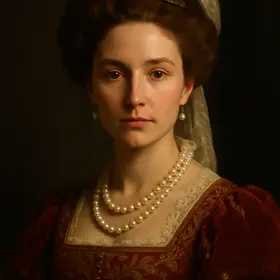 The DuchessMajor character
All chapter summaries ›Characters ›
Read Don Quixote illustrated
Every scene in these notes comes from the Book2Life reader, where the full public-domain text is illustrated as you read, with character portraits and narration. Free in your browser and on iPhone.
