Don Quixote Chapter 29 Summary
The Enchanted Bark
Don Quixote and Sancho find an unmoored boat they believe is enchanted, set out on the river, attack millers, and are rescued and paid for the wrecked boat.
Summary
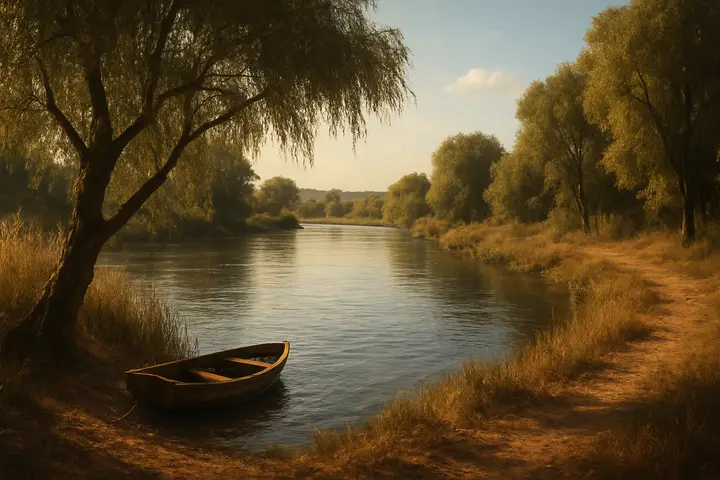
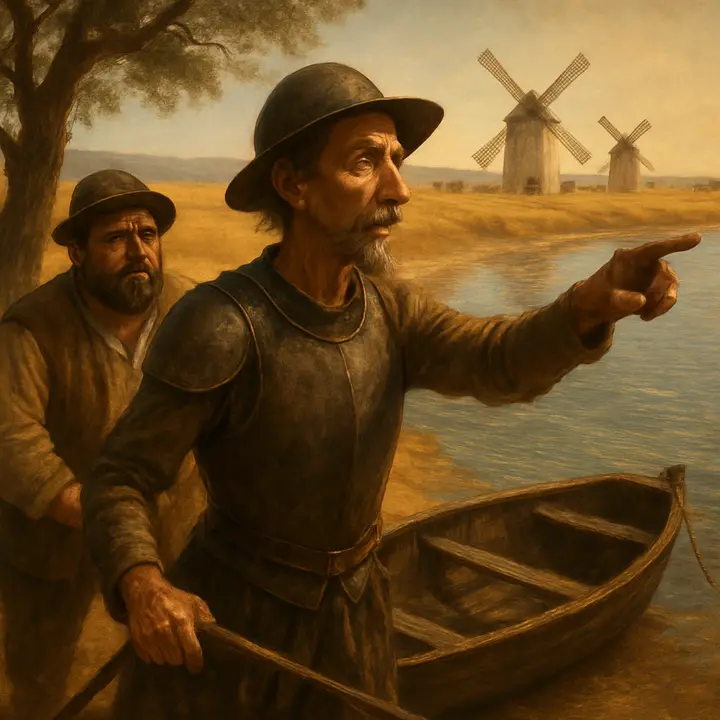
Two days after leaving the grove, Don Quixote and Sancho reach the river Ebro. Don Quixote admires the river and recalls the Cave of Montesinos; despite Sancho’s skepticism, Don Quixote insists that a small boat tied to a tree is an enchanted bark placed there to transport him to some knight or noble in distress. He forces Sancho to dismount, tie their animals, and embark, convinced that enchanters supply such vessels in chivalric adventures.
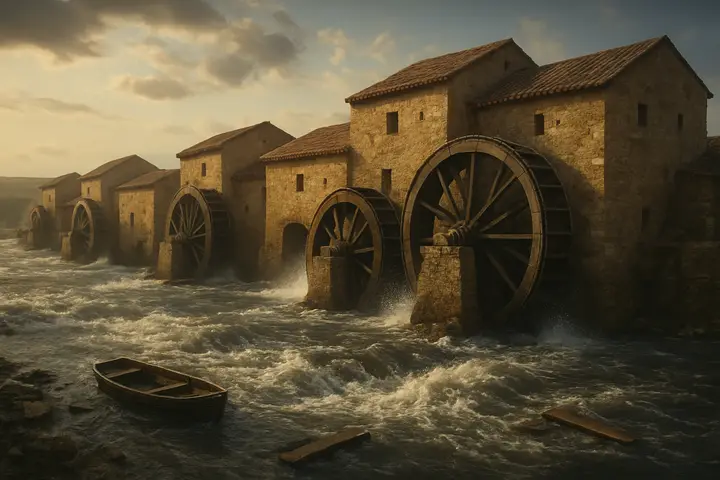
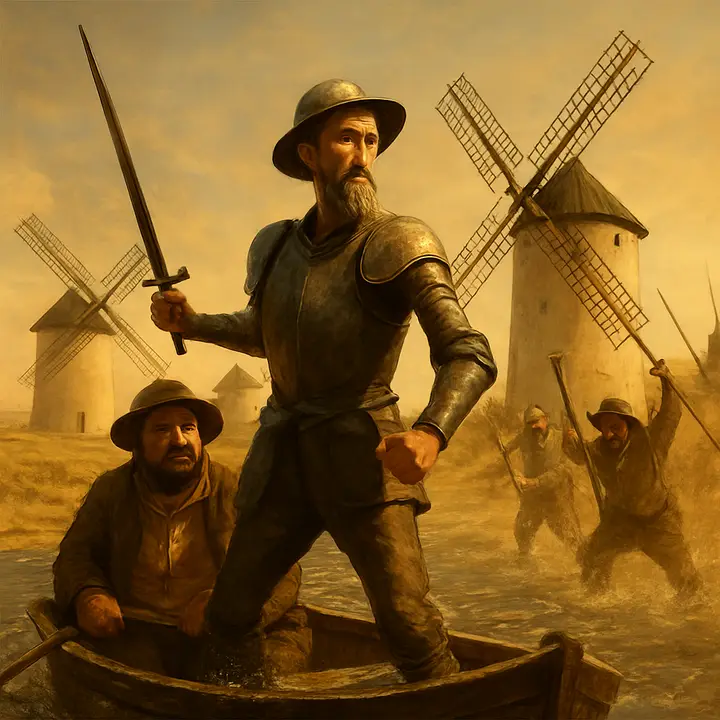
The current carries them downriver toward a line of watermills in the middle of the stream. Sancho frets and performs Don Quixote’s suggested tests for crossing the equinoctial line in comic fashion, while Don Quixote interprets the mills as a fortress imprisoning some distressed person whom he must free. He loudly berates the millers, draws his sword, and attempts to challenge them; the millers try to stop the drifting boat with poles but in the effort overturn the craft and throw Don Quixote and Sancho into the water. The millers and fishermen rescue them and demand payment for the damaged boat. Don Quixote pays fifty reals, insists the supposed imprisoned person remains unreleased, and the men conclude the pair are mad and go back to their work. Don Quixote and Sancho remount their animals and continue on, the episode ending as another ill-fated but character-revealing adventure.
Key events
- Don Quixote and Sancho arrive at the river Ebro and find a small unmoored boat.
- Don Quixote interprets the boat as enchanted and insists on embarking.
- They drift toward river mills which Don Quixote sees as a fortress imprisoning someone.
- Don Quixote threatens the millers and attacks; the millers try to stop the boat.
- Boat is dashed; Don Quixote and Sancho are thrown into the water and rescued.
- Don Quixote pays the fishermen fifty reals for the wrecked boat; the millers leave, calling them mad.
Chapter 29 in pictures
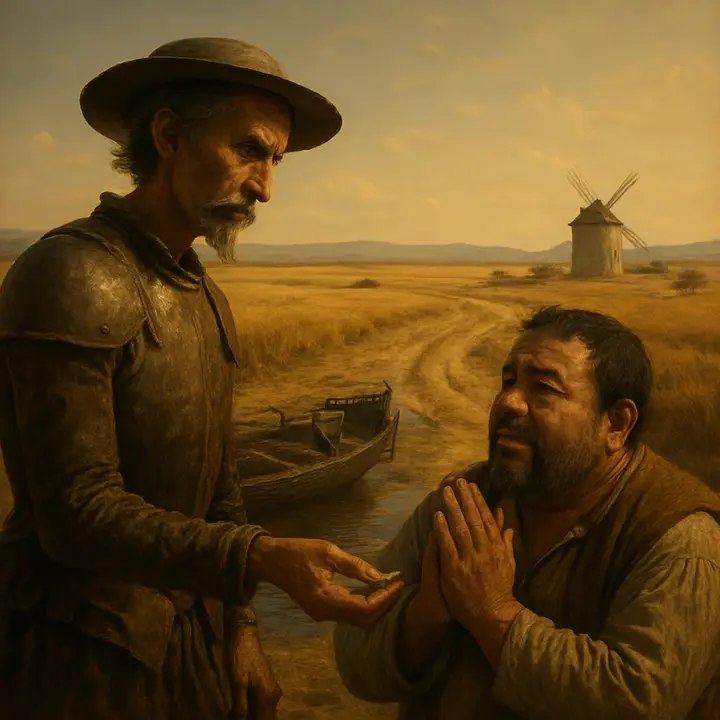
Analysis
This chapter continues the novel’s recurring collision between chivalric delusion and prosaic reality. Don Quixote’s interpretation of ordinary objects (a simple boat, river mills) as enchanted instruments and fortresses dramatizes his devotion to the romance code: he reads the world through narrative expectations, so signs of enchantment proliferate. Sancho functions as the skeptical foil, providing earthy common sense and comic resistance; his pragmatic tests and plaintive prayers underline the absurdity and danger of Don Quixote’s interpretive method. The episode emphasizes two themes: the power of stories to remake perception, and the social consequences of living by those fictions. Structurally, the chapter is a self-contained set piece — a familiar pattern of discovery, misreading, confrontation, and restorative but costly return to baseline — that reinforces the episodic nature of Cervantes’s narrative.
Symbolically, the river suggests movement between worlds (land/sea, reason/madness), while the mills stand in as mock-castles, transforming labor into imagined chivalric obstacle. Cervantes also refines his narrative technique here: the narrator stays close to Don Quixote’s point of view enough to render his grandiose language and confident misreadings, while allowing omniscient commentary and comic distance through Sancho’s reactions and the pragmatic millers. The payment for the boat and the men’s pragmatic verdict that the pair are mad restore quotidian reality, undercutting the knight’s grandeur and reminding readers that heroic narration does not alter social fact or material consequences.
Important quotes
“Thou must know, Sancho, that this bark is plainly, and without the possibility of any alternative, calling and inviting me to enter it”
Don QuixoteDon Quixote explains to Sancho why the untended boat must be an enchanted conveyance meant to carry him to someone in need.
“What art thou afraid of, cowardly creature? What art thou weeping at, heart of butter-paste?”
Don QuixoteDon Quixote scolds Sancho for his fear while they are drifting away from the bank, exposing the contrast between the knight’s zeal and his squire’s anxiety.
“Ill-conditioned and worse-counselled rabble, restore to liberty and freedom the person ye hold in durance in this your fortress or prison”
Don QuixoteStanding in the boat, Don Quixote loudly demands the millers release the supposed prisoners he imagines to be confined in the mills.
Characters in Chapter 29
- Don Quixote
- Sancho Panza
- Rocinante
- Dapple
- millers
- fishermen
All chapter summaries ›Characters ›
Read Don Quixote illustrated
Every scene in these notes comes from the Book2Life reader, where the full public-domain text is illustrated as you read, with character portraits and narration. Free in your browser and on iPhone.
