Don Quixote Chapter 28 Summary
Retreat, Remorse, and Wages
After fleeing a hostile crowd, Don Quixote and a bruised Sancho talk about prudence, promises, and pay before camping in a grove overnight.
Summary
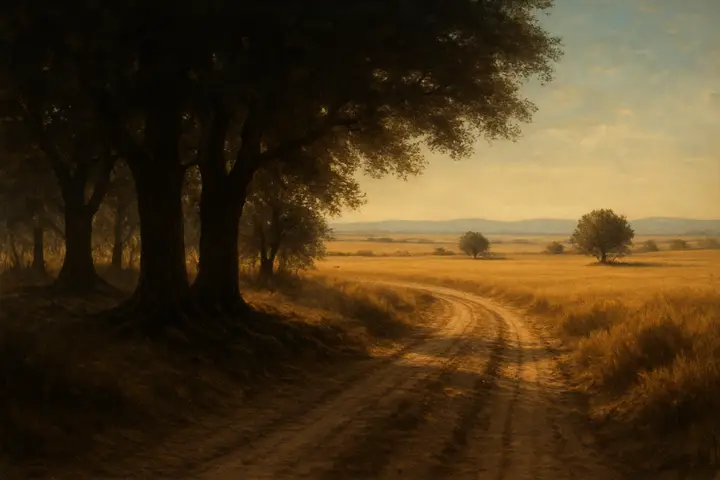
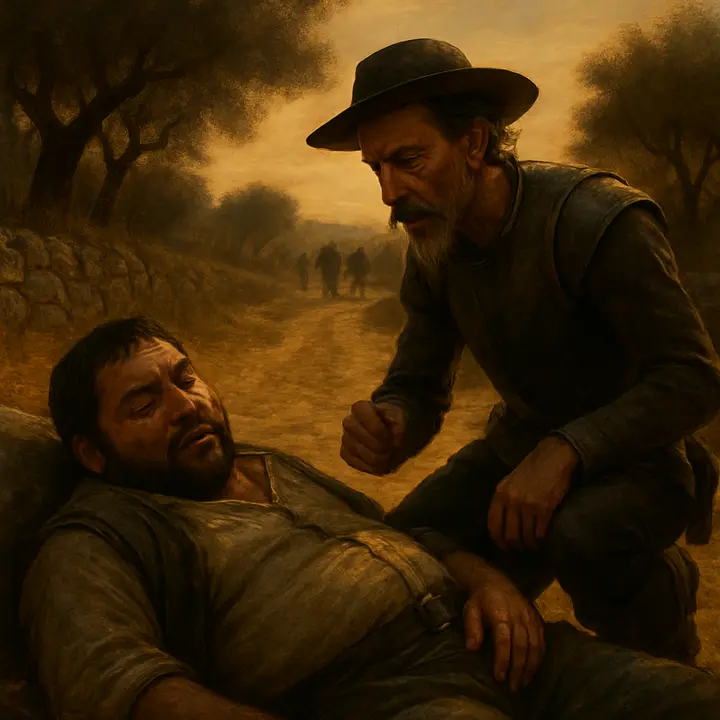
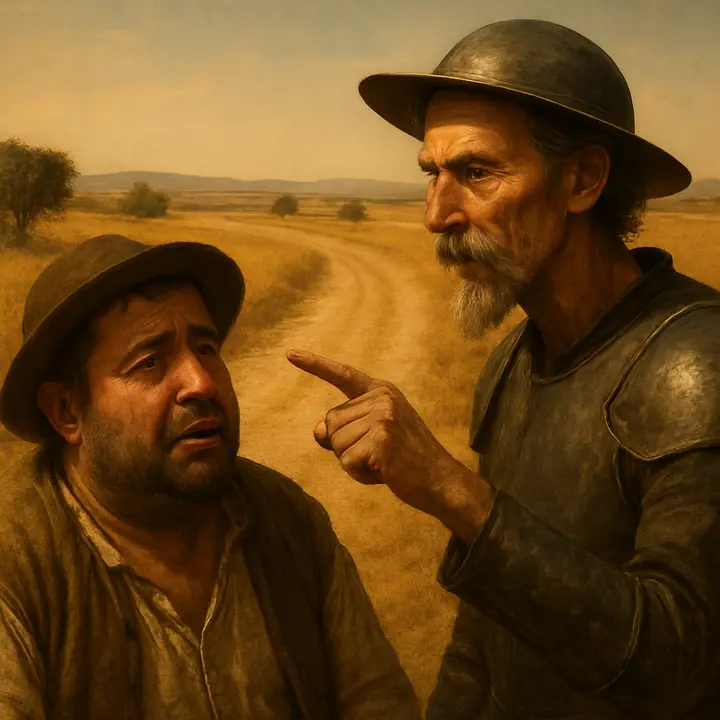
Don Quixote retreats from a violent townsfolk attack, leaving Sancho briefly behind; Sancho catches up, exhausted and bruised, and dismounts Dapple at Rocinante’s feet. Don Quixote inspects him, rebukes Sancho for “braying” in the face of danger, and argues that his withdrawal was prudent reservation, not cowardice. They mount again and move slowly toward a nearby grove.
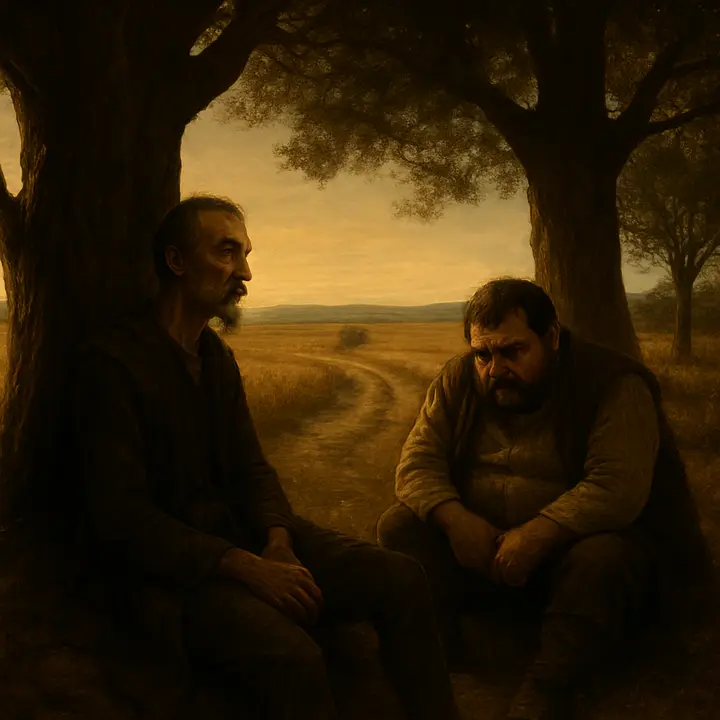
As they ride, Sancho complains bitterly about his sore back, the hard life of a squire, and the unkept promise of an island; he contrasts his current privations with the steadier life of farm work and lists the rare comforts he has enjoyed since joining Don Quixote. Don Quixote counters with a mock-accounting of wages and mock-offense at Sancho’s bargaining, launching into a theatrical denunciation of Sancho’s ingratitude. Sancho, ashamed, begs forgiveness and promises better conduct. They rest overnight under separate trees, Sancho suffering from the evening chill, and at dawn they resume their quest for the banks of the Ebro.
Key events
- Don Quixote withdraws from the angry townsfolk and distances himself.
- Sancho rejoins him, sore and beaten, and Don Quixote inspects him.
- Debate over whether retreat is cowardice or prudence.
- Sancho complains about low wages, hard life, and the broken promise of an island.
- Don Quixote scolds Sancho dramatically; Sancho repents and asks forgiveness.
- They camp in a grove overnight and resume their journey at dawn.
Chapter 28 in pictures
Analysis
This chapter foregrounds the comic-but-earnest master–servant relationship that structures much of the novel: romantic idealism versus earthy pragmatism. Don Quixote defends his conduct with the language of chivalric theory—distinguishing prudent retreat from flight—while Sancho voices the material costs of following such ideals. Their exchange reveals power dynamics: Don Quixote’s moral high ground masks performative authority, and Sancho’s bargaining (wages, the island) exposes how he measures loyalty in tangible terms. The scene advances themes of delusion and practical reality, showing how lofty rhetoric collides with bodily suffering and economic need. It also deepens characterization: Don Quixote oscillates between magnanimous mentor and censorious master; Sancho alternates between comic self-interest and genuine remorse, making him sympathetic.
Narratively, the chapter functions as a brief pause—an aftermath of violence that allows reflection and bonding before the next episode; it keeps the picaresque forward motion while supplying psychological texture. Symbolically, the grove and the trees (elm and beech) offer temporary shelter and a contrast between open peril and modest repose, while the repeated motif of promises (the island) foreshadows future tests of fidelity and trust. The narrator’s ironic, measured tone lets characters' voices dominate, enabling both humor and moral tension to coexist without authorial moralizing.
Important quotes
“In an evil hour didst thou take to braying, Sancho! Where hast thou learned that it is well done to mention the rope in the house of the man that has been hanged?”
Don QuixoteDon Quixote rebukes Sancho for speaking foolishly to an angry crowd, linking his noise to the punishment they received.
“He does not fly who retires,” returned Don Quixote; “for I would have thee know, Sancho, that the valour which is not based upon a foundation of prudence is called rashness...”
Don QuixoteDon Quixote defends his withdrawal as prudent reserve, distinguishing it from cowardly flight.
“I would do a great deal better (if I was not an ignorant brute that will never do any good all my life), I would do a great deal better, I say, to go home to my wife and children and support them...”
Sancho PanzaSancho laments the hardships of squire life and contemplates returning home, articulating the material stakes of following Don Quixote.
Characters in Chapter 28
- Don Quixote
- Sancho Panza
- Rocinante
- Dapple
- Tom Carrasco
- Samson Carrasco
- Don Diego de Miranda
- Camacho
- Basilio
- God
All chapter summaries ›Characters ›
Read Don Quixote illustrated
Every scene in these notes comes from the Book2Life reader, where the full public-domain text is illustrated as you read, with character portraits and narration. Free in your browser and on iPhone.
