Don Quixote Chapter 63 Summary
Visit to the Galleys and the Fair Morisco
Don Quixote and Sancho visit the galleys; Sancho is hoisted and terrorized, a captured 'youth' reveals a tragic Morisco story ending with a reunion.
Summary
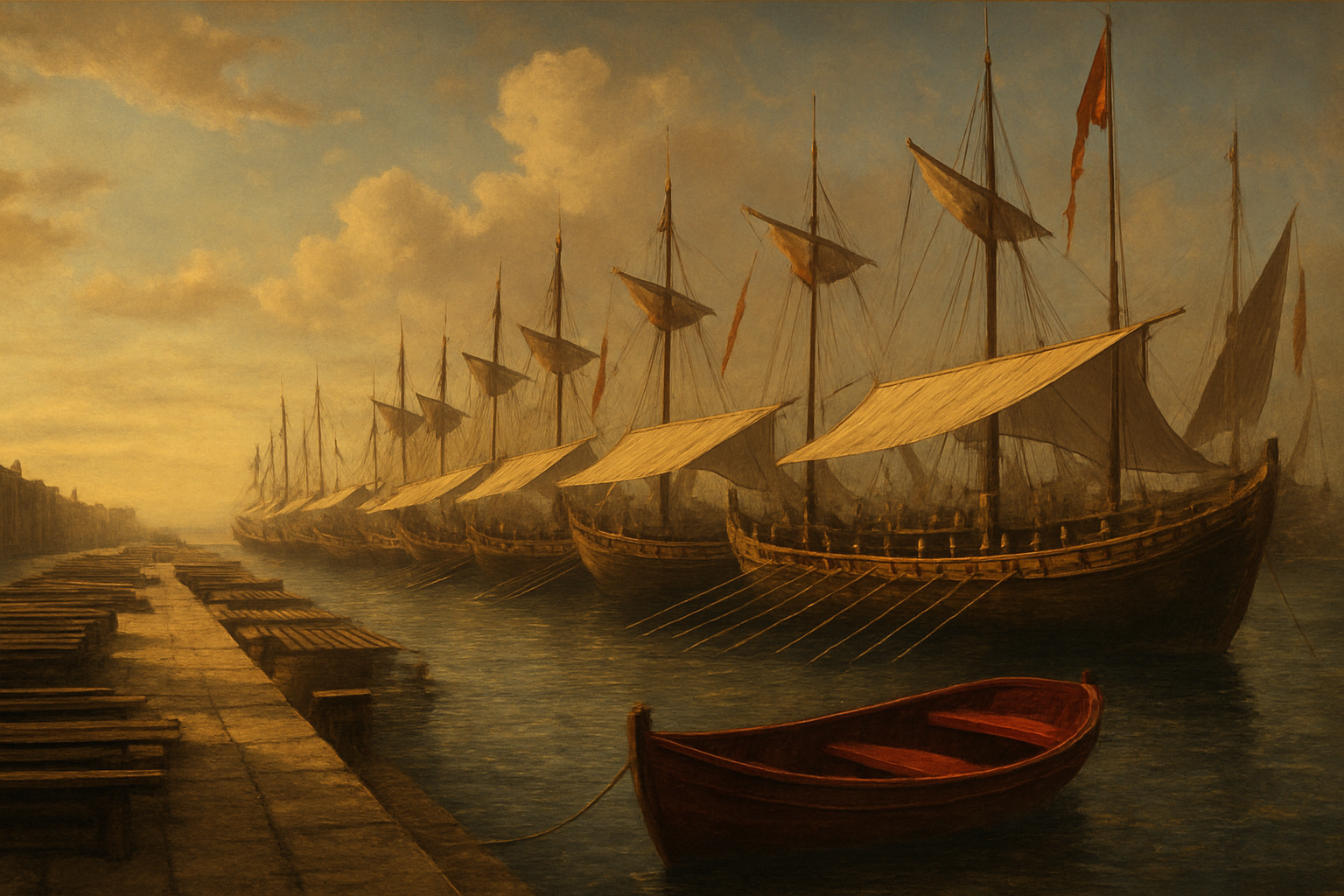
Don Quixote, still dwelling on the enchanted head's promise of Dulcinea’s disenchantment, accompanies his host Don Antonio Moreno and others to visit the galleys, where he receives a ceremonious and flattering welcome. The galley crews perform traditional salutations and rituals for their visitors; Sancho Panza is seized, hustled along the benches, and spun from hand to hand until he is bruised and frightened, mistaking naval activity for supernatural agency. Don Quixote contemplates enlisting Sancho among the rowers as a cure for his reluctance to complete Dulcinea’s disenthrallment.
The spectacle grows serious when the galleys pursue and capture a brigantine; during the capture two of the galley's soldiers are killed. Among the prisoners the supposed rais, a handsome young person, speaks Spanish and is claimed to be neither Turk nor renegade but a Christian woman. She tells a compact, sorrowful tale: born to Morisco parents, raised Catholic, forced into exile, she loved Don Gaspar Gregorio who accompanies her abroad and is disguised as a woman to save him; they sailed to land her in Spain but were waylaid by violent crewmen. While she speaks, an elderly pilgrim steps forward and calls her daughter Ana Felix (Ricote), revealing that he is her father Ricote returned to reclaim both his child and hidden treasure. Moved by mercy, the viceroy spares Ana Felix; the two Turks who murdered soldiers are to be punished but spared immediate hanging. Plans are made—with the aid of a Spanish renegade—to attempt a rescue of Don Gaspar Gregorio in Algiers, and Don Antonio Moreno is charged with hospitably receiving Ana Felix and Ricote ashore.
Key events
- Don Quixote receives honourable reception on the chief galley; customs and salutations observed.
- Sancho Panza is hoisted and passed along the benches, becoming bruised and terrified.
- The galleys pursue and capture a brigantine; two galley soldiers are slain by Turks.
- Prisoner presented as rais claims to be a Christian woman and tells her Morisco exile story.
- An elderly pilgrim recognizes the prisoner as his daughter Ana Felix (Ricote); a father-daughter reunion follows.
- Viceroy intercedes; two Turks spared immediate hanging; plans form to rescue Don Gaspar Gregorio.
Chapter 63 in pictures


Analysis
This chapter contrasts comic naval ritual and personal terror with a sudden, poignant human drama. Sancho’s humiliating, almost ritualized passage among the rowers reinforces his comic vulnerability and the theme of misread appearances—he interprets ordinary seafaring motions as supernatural. Don Quixote’s chivalric framing (linking such hardships to Dulcinea’s disenchantment) continues his tendency to read events through knight-errant optics, deepening his delusion while driving the plot forward by keeping Sancho engaged.
The capture of the brigantine shifts tone sharply: what begins as spectacle becomes a stage for issues of identity, exile, and religious/political conflict. The revelation that the supposed rais is a Christian woman and the emotional recognition by Ricote foregrounds the human cost of the Morisco expulsions and the porousness of identity (gender disguise, religious labels, renegades). Narrative technique mixes public ceremony and private confession, using the captive’s first-person account to compress backstory and to elicit mercy from authorities—showing how eloquence and appearance can sway justice. The chapter foreshadows rescue attempts and complicates moral certainties: mercy, pragmatism, and deceit coexist, and the novel keeps pivoting between comedy and social critique.
Important quotes
“Sancho was seated on the captain’s stage, close to the aftermost rower on the right-hand side.”
NarratorSets the scene for the comic ritual in which Sancho is lifted and passed hand to hand among the crew.
“I am neither Turk, nor Moor, nor renegade.”
the raisPivotal denial that surprises the commanders and begins the captive's confession revealing her true identity.
“O Ana Felix, my unhappy daughter, I am thy father Ricote, come back to look for thee, unable to live without thee, my soul that thou art!”
RicoteEmotional recognition that resolves the captive’s identity and shifts the scene from trial to mercy and reunion.
Characters in Chapter 63
- Don Quixote
- Sancho Panza
- Don Antonio Moreno
- the general
- the viceroy
- the rais
- Don Gaspar Gregorio
- Ana Felix
- Ricote
- the Spanish renegade
- two Turks
- Monjui
- Dulcinea del Toboso
All chapter summaries ›Characters ›
Read Don Quixote illustrated
Every scene in these notes comes from the Book2Life reader, where the full public-domain text is illustrated as you read, with character portraits and narration. Free in your browser and on iPhone.
