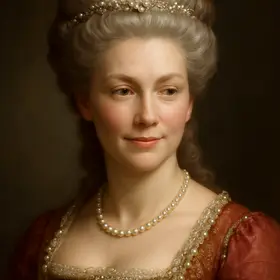
The Queen of Brobdingnag in Gulliver's Travels
Major character
The gracious Brobdingnagian queen who takes Gulliver into her household, protects him, and treats him as a court curiosity.
Who is The Queen of Brobdingnag?
The Queen of Brobdingnag is the ruling consort who first requests Gulliver be brought to the royal court and instantly takes a kindly interest in the tiny stranger. She wants to be entertained and to ensure the comfort and safety of this unusual charge, so she orders suitable lodging, miniature furniture, and attendants; she keeps Glumdalclitch in royal service as Gulliver’s nurse and guardian. At court she delights in his small contrivances and pastimes — having craftsmen build him a pleasure-boat, supplying audiences, and indulging amusements — while her household’s scale exposes Gulliver to repeated dangers and embarrassments. The queen’s curiosity and protective instincts guide much of Gulliver’s life in Brobdingnag: she watches his exhibitions, inquires about his talents, and shows concern when he is injured or ill. Though she is benevolent and intrigued, her court also participates in the objectifying spectacle that renders Gulliver ridiculous and vulnerable to pranks and public displays.
In the book: When we first meet her in Brobdingnag, she’s the gracious queen who is instantly intrigued by the tiny stranger and brings him into the royal household. She’s warm, curious, and protective, making sure he’s housed safely and keeping his young caretaker close so he’ll be comfortable at court.
Personality
- Gracious
- In Chapter 3 she orders comfortable lodgings and miniature furniture to be built for Gulliver and keeps Glumdalclitch in royal service to care for him.
- Curious
- She repeatedly summons Gulliver to entertain the court — for example commissioning a small pleasure-boat and indoor rowing trough described in Chapter 5.
- Protective
- When Gulliver falls ill after the monkey incident (Chapter 5) the queen shows marked concern and oversight of his recovery.
- Paternalistic
- Her indulgence turns to objectification as Gulliver is displayed to the populace and handled by maids of honour (Chapter 4 and 5).
- Practical
- She supports practical solutions — commissioning craftsmen and approving Gulliver’s small inventions like the combs and woven items in Chapter 6.
Character arc
From her first appearance the Queen of Brobdingnag acts as a kind and curious patron: she summons Gulliver to court, provides for his physical needs, and arranges attendants and comforts. Throughout Gulliver’s stay she consistently combines amusement with solicitude, commissioning games (the indoor rowing) and tolerating his exhibitions while stepping in when he is injured or ill. She does not undergo a radical transformation; rather, her role consistently balances benevolence and the cultural habit of treating a tiny human as a curiosum. Her kindness mitigates some of the harsher exposures to court life — securing Glumdalclitch’s position, attending to Gulliver’s recovery after mishaps, and enjoying his contrivances — but she remains part of a system that laughs at and displays him. By the end of Gulliver’s Brobdingnagian chapters her essential disposition is unchanged: she is still the gracious, inquisitive protector whose patronage both shelters and objectifies Gulliver, highlighting the fine line between care and spectacle in the royal household.
Relationships
- Lemuel Gulliver She is Gulliver’s royal patron and protector, providing lodging, commissioning entertainments, and overseeing his care.
- Glumdalclitch She retains Glumdalclitch in royal service as Gulliver’s nurse and ensures she receives attendants and instruction.
- The King of Brobdingnag She shares the courtly responsibilities and entertains with the king, participating together in audiences and the display of Gulliver.
- The Brobdingnagian Dwarf Her court includes the dwarf whose pranks and mockery contribute to Gulliver’s humiliations under her watch.
- The Farmer of Brobdingnag She receives Gulliver after the farmer sells him to the court at her request, establishing the formal custody of the stranger.
Quotes by The Queen of Brobdingnag
“how contemptible a thing was human grandeur, which could be mimicked by such diminutive insects as I: and yet," says he, "I dare engage these creatures have their titles and distinctions of honour; they contrive little nests and burrows, that they call houses and cities; they make a figure in dress and equipage; they love, they fight, they dispute, they cheat, they betray!”
Chapter 3The king reflects—mockingly and philosophically—on human society after seeing Gulliver, highlighting Swift's satirical reversal of perspective.
“My little friend Grildrig, you have made a most admirable panegyric upon your country; you have clearly proved, that ignorance, idleness, and vice, are the proper ingredients for qualifying a legislator;”
Chapter 6After auditing Gulliver’s description of England, the king delivers a severe critique of English institutions and morals.
“He was amazed, how so impotent and grovelling an insect as I”
Chapter 7The king reacts with horror to Gulliver's description of gunpowder and artillery, calling him an "impotent and grovelling insect."
“that whoever could make two ears of corn, or two blades of grass, to grow upon a spot of ground where only one grew before, would deserve better of mankind, and do more essential service to his country, than the whole race of politicians put together.”
Chapter 7The king summarizes his political philosophy, valuing practical improvements in agriculture far above political maneuvering.
Why The Queen of Brobdingnag matters
The Queen of Brobdingnag embodies the novel’s tension between humane care and imperial objectification. Her benevolence highlights compassion across difference: she provides protection and resources for Gulliver despite their vast disparity in size. At the same time, her court’s public spectacles reveal how power can turn care into display. Through her patronage Swift explores themes of scale, perspective, and the ethics of curiosity: she humanizes the foreigner while participating in a society that treats him as a living curiosity, forcing readers to question the moral distance between kindness and domination.
Chapters with The Queen of Brobdingnag
More Gulliver's Travels characters
 Lemuel GulliverProtagonist
 The YahoosAntagonist
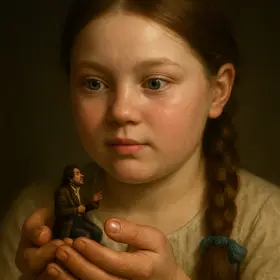 GlumdalclitchMajor character
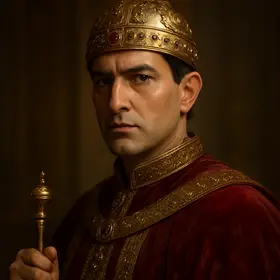 The Emperor of LilliputMajor character
- tthe kingMajor character
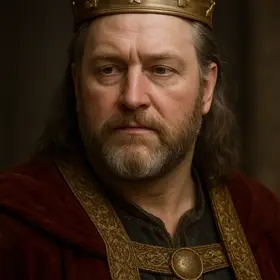 The King of BrobdingnagMajor character
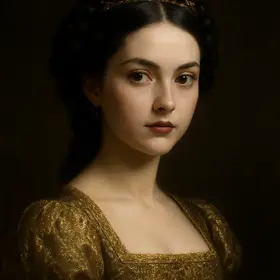 The Empress of LilliputMajor character
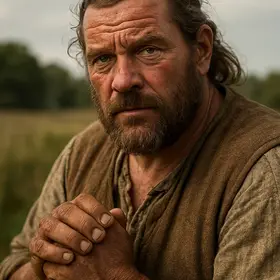 The Farmer of BrobdingnagMinor character
All chapter summaries ›Characters ›
Read Gulliver's Travels illustrated
Every scene in these notes comes from the Book2Life reader, where the full public-domain text is illustrated as you read, with character portraits and narration. Free in your browser and on iPhone.
