
Lemuel Gulliver in Gulliver's Travels
Protagonist
An observant English surgeon and voyager whose calm reportage guides us through absurd societies and moral inquiry.
Who is Lemuel Gulliver?
Lemuel Gulliver is an English surgeon turned seafarer who narrates four extended voyages to fantastical lands. He wants to survive, to record faithfully what he sees, and—especially after the Houyhnhnms—to understand and, briefly, to reform human vice. Across shipwreck and capture he documents encounters with tiny Lilliputians (where he aids the emperor and prevents invasion), gigantic Brobdingnagians (where court favour and humiliation alternate), the scientific absurdities of Laputa and Balnibarbi (where he witnesses impractical theorizing), and finally the Houyhnhnms and Yahoos (where he lives among rational horses and confronts human depravity). He repeatedly adapts to extreme scales and foreign customs: learning languages, assisting rulers, inventing contrivances to entertain or help his hosts, and surviving perilous escapes to return to England. His narrative voice insists on plain truth, complains about editorial tampering, and ends with a conflicted, hardened judgment of humankind contrasted with admiration for rational virtue.
In the book: We first meet Lemuel Gulliver as a practical, curious English surgeon who takes to the sea to better his fortunes. After a shipwreck, he wakes on a beach to find himself pinned down by a nation of tiny people, and his calm, precise way of noticing everything makes their unbelievable world feel matter-of-fact.
Personality
- Observant
- He measures Lilliputian streets, notes Brobdingnagian tumors and lice, and catalogs Laputan instruments with meticulous practical detail (Chapters 1–4 Part I; Part II; Part III).
- Practical
- He fashions hooks and swims to Blefuscu to haul enemy ships into port and later invents a small pleasure-boat in Brobdingnag to amuse the queen (Part I Ch.5; Part II Ch.5).
- Adaptable
- He rapidly learns Lilliputian and Houyhnhnm tongues, accepts court customs, and alters his behaviour to survive in wildly different societies (Part I Ch.2–3; Part IV Ch.3).
- Morally earnest
- He insists on publishing a truthful account, protests editorial interpolations in his prefatory letter, and tries to counsel Houyhnhnms about human institutions (Prefatory Letter; Part IV Ch.4–6).
- Susceptible to disgust
- After long residence with the Houyhnhnms he finds his family and fellow humans revolting and prefers the company of horses (Part IV Ch.11).
Character arc
Gulliver begins as a pragmatic, curiosity-driven surgeon seeking fortune and honest reporting. Early voyages show a steady professional composure: shipwrecked in Lilliput he negotiates freedom, aids the emperor militarily, and keeps careful inventories; in Brobdingnag he adapts to humiliation and court life while testing European institutions against a giant king’s scrutiny. His Laputa and Balnibarbi visit deepens his scepticism toward abstracted learning divorced from practice. The decisive transformation occurs among the Houyhnhnms: prolonged exposure to their reason and the contrast with the Yahoos intensifies his moral judgments until he comes to despise human corruption. Returning home, he is unable to reaccept ordinary social habits, oscillating between attempted moderation and hardened misanthropy. By the end he retains his commitment to truthful narration but his sympathies have shifted dramatically—he venerates rational virtue and distrusts human society, resolving to model Houyhnhnm lessons while also acknowledging his failure to reform others.
Relationships
- Glumdalclitch Gulliver’s devoted Brobdingnagian nurse and teacher who cares for him, instructs him in language, and protects him at court.
- Don Pedro de Mendez The Portuguese captain who rescues Gulliver from natives near New Holland and kindly escorts him back to Europe, easing his final return.
- The Emperor of Lilliput The ruler who first receives Gulliver, alternates between granting favour and being influenced by ministers, and bestows honours after Gulliver captures Blefuscu ships.
- The King of Brobdingnag A powerful monarch who interrogates Gulliver about English institutions, judges them corrupt, and shapes Gulliver’s self-reflection through moral critique.
- my master Gulliver’s Houyhnhnm master who teaches him the language, questions European vices, and ultimately compares Gulliver and his countrymen unfavourably to Houyhnhnm virtue.
- The Empress of Lilliput A court figure who is alternately entertained and offended by Gulliver and whose anger contributes to court tensions around him.
Why Lemuel Gulliver matters
Gulliver functions as both eyewitness and moral interlocutor: his empirical detail anchors Swift’s satire, and his shifting judgments map the book’s theme of reason versus folly. Through Gulliver’s practical experiments, linguistic learning, and moral wrestlings, readers experience the relativity of stature, the dangers of abstracted knowledge, and an escalating indictment of human vice. His development—from pragmatic voyager to near-misanthrope after the Houyhnhnms—embodies Swift’s probe into whether civilization’s arts improve or merely corrupt natural reason, making Gulliver the vehicle for the book’s bitter, observational satire.
Chapters with Lemuel Gulliver
- A LETTER FROM CAPTAIN GULLIVER TO HIS COUSIN SYMPSON
- Chapter 1
- Chapter 2
- Part 1, Chapter 3
- Chapter 4
- Chapter 5
- Chapter 6
- Chapter 8
- Part 2, Chapter 1
- Part 2, Chapter 2
- Chapter 3
- Chapter 4
- Chapter 5
- Chapter 6
- Chapter 7
- Chapter 8
- Part 3, Chapter 1
- Chapter 2
- Chapter 3
- Chapter 4
- Chapter 5
- Chapter 6
- Chapter 7
- Chapter 9
- Chapter 10
- Chapter 11
- Part 4, Chapter 1
- Chapter 2
- Chapter 3
- Chapter 4
- Chapter 5
- Part 4, Chapter 6
- Chapter 7
- Chapter 8
- Chapter 9
- Chapter 11
- Chapter 12
More Gulliver's Travels characters
 The YahoosAntagonist
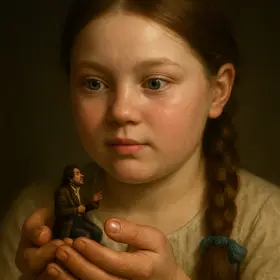 GlumdalclitchMajor character
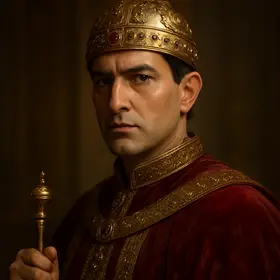 The Emperor of LilliputMajor character
- tthe kingMajor character
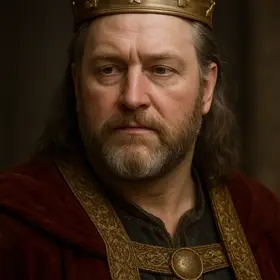 The King of BrobdingnagMajor character
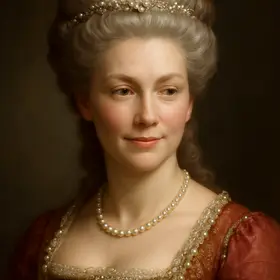 The Queen of BrobdingnagMajor character
 The Empress of LilliputMajor character
 The Farmer of BrobdingnagMinor character
All chapter summaries ›Characters ›
Read Gulliver's Travels illustrated
Every scene in these notes comes from the Book2Life reader, where the full public-domain text is illustrated as you read, with character portraits and narration. Free in your browser and on iPhone.
