
The Fool in King Lear
Major character
King Lear’s witty, biting companion who speaks truth and keeps the king tethered to reality.
Who is The Fool?
The Fool appears after Lear divides his kingdom and remains the monarch’s closest companion through the mounting family betrayals and Lear’s descent into madness. He uses jokes, riddles and sharp images to chastise Lear for giving away his authority and trusting his eldest daughters; his mockery alternates between comic nonsense and moral rebuke. The Fool stays near Lear in public confrontations (mocking Oswald, trading riddles at court) and in private collapse (trying to distract Lear on the heath and participating in Lear’s mock trial at the farmhouse). He also helps during urgent movements: he accompanies Lear when Gloucester prepares a litter to carry the king to safety and is present when Gloucester and others try to shield Lear. The Fool’s role is both companion and conscience: he provokes moments of self-awareness in Lear, keeps exposed the king’s folly, and eases the strain of grief with dark levity, even as political violence and personal suffering escalate around them.
In the book: We meet the Fool at Lear’s court just after the king has split his realm, and he immediately needles Lear with sharp jokes and riddles. He’s the one person who can speak hard truths to the old king without getting his head taken off, and he stays close, needling and nudging him back toward sense.
Personality
- acerbic
- Mocks Oswald and Goneril’s treatment of Lear in Act 1, Scene 4, using sharp, teasing jests to expose their cruelty.
- loyal
- Remains constantly at Lear’s side from the first court scenes through the storm and the farmhouse chamber, attempting to comfort and chastise him.
- truth-telling
- Uses riddles and songs in Act 1, Scene 5 to chastise Lear for trusting his daughters and to warn him about his loss of protection.
- playful
- Engages Lear in rapid, witty exchanges and ribald quips that lighten and underline painful moments, as when he leaves with a final bawdy joke before travel.
Character arc
From his first appearance the Fool functions as Lear’s critic and companion: he mocks the king’s misjudgment and stays close enough to speak hard truths without punishment. As Lear’s situation deteriorates—Goneril’s coldness, Regan’s refusal, the king’s humiliation in court—the Fool intensifies his nagging, alternating mockery and counsel to keep Lear conscious of his folly. On the heath and in the farmhouse he shifts from mere jester to active participant in Lear’s emotional life, distracting him from the storm, joining the mock trial, and helping carry Lear toward safety when Gloucester prepares the litter. The Fool does not undergo a dramatic inner change; he remains consistently loyal and ironic, maintaining his role as conscience-in-jest. The record of appearances ends with him still by Lear’s side as calamity mounts, his presence sustaining the king but never transforming the political dynamics that consume the court.
Relationships
- Lear Closest companion and licensed critic who uses mockery to chastise and comfort the king.
- Kent Fellow loyal servant; shares concern for Lear and appears alongside him in scenes of crisis.
- Gloucester Ally in the effort to protect Lear; present with Gloucester when they move Lear toward Dover and the farmhouse.
- Edgar Participates with Edgar in the farmhouse scene’s mock-legal banter, mirroring and undercutting Lear’s dignity.
- Gentleman An observer and reporter who notes the Fool as Lear’s solitary companion on the stormy heath.
Quotes by The Fool
“When thou clovest thy crown i’ the middle and gav’st away both parts, thou bor’st thine ass on thy back o’er the dirt:”
Act 1, Scene 4The Fool mocks Lear’s decision to divide his power, using the egg/crown image to show that giving away authority makes Lear vulnerable and foolish.
Why The Fool matters
The Fool embodies the play’s theme that wisdom and truth can come in unexpected, comic forms. By speaking bluntly and mockingly to Lear, he exposes the gap between former royal authority and the king’s current vulnerability. His constant presence demonstrates how honesty and loyalty are distinct from power; he can name folly where courtiers flatter. In scenes of storm, madness and mock trial the Fool’s blend of jest and counsel highlights the tragedy’s moral center: the failure of filial duty, the collapse of political order, and the painful necessity of self-knowledge.
Chapters with The Fool
More King Lear characters
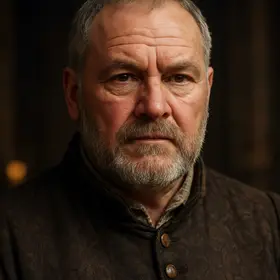 Gloucester
 Kent
Kent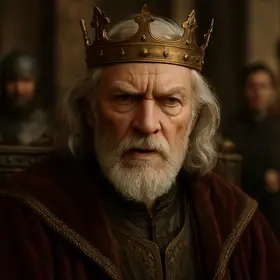 King Lear
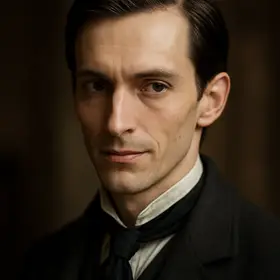 Edmund
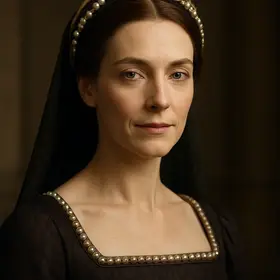 Goneril
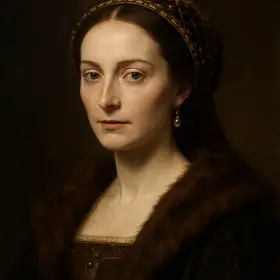 Regan
Regan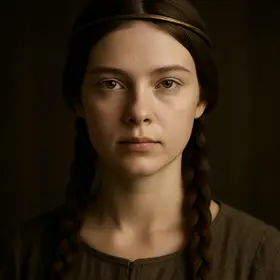 Cordelia
 Edgar
EdgarAll chapter summaries ›Characters ›
Read King Lear illustrated
Every scene in these notes comes from the Book2Life reader, where the full public-domain text is illustrated as you read, with character portraits and narration. Free in your browser and on iPhone.
