
Fanny Price in Mansfield Park
Protagonist
A poor relation raised at Mansfield Park who becomes the novel’s steady moral center, modest, observant, and dutiful.
Who is Fanny Price?
Fanny Price arrives at Mansfield Park at ten as a dependent relation and slowly grows into the household’s quiet moral arbiter. She wants acceptance, steadiness, and to act according to conscience rather than fashion. Early kindness from Edmund wins her friendship and shapes her mind; she endures condescension from Mrs. Norris and the Miss Bertrams, resists pressures to conform to reckless entertainments (notably the amateur theatricals), and keeps a protective humility while observing others’ foibles. Fanny forms deep attachments to William and Edmund, navigates uncomfortable flirtations from Henry Crawford, and withholds reciprocal feeling when proposals or social expedients conflict with her principles. Sent to Portsmouth, she tends to her noisy family, sustains moral firmness amid gossip about the Crawfords, and returns to help Mansfield through the crises of Maria and Julia’s scandals. By the end she is restored to Sir Thomas’s favor, proves indispensable, and is eventually recognized as Edmund’s proper match and as a stabilizing domestic presence.
In the book: A poor relation sent to live with her wealthy Bertram cousins at Mansfield Park, Fanny Price grows into the novel’s steady moral center. Observant and self-effacing, she quietly resists fashionable pressures and measures people by their integrity, forming deep attachments while navigating questions of class, duty, and conscience.
Personality
- Observant
- At Sotherton she notices the private chapel’s restrained character and later watches Edmund and Mary’s intimacy on the bench (Chapters 9–10).
- Conscientious
- She objects to the choice of Lovers’ Vows for private performance and repeatedly expresses unease about the theatricals (Chapters 14–16).
- Self-effacing
- As a child she hides tears, accepts subordinate position among the Bertrams, and endures Mrs. Norris’s reproaches without loud complaint (Chapters 2–3).
- Loyal
- She devotes herself to nursing and comforting the household after the London scandals and returns quickly when Edmund summons her (Chapters 46–47).
- Steadfast
- She refuses Henry Crawford’s proposal despite Sir Thomas’s and others’ pressure, insisting she cannot love him (Chapters 31–33).
Character arc
Fanny begins as a timid, grateful child transplanted from Portsmouth to Mansfield, dependent on others’ goodwill and protected chiefly by Edmund’s early kindness. In youth she accepts a subordinate role, learning restraint and modesty, yet maintains private scruples (e.g., discomfort at the household theatricals). As the Crawfords arrive she becomes more conscious of moral distinctions; her jealousy and wounded pride at Edmund’s attentions to Mary reveal an emotional depth she rarely shows. Her refusal of Henry Crawford marks a decisive moral stand: she values inward conviction over social advantage. Sent back to Portsmouth, she practices practical charity and patience, proving useful and composed amid coarser domestic life. The Wimpole Street scandal and the Bertrams’ resulting shame test her loyalty; summoned back, she becomes central to the family’s recovery through quiet service. By the close she is restored in Sir Thomas’s esteem, Edmund recognizes her constancy, and she moves from timid outsider to the acknowledged domestic and moral anchor of Mansfield, culminating in a sanctioned marriage and settled domestic responsibility.
Fanny Price in pictures
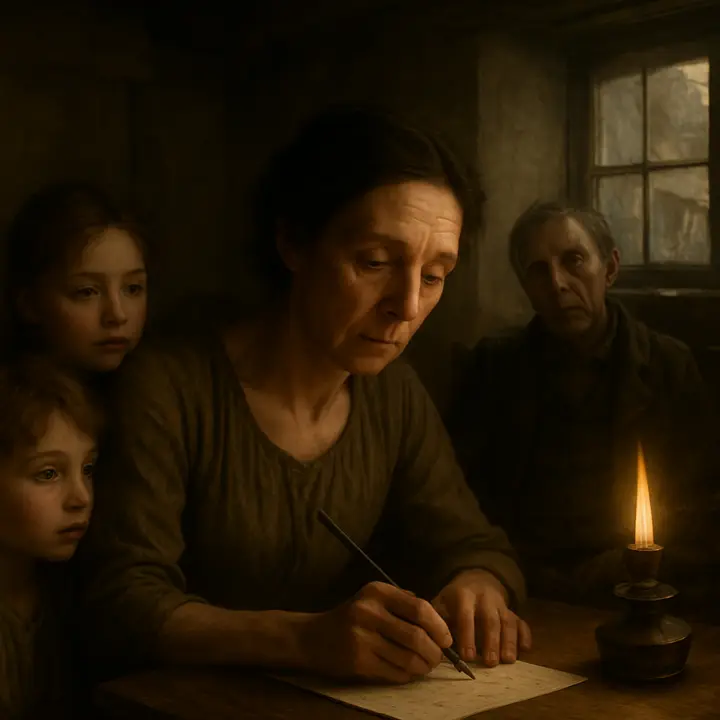
Relationships
- Edmund Bertram His early kindness trains and sustains Fanny; he becomes her closest friend and ultimately her husband after recognizing her steadiness.
- William Price Her eldest brother and emotional refuge whose return and promotion delight and steady Fanny (Chapters 2, 24–25, 31).
- Sir Thomas Bertram Her stern but ultimately protective uncle whose return, rebukes, and final approbation shape Fanny’s fortunes (Chapters 3, 19–21, 32, 48).
- Mrs. Norris Her officious aunt who continually belittles Fanny while controlling her placement and duties at Mansfield (Chapters 1–4, 17, 20).
- Henry Crawford A flirtatious suitor who pressures Fanny and is refused, his persistence and later discredit contrast with Fanny’s moral constancy (Chapters 24, 30–36, 46).
- Mary Crawford A sociable friend whose values disturb Fanny; Mary’s influence tensions Fanny’s relationship with Edmund and complicates social pressures (Chapters 4, 22–23, 36–37, 44).
Quotes by Fanny Price
““I shall be very sorry to go away,” said she, with a faltering voice.”
Chapter 3Fanny responds to Lady Bertram’s casual statement that she will live with Mrs. Norris; this reveals Fanny’s distress and attachment to Mansfield Park.
“Cut down an avenue! What a pity! Does it not make you think of Cowper? ‘Ye fallen avenues, once more I mourn your fate unmerited.’”
Chapter 6Fanny’s poetic lament reveals her sentimental attachment to landscape and signals a contrast with the pragmatic views of others who favor modern improvement.
““I am disappointed,” said she, in a low voice, to Edmund.”
Chapter 9Fanny confesses her disappointment at the private chapel’s modesty, revealing her romantic expectations and sensitivity to setting.
“The memory is sometimes so retentive, so serviceable, so obedient; at others, so bewildered and so weak; and at others again, so tyrannic, so beyond control!”
Chapter 22Fanny reflects aloud during a walk, revealing her contemplative nature and providing contrast to Mary’s more superficial responses.
“I am very much obliged to you, my dear Miss Crawford, for your kind congratulations, as far as they relate to my dearest William.”
Chapter 31Fanny's trembling, defensive reply to Mary, politely thanking her for William's congratulations while distancing herself from any suggestion about Henry.
“"I cannot like him, sir, well enough to marry him."”
Chapter 32Fanny plainly refuses Crawford to her uncle, asserting that she does not feel enough affection to marry him and triggering Sir Thomas’s astonished reproach.
Why Fanny Price matters
Fanny embodies the novel’s themes of moral integrity, conscience, and the claim of inner worth over outward rank. Her quiet resistance to the theatricals, to fashionable compromises, and to an advantageous but uncongenial match dramatizes Austen’s critique of social superficiality and the value of principled steadiness. Through Fanny’s return to Mansfield and her role in the household’s recovery after scandal, the text privileges moral education, domestic responsibility, and constancy of affection as the basis for legitimate social authority. She shows that true gentility is ethical, not merely social, and that personal virtue can reshape family and community life.
Chapters with Fanny Price
- Chapter 1
- Chapter 2
- Chapter 3
- Chapter 4
- Chapter 5
- Chapter 6
- Chapter 7
- Chapter 8
- Chapter 9
- Chapter 10
- Chapter 11
- Chapter 12
- Chapter 13
- Chapter 14
- Chapter 15
- Chapter 16
- Chapter 17
- Chapter 18
- Chapter 19
- Chapter 20
- Chapter 21
- Chapter 22
- Chapter 23
- Chapter 24
- Chapter 25
- Chapter 26
- Chapter 27
- Chapter 28
- Chapter 29
- Chapter 30
- Chapter 31
- Chapter 32
- Chapter 33
- Chapter 34
- Chapter 35
- Chapter 36
- Chapter 37
- Chapter 38
- Chapter 39
- Chapter 40
- Chapter 41
- Chapter 42
- Chapter 43
- Chapter 44
- Chapter 45
- Chapter 46
- Chapter 47
- Chapter 48
More Mansfield Park characters
 Edmund BertramMajor character
 Lady BertramMinor character
 Henry CrawfordMajor character
 Sir Thomas BertramMajor character
 Julia BertramMinor character
 Maria BertramMajor character
 Mary CrawfordMajor character
 Mrs NorrisMajor character
All chapter summaries ›Characters ›
Read Mansfield Park illustrated
Every scene in these notes comes from the Book2Life reader, where the full public-domain text is illustrated as you read, with character portraits and narration. Free in your browser and on iPhone.
