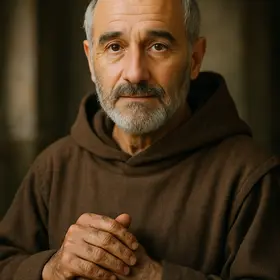
Friar Laurence in Romeo and Juliet
Major character
A compassionate Franciscan friar who counsels Romeo and Juliet and devises plans to end their families' feud.
Who is Friar Laurence?
Friar Laurence is a learned Franciscan who serves as a trusted confessor and practical adviser in Verona. He knows scripture and herbal lore, which he meditates on in his opening speech about the earth's mixed powers. When Romeo arrives declaring sudden love for Juliet, the friar hesitates at Romeo's fickleness but agrees to marry them, hoping their union will reconcile the Montagues and Capulets. He performs the secret wedding and later counsels an anguished Romeo after Tybalt's death, arranging Romeo's temporary escape to Mantua while promising to work for a lasting solution. Facing Juliet's despair over an enforced marriage to Paris, he devises a desperate plan using a potion to simulate death so she can flee with Romeo; he promises to send word to Romeo. When that message fails to arrive, Friar Laurence rushes to the tomb to rescue Juliet but arrives too late to prevent the double catastrophe. Throughout, he acts from charity and prudence, yet his schemes have unforeseen, tragic consequences.
In the book: A compassionate Franciscan and trusted confidant in Verona, Friar Laurence serves as counselor and mediator, especially to the young lovers, hoping to mend a bitter civic feud. Learned in scripture and herbal lore, he officiates sacred rites, offers pragmatic advice, and devises well-intended plans. His guidance and interventions drive key turns in the plot and illuminate themes of wisdom versus impulse, private devotion versus public conflict, and the unforeseen consequences of good intentions.
Personality
- Compassionate
- He agrees to marry Romeo and Juliet and continually comforts both lovers, seeking to ease their suffering after Tybalt's death (Act 2.3; Act 3.3).
- Pragmatic
- He proposes concrete plans: marrying the lovers to unite their families, arranging Romeo's flight to Mantua, and later the sleeping‑potion plot to avert Juliet's forced marriage (Act 2.3; Act 3.3; Act 4.1).
- Learned
- His opening meditation on herbs shows his knowledge of natural philosophy and moral ambiguity, which he uses to frame counsel (Act 2.3).
- Cautious adviser
- He repeatedly warns against haste and extremes—telling Romeo 'Wisely and slow' and warning that 'violent delights have violent ends' before marrying them (Act 2.3; Act 2.6).
- Well‑intentioned but fallible
- He devises the sleeping‑potion plan and sends Friar John with a letter, but the letter fails to reach Romeo, producing tragic results he could not foresee (Act 4.1; Act 5.2–3).
Character arc
Friar Laurence first appears as a reflective, morally minded cleric who contemplates nature's mixed powers and the ambiguity of good and evil. When Romeo bursts into his cell, the friar moves from detached meditation to active intervention: he marries the young lovers, hoping to repair social ruptures. As events escalate—Tybalt's death and Romeo's banishment—the friar shifts into crisis manager, urging Romeo to accept exile and plotting practical steps to reunite the couple. Faced with Juliet's imminent forced marriage and her threat of self‑harm, he adopts riskier measures: a sleeping potion and a complex plan of deception designed to produce a secret elopement. His role becomes increasingly responsible for coordinating actions beyond his control; the miscarriage of communication (Friar John's failure) exposes the fragility of his schemes. In the final act he moves from planner to penitent actor, hurrying to the tomb to remedy the catastrophe but arriving too late to prevent the lovers' deaths. His journey is from reflective mediator to a desperate agent whose well‑meant interventions contribute to the tragic outcome.
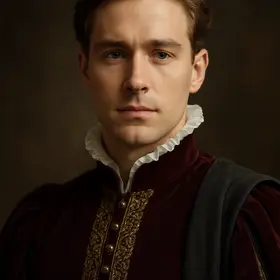
Friar Laurence in pictures
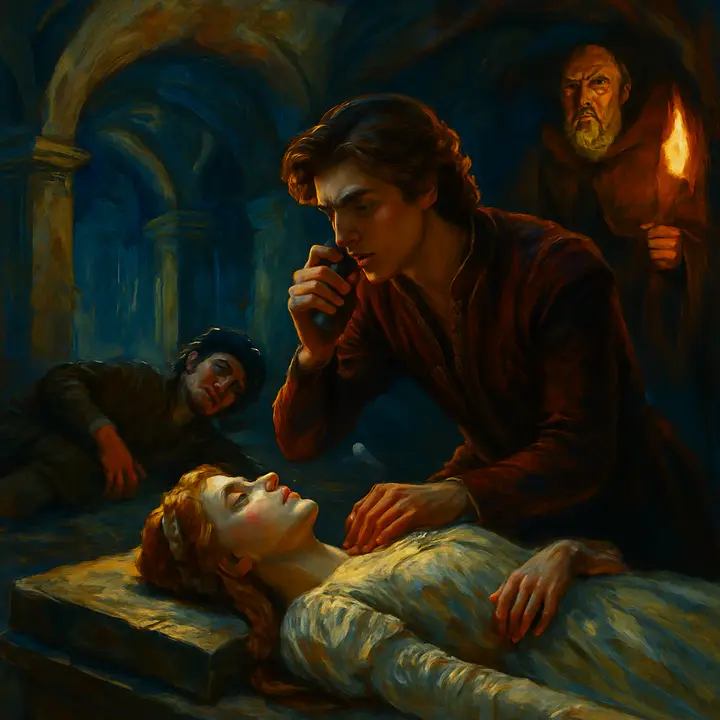
Relationships
- Romeo Confessor and adviser who marries Romeo and urges him to flee to Mantua after Tybalt's death.
- Juliet Secret counselor and co‑conspirator who provides the sleeping potion and a plan to reunite her with Romeo.
- Friar John Fellow friar and messenger whose failure to deliver a crucial letter thwarts Friar Laurence's plan.
- Paris Acquaintance with whom the friar speaks about the wedding haste; Paris trusts the friar's role in the ceremony.
- Capulet Authority figure whose sudden wedding plans for Juliet prompt the friar to enact his desperate scheme.
Quotes by Friar Laurence
“The earth that’s nature’s mother, is her tomb; What is her burying grave, that is her womb: And from her womb children of divers kind We sucking on her natural bosom find.”
Act 2, Scene 3Friar Laurence meditates on nature's dual role as giver and taker of life, introducing the theme that things can be both beneficial and harmful.
“Within the infant rind of this weak flower Poison hath residence, and medicine power:”
Act 2, Scene 3He notes that a single plant can contain both poison and remedy, a metaphor for the play's intertwining of love and danger.
“Wisely and slow; they stumble that run fast.”
Act 2, Scene 3As he agrees to help Romeo, the friar admonishes him to be cautious, offering a proverb that highlights the conflict between haste and prudence.
“So smile the heavens upon this holy act That after-hours with sorrow chide us not.”
Act 2, Scene 6Friar Lawrence opens by blessing the marriage and hoping the future will not reproach them with sorrow.
“These violent delights have violent ends, And in their triumph die; like fire and powder, Which as they kiss consume.”
Act 2, Scene 6The friar warns that intense, sudden pleasures can destroy themselves, advising moderation in love.
“Come, come with me, and we will make short work, For, by your leaves, you shall not stay alone Till holy church incorporate two in one.”
Act 2, Scene 6After the warning and the lovers’ exchanges, the friar quickly moves to marry them, promising to unite them in the church.
Why Friar Laurence matters
Friar Laurence embodies the play's tension between reasoned mediation and the unpredictable outcomes of human action. His knowledge of nature and preaching about mixed virtues underline the theme that good intentions can contain poison when joined with haste or secrecy. As a spiritual figure who seeks civic peace, he highlights conflicts between private devotion and public obligation; his plans aim to bridge family enmity but reveal the limits of individual agency within social feud. His tragic failure emphasizes how prudence alone cannot control passion and mischance, reinforcing the play's cautionary lesson about impulsive love, secrecy, and the catastrophic cost of attempts to manage fate.
Chapters with Friar Laurence
More Romeo and Juliet characters
 Romeo
Romeo Juliet
 Nurse
Nurse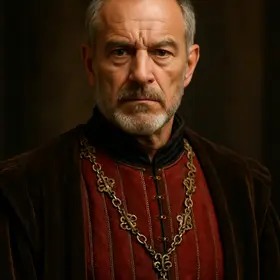 Capulet
 Tybalt
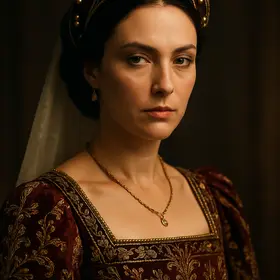 Lady Capulet
 Paris
Paris Benvolio
All chapter summaries ›Characters ›
Read Romeo and Juliet illustrated
Every scene in these notes comes from the Book2Life reader, where the full public-domain text is illustrated as you read, with character portraits and narration. Free in your browser and on iPhone.
