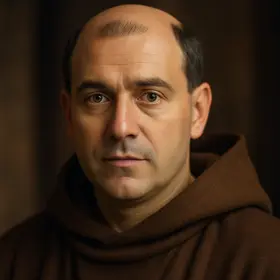
Friar John in Romeo and Juliet
Minor character
A friar who is sent to carry Friar Laurence’s crucial letter to Romeo but is prevented from delivering it.
Who is Friar John?
Friar John is a fellow friar and assistant to Friar Laurence who is entrusted with carrying a secret letter from Friar Laurence to Romeo in Mantua. While visiting the sick in the city to find a messenger route, he is delayed when authorities seal up a house suspected of pestilence and he cannot leave to reach Mantua. He returns to Friar Laurence with the unopened letter and an apology. His failure to deliver the message directly triggers the chain of events in the final scenes: Romeo never learns of the Friar’s plan, acts on the false belief that Juliet is dead, and the resulting confrontation in the tomb culminates in multiple deaths and the public confession that follows. Though he appears only briefly, Friar John’s misfortune turns a minor logistical task into a pivotal turning point for the tragedy.
In the book: Friar John is a fellow friar and helper to Friar Laurence, entrusted with carrying an important message meant for Romeo. Though he appears only briefly, the task he undertakes—and the unforeseen obstacles surrounding it—turn his small part into a pivotal moment, underscoring the play’s themes of chance, miscommunication, and the fragile threads upon which fate can hang.
Personality
- duty-bound
- He accepts Friar Laurence’s urgent commission to carry the letter to Mantua.
- honest
- He returns to Friar Laurence with the unopened letter and apologizes instead of hiding his failure.
- unlucky
- He is detained by authorities who seal a house thought to have pestilence, preventing him from delivering the message.
- practical
- When he cannot deliver the letter he goes back directly to Friar Laurence to report what happened.
Character arc
Friar John appears late and undergoes no dramatic internal transformation; his role is functional and externally defined. He begins as a trusted messenger asked to perform a specific, time-sensitive task. Circumstance — not choice — deprives him of success: municipal officials seal a house because of suspected pestilence, trapping him in the city and making travel to Mantua impossible. Rather than conceal the failure, he returns to Friar Laurence and reports honestly, triggering the friar’s desperate, immediate attempt to salvage the plan. Thus Friar John’s arc is effectively an incident: he moves from active agent of communication to the bearer of bad news, and his misfortune converts a minor character into the hinge on which the play’s final catastrophe turns. He leaves the stage unchanged internally but crucially alters events by failing to complete his mission.
Relationships
- Friar Laurence Colleague and the man who entrusts him with the vital letter; he reports directly to Friar Laurence when he cannot complete the delivery.
- Romeo The intended recipient of the letter; Romeo’s ignorance of Friar Laurence’s plan is a direct consequence of Friar John’s failed delivery.
- Juliet The subject of the plan whose fate depends on the letter; Friar John’s delay helps set the conditions that lead to her tragic awakening in the tomb.
- Balthasar A participant in the tomb scene whose later account, along with Friar John’s failure, shapes the explanation of events.
- Prince Escalus An authority figure whose arrival reveals the consequences of the failed communication and whose judgment frames the public outcome.
Quotes by Friar John
“Going to find a barefoot brother out, One of our order, to associate me,”
Act 5, Scene 2Explains why he was delayed and could not deliver the letter to Romeo in Mantua.
“Within this three hours will fair Juliet wake.”
Act 5, Scene 2States the urgent timeline that forces him to hurry to the tomb alone.
“Poor living corse, clos'd in a dead man's tomb.”
Act 5, Scene 2Concludes with a grim image that links Juliet’s sleeping state to death and foreshadows the tomb scene.
Why Friar John matters
Friar John personifies the play’s dependence on chance and the fragility of human plans. His short, unlucky detainment turns a single missed message into the decisive miscommunication that leads to death, highlighting how unpredictable external forces disrupt intention. By returning honestly rather than concealing failure, he also sharpens moral contrasts: the tragedy arises not from malice but from circumstantial misfortune and failed coordination. In thematic terms, Friar John underscores fate’s caprice and the catastrophic effects small, apparently minor events can have within a tightly timed plot.
Chapters with Friar John
More Romeo and Juliet characters
 RomeoProtagonist
 JulietProtagonist
 NurseMajor character
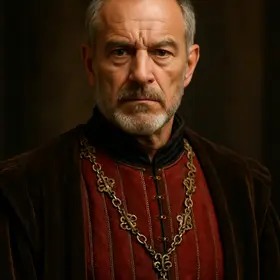 CapuletMajor character
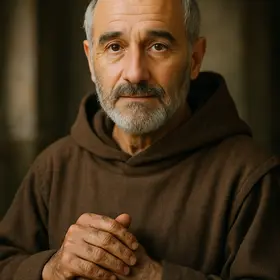 Friar LaurenceMajor character
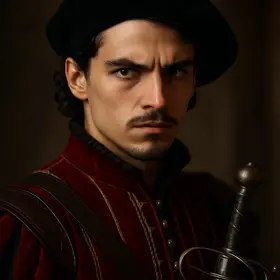 TybaltAntagonist
 Lady CapuletMajor character
 ParisMajor character
All chapter summaries ›Characters ›
Read Romeo and Juliet illustrated
Every scene in these notes comes from the Book2Life reader, where the full public-domain text is illustrated as you read, with character portraits and narration. Free in your browser and on iPhone.
