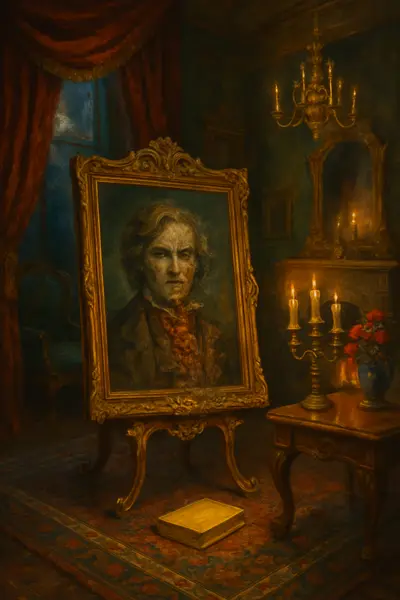
The Importance of Being Earnest
1899 · Comedy of manners
Free to read in your browser. Public-domain edition from Project Gutenberg, illustrated as you read.
About This Book
Oscar Wilde’s The Importance of Being Earnest is a comic play set in late Victorian England that skewers social conventions, romantic affectation, and the performative nature of identity. Written in sparkling, epigrammatic dialogue, the play follows two young gentlemen whose invented personas set off a chain of flirtations and deceptions among family and friends. Wilde’s wit targets manners and marriage while keeping the tone light and farcical. The premise revolves around Jack Worthing, a responsible country gentleman with a double life in the city, and his urbane friend Algernon Moncrieff, who invents an invalid friend to escape obligations—a hobby he calls “Bunburying.” Jack seeks to marry Gwendolen Fairfax, while Algernon becomes entangled with Jack’s ward, Cecily Cardew, by assuming Jack’s invented name, Ernest. The older generation—Lady Bracknell, Gwendolen’s imperious mother, and other foils like Miss Prism and the earnest Dr. Chasuble—exert social pressure and comic scrutiny. The play’s central tensions are identity, courtship, and the clash between public reputation and private desire, set against increasingly ludic misunderstandings that build toward pointed revelations. The Importance of Being Earnest endures because Wilde pairs razor-sharp humor with keen social observation. Its compact structure and memorable lines make it both an entertaining romance and a satirical study of status, hypocrisy, and the elasticity of truth in polite society.
Characters in The Importance of Being Earnest
 Jack WorthingJack Worthing is the play’s central figure, a country gentleman who leads a double life—respectable “Jack” at his estate and “Ernest” in London—so he can balance duty with pleasure. Guardian to his ward Cecily and in love with Gwendolen, he navigates social expectations, romance, and deceptions sparked by his invented persona. Through Jack, the play satirizes Victorian morality, identity, and the absurdities of polite society without heavy melodrama.
 Algernon MoncrieffAlgernon Moncrieff is a witty bachelor and consummate dandy whose playful cynicism and delight in social games drive much of the comedy. As Jack Worthing’s friend and counterpart, he popularizes “Bunburying,” flouting Victorian norms to pursue pleasure and romantic intrigue. Through his epigrams and antics, he exposes the absurdities of rigid etiquette and highlights the play’s themes of identity, sincerity, and the slipperiness of social convention.
 Lady BracknellAlgernon’s aunt and Gwendolen’s mother, Lady Bracknell is the formidable gatekeeper of Victorian respectability whose opinions on lineage, money, and propriety drive much of the comedy. Her interviews, objections, and approvals shape the romantic prospects of the younger characters, and her blunt pronouncements satirize the absurdities of class and marriage conventions.
 Gwendolen FairfaxGwendolen Fairfax is Lady Bracknell’s daughter and Algernon’s cousin, the sharp-witted society woman whom Jack Worthing courts. She embodies and satirizes fashionable Victorian ideals—especially the fetish for “proper” appearances—through her cool intelligence, social confidence, and very particular romantic preferences. Her interactions drive key misunderstandings, illuminate themes of identity and class, and anchor much of the play’s sparkling comedy of manners without requiring deep plot knowledge to appreciate her role.
 Cecily CardewCecily Cardew is Jack Worthing’s imaginative and spirited ward, whose romantic idealism and meticulous diary-keeping gently parody Victorian notions of propriety and courtship. Her quick wit and innocence create comedic friction with city-bred Gwendolen and entangle her in the mistaken-identity antics surrounding a suitor who presents himself as “Ernest,” making Cecily central to the play’s satire of sincerity and social performance.
 Miss PrismCecily Cardew’s governess and companion, Miss Prism champions propriety, education, and “earnest” behavior, serving as a comic embodiment of Victorian respectability. Her interactions with Reverend Chasuble add gentle romantic humor, her past as a would‑be novelist satirizes moralistic art, and her strict values help set key misunderstandings in motion that drive the play’s wit and social critique.
 Canon ChasubleCanon Chasuble, D.D., is the affable local rector whose gentle moralizing and readiness to perform church rites become comic levers in the plot. He provides a genial counterpoint to the sharper wits around him, lightly satirizing clerical propriety while sharing a shy, humorous rapport with Miss Prism, and helping to move key misunderstandings toward resolution without revealing or driving the central secrets himself.
 LaneLane is Algernon Moncrieff’s butler and the first character we meet, setting the tone with dry, perfectly polite observations that gently puncture upper‑class pretensions. Through his impeccable manners and economical replies, he highlights the play’s satire of social rituals and the gulf between servants and their employers, providing wry commentary while efficiently managing the household’s small crises.
 MerrimanMerriman is Jack Worthing’s butler at the Manor House in Woolton, serving as a polite, unflappable attendant who announces visitors, conveys messages, and keeps social order. His straight‑laced demeanor supports the play’s comedy of manners and helps set up misunderstandings without driving the plot himself.
Study guide
Summaries and analysis of all 3 chapters, and profiles of 9 characters, illustrated with scenes from the book.
The Importance of Being Earnest summary ›The Importance of Being Earnest characters ›
Themes
- Identity
- Hypocrisy
- Marriage
- Social class
- Deception
Why Read The Importance of Being Earnest?
Read this play to enjoy one of Wilde’s finest displays of verbal wit and theatrical timing. Its brisk acts and lively characters make it accessible to modern readers and new theatre-goers alike, while the dialogue rewards close reading: jokes double as critiques of social ritual, and small absurdities reveal larger cultural pressures.
Beyond humor, the play still speaks to contemporary concerns about image, the roles people perform, and how society polices relationships. Whether you come for comedy, character, or social satire, The Importance of Being Earnest offers a compact, clever experience that remains surprisingly relevant and delightfully quotable.
Experience The Importance of Being Earnest on Book2Life
Read with AI-generated visuals, character portraits, audio narration, smart summaries, and more — free in your browser and on iPhone.