The Jungle
1906 · Social novel
Free to read in your browser. Public-domain edition from Project Gutenberg, illustrated as you read.
About This Book
The Jungle is a hard-hitting novel of social realism that follows a Lithuanian immigrant family’s attempt to build a new life in Chicago’s Packingtown. Written as a moral and investigative portrait of early twentieth-century industrial capitalism, the book combines vivid scenes of everyday life, laboring routines, and urban hardship to expose the physical and economic costs borne by working-class communities. The story centers on Jurgis Rudkus, his wife Ona, and their extended family as they arrive full of hope and quickly confront the brutal realities of wage labor, corrupt employers, unsafe factory practices, and manipulative housing and banking schemes. Early chapters show a wedding and the family’s first jobs amid the mechanized slaughterhouses; later episodes track layoffs, injury, the ruin of savings, the loss of children to illness and labor, and Jurgis’s descent into jail, homelessness, and political struggle. Along the way Marija, Elzbieta, and other neighbors reveal the strains faced by women and children in a system that commodifies both labor and bodies. The Jungle endures because it pairs intimate human detail with relentless social documentation. Sinclair’s close-eyed depictions of workplace danger, municipal corruption, and survival strategies remain strikingly immediate, and the book’s focus on organization, political awakening, and the costs of industrial growth keeps it relevant for readers interested in labor history, urban life, and the roots of reform movements.
Characters in The Jungle
 Jurgis RudkusWhen we first meet Jurgis at the veselija in Chicago’s Packingtown, he’s the optimistic new immigrant who believes he can outwork any problem. He’s Ona’s devoted husband and the steady backbone of their extended family, quick to take the heaviest load and promise that things will be all right.
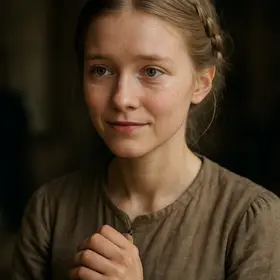 Ona LukoszaiteWe first meet Ona at her wedding feast in Chicago’s Packingtown, a shy Lithuanian bride glowing with hope beside Jurgis Rudkus. She matters because her marriage pulls an extended immigrant family under the same fragile roof, and her needs and worries push Jurgis to chase steady work and a future in this harsh new city.
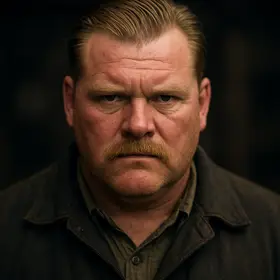 Phil ConnorWhen we first meet him, Connor is a stockyards foreman with political pull, the kind of boss everyone knows not to cross. He matters because he can open or close the gate to work, and his word carries weight with the men who run the yards.
 Mike ScullyWhen we first hear about Mike Scully, he’s the Democratic ward boss of Packingtown—the man who can open or close doors with a nod. He controls jobs, police favors, and little city contracts, and Jurgis is quickly drawn into his orbit around election time with promises that working for Scully will make life in the yards a bit easier.
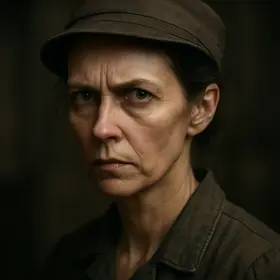 Miss HendersonMiss Henderson is the forelady over the young women in the packinghouse wrapping room, the one who controls hiring, hours, and favors. She matters because she can make or break a girl’s job with a glance—and she expects payoffs and obedience, punishing anyone who won’t play along or send business her way.
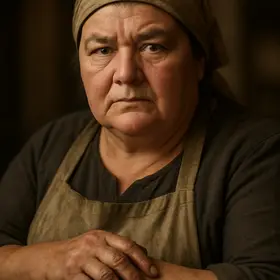 Teta ElzbietaWe first meet Teta Elzbieta at Jurgis and Ona’s wedding feast, running the kitchen like a general—counting coins, minding the musicians, and watching that no expense slips past her. She’s the family’s steady center in a strange new city, a no-nonsense aunt and mother of a brood who keeps everyone fed, organized, and a little less frightened.
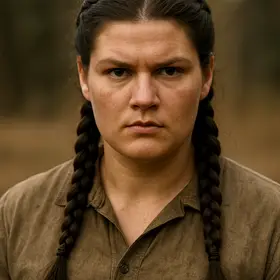 Marija BerczynskasWhen we first meet Marija, she’s Ona’s tough, no-nonsense cousin who takes charge at the wedding feast, bargaining with musicians and keeping the rowdy crowd in line. She’s blunt, fearless, and proudly ready to work—exactly the kind of backbone the family leans on as they start out in Chicago.
 Little AntanasWe meet Little Antanas as the baby of Jurgis and Ona, passed gently from arm to arm in cramped rooms while the adults hustle to keep food on the table. He matters because his small needs—warmth, milk, a dry place to sleep—quietly drive the family’s choices and keep their hopes pointed forward.
 Jack DuaneWhen we first meet Jack Duane, he’s the smooth-talking fellow in jail who seems oddly at ease, chatting like a man between appointments. He’s friendly with Jurgis, worldly about Chicago, and he hints at a network of people who get things done, which instantly makes him feel important and a little dangerous.
 Comrade OstrinskiHe’s a Polish immigrant tailor and devoted socialist who speaks to Jurgis in his own language after a rousing meeting, inviting him in and calmly explaining what the movement stands for. He matters because he offers Jurgis warmth, clarity, and a first real doorway into a supportive circle.
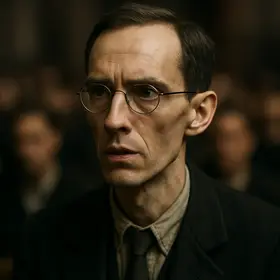 Nicholas SchliemannWhen we first meet him, he’s the intense, bookish voice in a crowded hall—an educated socialist who talks fast, asks sharper questions, and seems to have read everything. He matters because he gives the workers’ frustrations a framework, turning raw outrage into ideas they can actually argue about.
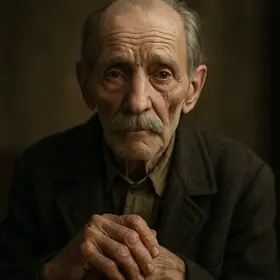 Antanas RudkusWhen we first meet him, Antanas Rudkus is Jurgis’s elderly father, newly arrived from Lithuania with the family and trying to help them make a start in Chicago. He’s gentle, proud, and stubborn about working, even though his strength is clearly fading, which makes you worry for him right away.
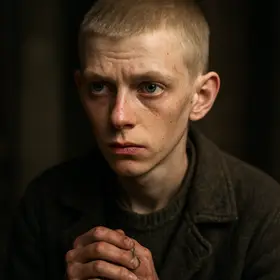 StanislovasStanislovas is one of Teta Elzbieta’s older children, a new arrival in Chicago who’s quickly told he has to help keep the household afloat. When you first meet him, he’s nervous but determined, the kid everyone is counting on to land a job even if it scares him. He matters because he shows how the pressure to earn money lands on the children almost immediately.
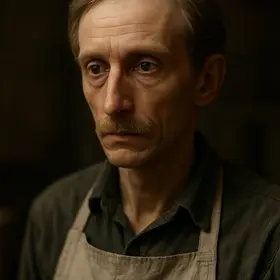 Jokubas SzedvilasJokubas Szedvilas is the family’s countryman in Chicago, the cautious delicatessen owner who takes them in when they arrive. He knows the stockyards and the streets, and he’s the one who guides them around, helps them find a place to stay, and tries—gently—to temper their hopes with what he’s learned the hard way.
 Grandmother MajauszkieneShe’s the seasoned neighbor the family meets in Packingtown, an old immigrant who’s seen every trick the stockyards and landlords can play. Plainspoken and a bit tart, she spells out how the payments and housing schemes really work. She matters because she gives the newcomers their first unvarnished look at the neighborhood’s hard truths.
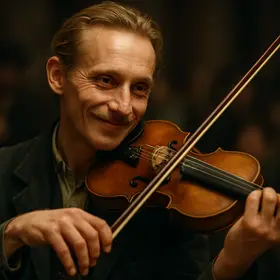 Tamoszius KuszleikaHe’s the fiddler who keeps Jurgis and Ona’s wedding whirling—calling figures, striking up reels, and coaxing coins from merry guests. Friendly and quick with a joke, he moves through the immigrant crowd like a spark, and he starts paying special attention to Marija almost as soon as the music begins.
 JonasWe first meet Jonas amid the raucous wedding feast in Packingtown—an older relative whose tales of high wages in America helped push the family to make the trip. He’s the practical one, counting costs and offering blunt advice as they start looking for work and a place to live in Chicago.
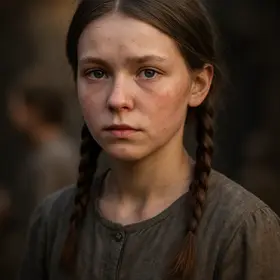 KotrinaWhen we first meet Kotrina, she’s one of Teta Elzbieta’s children bustling around the wedding feast, quietly corralling younger siblings and pitching in wherever an extra pair of hands is needed. She matters because she shows how the family runs on everyone’s effort, even a girl her age, and you instantly feel how much responsibility she carries.
Study guide
Summaries and analysis of all 31 chapters, and profiles of 22 characters, illustrated with scenes from the book.
Themes
- industrial labor
- immigrant struggle
- corruption
- poverty
- gender exploitation
Why Read The Jungle?
Read The Jungle to encounter a sustained, eyewitness-style examination of how early industrial capitalism reshaped everyday life. Sinclair’s prose makes concrete the links between workplace practices, housing, credit, and public health; the book turns abstract systems into the lived experiences of people you come to know through joy, illness, and heartbreak.
For contemporary readers the novel offers tools for understanding present debates about labor rights, supply chains, and economic displacement. It also preserves the voices of immigrant communities and women who bore disproportionate burdens; as a historical document and a moving family saga, it prompts reflection on what reforms matter and why political organization emerged from dire necessity.
Experience The Jungle on Book2Life
Read with AI-generated visuals, character portraits, audio narration, smart summaries, and more — free in your browser and on iPhone.