The Iliad Book 18 Summary
Thetis, Vulcan, New Armour
Achilles learns of Patroclus’s death, mourns, Thetis seeks Vulcan, and Hephaestus forges magnificent armour for Achilles.
Summary
Antilochus arrives at Achilles’ ships to tell him that Patroclus has been slain and that Hector now bears Achilles’ armour. Achilles reacts with overwhelming grief: he tramples dust on his head, rends his hair, and threatens death if Hector is not slain. His lament draws Thetis and a host of Nereids from the sea. Thetis comforts Achilles but warns that his own death will soon follow Hector’s; Achilles nevertheless vows to return to battle to avenge Patroclus. Iris, sent by Juno, comes to bid Achilles show himself at the trench to frighten the Trojans and help recover Patroclus’ body. Achilles appears, armed with Minerva’s aegis and a halo-like flame, and his shout routs many Trojans so the Danaans can drag Patroclus free and lay him on a bier.
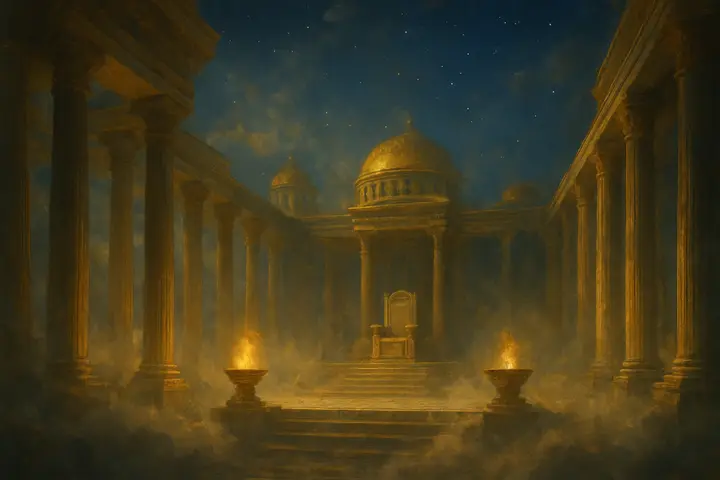
That night Thetis goes to Olympus and beseeches Vulcan (Hephaestus) to make new armour for Achilles, because the hero’s own armour was taken with Patroclus. Vulcan greets her hospitably and sets to work at his forge. The poem gives an extended, vivid catalogue of Vulcan’s workmanship: a multi-layered shield inlaid with scenes of the world and human life (cosmos, celestial bodies, two cities in civic scenes and war, agricultural labor, a vineyard, herds, dances), a bright breastplate, a close helmet with a golden crest, and greaves. The shield’s rim is encircled by Oceanus. When the arms are finished, Thetis swiftly returns to bear them to Achilles, preparing him for the next confrontation.
Key events
- Antilochus tells Achilles that Patroclus has fallen and Hector has taken the armour
- Achilles' profound grief summons Thetis and the Nereids from the sea
- Thetis warns Achilles that his own death will follow Hector’s but promises new armour from Vulcan
- Iris (sent by Juno) urges Achilles to show himself; Minerva arms him with aegis and terrorizes the Trojans
- Achaean fighters recover Patroclus’ body and hold a vigil; Trojans debate whether to retreat
- Thetis visits Hephaestus; he forges an elaborate shield and full armour, which Thetis carries back to Achilles
Analysis
This book pivots from the battlefield’s immediate chaos to a mythic, providential response: grief provokes divine craftsmanship. Achilles’ lament and Thetis’ supplication deepen the poem’s exploration of heroic fate, anger, and the entwining of personal loss with communal consequence. Achilles’ grief is performative and catalytic: it reunites gods and men and precipitates a shift in the fighting’s balance. Thetis’ role as mediator emphasizes the porous boundary between mortal suffering and divine agency; her securing of armor for Achilles stages a ritualized preparation for vengeance that will shape the story’s next phase.
Hephaestus’ forging sequence is central thematically and structurally. The shield’s imagery condenses the poem’s moral universe: cosmos, daily life, civic law, agriculture, song, and war all sit within a single object that will be borne into combat. The detailed ekphrasis elevates human life—marriage, law-suits, harvests—against the backdrop of war’s devastation, underscoring what heroism both protects and imperils. Narrative technique shifts from direct action to ornate description, offering readers a pause that gives weight to upcoming violence and frames Achilles’ return as both personal vendetta and moment with cosmic significance.
Important quotes
“Alas,” he cried, “son of noble Peleus, I bring you bad tidings, would indeed that they were untrue. Patroclus has fallen, and a fight is raging about his naked body—for Hector holds his armour.”
AntilochusAntilochus breaks the news of Patroclus’ death to Achilles, triggering Achilles’ grief and vow of revenge.
“My son, why are you thus weeping? What sorrow has now befallen you? Tell me; hide it not from me.”
ThetisThetis arrives from the sea to comfort Achilles and hears of Patroclus’ fate, leading her to seek armour from Vulcan.
“He wrought the earth, the heavens, and the sea; the moon also at her full and the untiring sun, with all the signs that glorify the face of heaven—the Pleiads, the Hyads, huge Orion, and the Bear...”
NarratorPart of Hephaestus’ ekphrasis describing the shield’s cosmic and human scenes—central to the poem’s thematic mapping of war and life.
Characters in Book 18
All chapter summaries ›Characters ›
Read The Iliad illustrated
Every scene in these notes comes from the Book2Life reader, where the full public-domain text is illustrated as you read, with character portraits and narration. Free in your browser and on iPhone.
