
Jurgis Rudkus in The Jungle
Protagonist
A large, hardworking Lithuanian immigrant whose devotion to family and faith in work drive him through Packingtown's brutality.
Who is Jurgis Rudkus?
Jurgis Rudkus arrives in Chicago full of confidence, physical strength, and devotion to his young wife Ona. He wants stability, enough wages to buy a home and provide for his extended household, and to protect his family from the city's dangers. Early on he finds steady work in the packing houses, helps purchase a row house, and assumes responsibility for earning and defending the household. Repeated injuries, seasonal unemployment, blacklisting, and personal tragedies—Ona's assault and death, the drowning of his son Little Antanas, and the collapse of family hopes—undermine his belief that hard work alone will solve their problems. He drifts between factory jobs, brief stints of honest labor, vagrant tramping in the countryside, and criminal apprenticeship in the city as desperation grows. Ultimately he is converted by a Socialist orator and finds a new political purpose, joining organizers and using his experience to speak for other workers.
In the book: When we first meet Jurgis at the veselija in Chicago’s Packingtown, he’s the optimistic new immigrant who believes he can outwork any problem. He’s Ona’s devoted husband and the steady backbone of their extended family, quick to take the heaviest load and promise that things will be all right.
Personality
- Physically strong
- At the veselija he is described as a huge, awkward man confident his broad back will not be beaten down by stockyards labor.
- Devoted
- He promises Ona at the wedding to work harder and constantly risks attacks (he assaults Connor) to defend her honor after learning of the foreman’s coercion.
- Stubbornly hopeful
- After first day wages he urges the household to buy a house and sleeps in determination despite warnings about the deed's fine print.
- Practical survivor
- When blacklisted he moves to Harvester works, then to rail-mill work, and later hops freight trains to earn harvest wages during his flight into the country.
- Radicalizing grief
- Crushing losses—Ona’s death and his family’s ruin—turn his despair into an intense receptivity to Socialist speeches that he attends and acts on.
Character arc
Jurgis begins as an optimistic, muscular immigrant who believes in hard work, family duty, and the promise of America. He secures jobs, helps buy a house, and initially embraces the packinghouse spectacle as honorable work. Repeated shocks—brutal labor practices, deceptive housing terms, injuries, blacklisting, the sexual coercion of Ona, and the deaths of Ona and Little Antanas—erode his faith in honest toil and in the institutions around him. He alternates between trying to rebuild (finding work at Harvester and in the mills) and fleeing (hopping trains, tramping the country) as grief and shame push him into drunkenness, petty crime, and prison. Repeated contact with political machines draws him briefly into graft and election work, but ultimately a Socialist orator and organizers offer him a different transformation: from private struggle and sporadic lawlessness to political consciousness and collective purpose. By the end of the notes he moves from personal, reactive violence and survival tactics toward organized political action, finding in Socialism a framework to name the causes of his suffering and a new way to act.
Relationships
- Ona Lukoszaite Wife; his love and the central motivation for his early devotion, protection, and later grief.
- Teta Elzbieta Aunt/household matriarch whose labor and advice anchor the family and who cares for him during illness.
- Marija Berczynskas Cousin and laborer whose misfortunes (factory shutdown, morphine addiction, brothel life) both sadden and reconnect him to Packingtown networks.
- Little Antanas His infant son whose birth momentarily renews Jurgis’s determination and whose subsequent drowning devastates him.
- Phil Connor Packing-house foreman who sexually exploits Ona and becomes the target of Jurgis’s violent attack.
- Comrade Ostrinski Socialist organizer who listens to Jurgis and helps translate his anger into political understanding and membership.
Quotes by Jurgis Rudkus
“Leave it to me; leave it to me. I will earn more money—I will work harder.”
Chapter 1Jurgis’s repeated promise to Ono after they learn of the wedding's debts, establishing his earnest resolve and a recurring response to hardship.
“Dieve—but I’m glad I’m not a hog!”
Chapter 3After witnessing the hogs’ terrified journey and slaughter, Jurgis mutters this, revealing a moment of humane sympathy and relief at his own human status.
“Palauk! Look, Muma, he knows his papa! He does, he does! Tu mano szirdele, the little rascal!”
Chapter 11Jurgis's joyful, tender moment watching little Antanas smile, offering a humanizing counterpoint to his suffering and despair.
“"I hit my boss."”
Chapter 17Jurgis admits in court that he attacked Connor, sparking the judge’s summary sentence.
““My wife!” he panted.”
Chapter 19Jurgis bursts into Madame Haupt’s room, frantic and out of breath as he begs her to come for Ona’s childbirth.
“Can you change me a hundred-dollar bill?”
Chapter 25Jurgis’s desperate request to a saloon bartender; it sets off the confrontation that leads to his arrest.
Why Jurgis Rudkus matters
Jurgis functions as the novel’s human barometer: his early hope, slow degradation, and eventual political conversion trace how industrial capitalism grinds individuals and families. Through his injuries, unemployment, and losses Sinclair exposes exploitative labor, corrupt political machines, and public-health dangers. Jurgis’s transition from believing in individual effort to embracing collective action embodies the book’s argument that systemic causes require organized responses; his suffering personalizes the structural critiques of the packing industry, urban poverty, and the promise of Socialism as a remedy.
Chapters with Jurgis Rudkus
- Chapter 1
- Chapter 2
- Chapter 3
- Chapter 4
- Chapter 5
- Chapter 6
- Chapter 7
- Chapter 8
- Chapter 9
- Chapter 10
- Chapter 11
- Chapter 12
- Chapter 13
- Chapter 14
- Chapter 15
- Chapter 16
- Chapter 17
- Chapter 18
- Chapter 19
- Chapter 20
- Chapter 21
- Chapter 22
- Chapter 23
- Chapter 24
- Chapter 25
- Chapter 26
- Chapter 27
- Chapter 28
- Chapter 29
- Chapter 30
- Chapter 31
More The Jungle characters
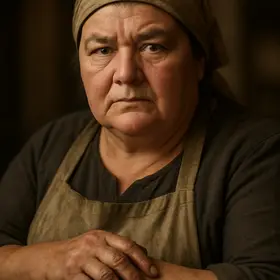 Teta ElzbietaMajor character
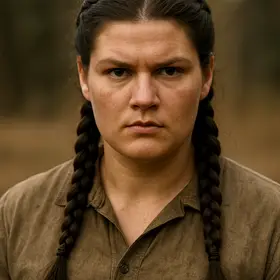 Marija BerczynskasMajor character
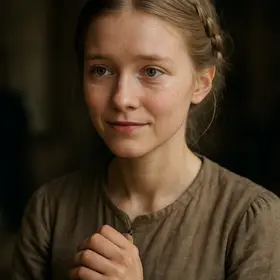 Ona LukoszaiteMajor character
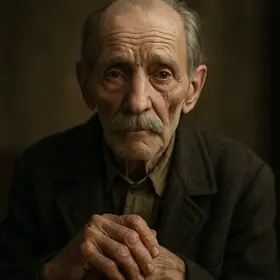 Antanas RudkusMinor character
 JonasMajor character
 StanislovasMinor character
 Tamoszius KuszleikaMinor character
 Little AntanasMinor character
All chapter summaries ›Characters ›
Read The Jungle illustrated
Every scene in these notes comes from the Book2Life reader, where the full public-domain text is illustrated as you read, with character portraits and narration. Free in your browser and on iPhone.
