
Hareton Earnshaw in Wuthering Heights
Major character
The neglected Earnshaw heir, rough-mannered and uneducated, raised at Wuthering Heights under Heathcliff’s control yet fundamentally warm and loyal.
Who is Hareton Earnshaw?
Hareton Earnshaw is the son born to Hindley and Frances Earnshaw who becomes the last of the Earnshaws living at Wuthering Heights. After his mother’s death and Hindley’s descent into drink, Hareton is deprived of a proper upbringing: he grows coarse, ill-taught, and sullen under the hostile household regime. Heathcliff, having gained power over Wuthering Heights, keeps Hareton close but deliberately stunts his education and manners as part of a wider design against Hindley’s line. Visitors and narrators repeatedly notice Hareton’s rough appearance, his crude language, and his readiness to curse, yet they also glimpse moments of loyalty and decency—he brings provisions to prisoners, defends the household, and shows affection when treated kindly. As Catherine Linton begins to interact with him, Hareton reacts with wounded pride, shame at his ignorance, and a stubborn desire for approval; he later accepts efforts to learn and to behave more civilly. Throughout the chapters in which he appears, Hareton functions as the earthy, human counterweight to the Heights’ cruelty: abused and diminished, but capable of being softened by patient kindness.
In the book: Hareton Earnshaw is the neglected heir of Wuthering Heights, raised in hardship and ignorance by those who wish to keep him low. Despite rough manners and little schooling, he is fundamentally loyal and warm-hearted, becoming a quiet counterpoint to the novel’s fiercer tempers and a symbol of how affection and perseverance can soften a brutal legacy without detailing the later plot turns.
Personality
- Rough-mannered
- In Chapter 2 Lockwood meets a "young coarse-looking man" who mocks and curses, and in Chapter 11 Hareton hurls a stone at Nelly and uses learned curses.
- Loyal
- In Chapter 11 Hareton admits Heathcliff as his teacher and protector and in Chapter 34 he tends Heathcliff’s corpse and helps bury him, showing devotion.
- Proud
- In Chapter 31 Hareton is deeply humiliated by Catherine’s mockery of his reading and angrily flings books into the fire, betraying wounded pride.
- Teachable
- In Chapter 32 Hareton accepts Catherine’s gift of a book and sits with her to study, beginning to soften and learn despite earlier ignorance.
- Isolated
- After Hindley’s decline and Heathcliff’s control (Chapter 17), Hareton remains at the Heights, deprived of visitors and decent instruction, living largely cut off.
Character arc
Hareton begins as a neglected infant heir (Chapter 8) who, after his mother’s death and Hindley’s ruin, grows into a coarse, ill-educated youth shaped by the hostile atmosphere at Wuthering Heights. Early chapters show him as surly and aggressive: he hurls stones at Nelly (Chapter 11), curses and mocks visitors (Chapter 2), and accepts Heathcliff as his guardian in place of proper nurture. Under Heathcliff’s authority and from lack of schooling he becomes ashamed of his ignorance; his pride is exposed when Catherine taunts his reading attempts and he reacts violently by striking and later burning books (Chapter 31). That shame, however, contains a seed of change: when Catherine offers a book and patience, Hareton accepts instruction (Chapter 32), returns the gesture by bringing books in remorse (Chapter 31), and begins to form a genuine, tender rapport with her (Chapters 32–33). By Heathcliff’s final days Hareton displays genuine grief and a capacity for care—he tends the dead master and participates in the burial (Chapter 34). His arc moves from neglected, embittered heir to a more humane, taught, and emotionally responsive young man through the influence of affection and opportunity to learn.
Relationships
- Heathcliff Hareton is raised under Heathcliff’s authority; Heathcliff acts as his guardian and deliberately shapes him by withholding education and enforcing harsh manners.
- Hindley Earnshaw Hindley is Hareton’s father whose alcoholism and cruelty leave Hareton neglected and vulnerable to Heathcliff’s control.
- Catherine Linton Catherine’s mocking and later patient teaching provoke Hareton’s wounded pride and eventual willingness to learn, forming an intimate bond.
- Nelly Dean Nelly observes Hareton’s condition, intervenes for his welfare at times, and records his gradual improvement as she cares for the younger household.
- Joseph Joseph is a long-serving, severe servant at Wuthering Heights who witnesses and denounces Hareton’s rough behavior, representing the household’s stern domestic order.
- Zillah Zillah is a servant who reports on household affairs involving Hareton and assists in managing the practical burdens of his neglected upbringing.
Quotes by Hareton Earnshaw
““I shall have naught to do wi’ you and your mucky pride, and your damned mocking tricks!””
Chapter 32Hareton’s violent, dialectal outburst reveals his wounded pride and resistance to Catherine’s teasing, highlighting social tension between them before reconciliation.
Why Hareton Earnshaw matters
Hareton embodies the human cost of vengeance and social degradation: his wasted education and coarse manners are direct effects of Hindley’s ruin and Heathcliff’s punitive control. Yet his capacity to respond to patient kindness—accepting a book, beginning to learn, and forming a gentle bond with Catherine—suggests the novel’s hope that affection and steady care can reverse cycles of brutality. As a living link between the Earnshaw past and the Heights’ present, Hareton represents both the inheritance of suffering and the possibility of repair through humane relations.
Chapters with Hareton Earnshaw
More Wuthering Heights characters
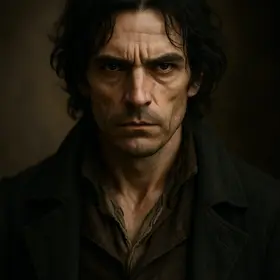 HeathcliffProtagonist
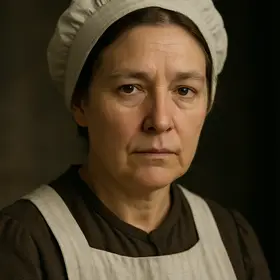 Nelly DeanNarrator
 Catherine LintonMajor character
 JosephMinor character
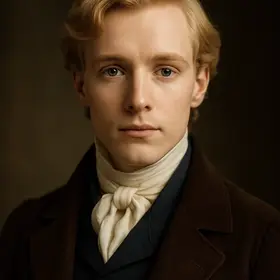 Edgar LintonMajor character
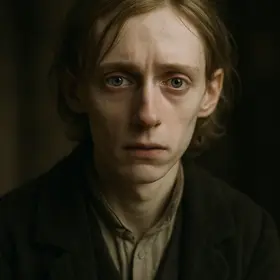 Linton HeathcliffMajor character
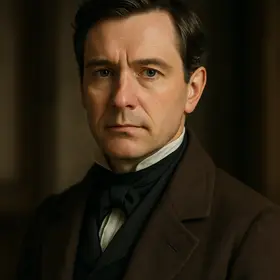 Mr. LockwoodNarrator
 Hindley EarnshawMajor character
All chapter summaries ›Characters ›
Read Wuthering Heights illustrated
Every scene in these notes comes from the Book2Life reader, where the full public-domain text is illustrated as you read, with character portraits and narration. Free in your browser and on iPhone.
