
Joseph in Wuthering Heights
Minor character
Long-serving, pious, cantankerous manservant at Wuthering Heights whose Yorkshire manner marks the household atmosphere.
Who is Joseph?
Joseph is the elderly, devout servant who has worked at Wuthering Heights through multiple generations. He appears repeatedly in kitchen and common-room scenes, performing domestic tasks (relieving guests of horses, sitting by the fire, denouncing misdeeds) and supplying a stern, moral commentary on household life. His thick Yorkshire dialect and rigid religiosity make him a figure of comic harshness and persistent judgment: he chastises children, mouths prayers and sermons, and rebukes any behavior he deems profane. He remains physically present when other servants leave, helping maintain the house during Hindley’s decline and after later upheavals; he also acts for Heathcliff on occasion, notably insisting that Linton be returned to Wuthering Heights. Though often sour and unsympathetic, Joseph is loyal to the Heights and its masters, enforcing their will and preserving the bleak social order of the household by his constancy and unbending moral posture.
In the book: Joseph is the long-serving manservant at Wuthering Heights, a fiercely pious, cantankerous presence whose thick Yorkshire dialect and rigid moralizing color the household’s daily life. He provides dark comic relief and a constant note of judgment, embodying the novel’s atmosphere of harshness and superstition while showing unwavering loyalty to the Heights and its masters.
Personality
- Pious
- Lockwood and Nelly note Joseph’s rigid religiosity and he is associated with interminable sermons in Lockwood’s nightmare sequence (Chapters 1, 3).
- Cantankerous
- He offers Lockwood a surly welcome on arrival and regularly denounces and scolds household members for perceived improprieties (Chapters 1, 31).
- Loyal
- When most servants leave during Hindley’s decline, Joseph remains at the Heights, maintaining the house and serving its masters (Chapter 8).
- Judgmental
- Isabella and visitors record Joseph’s vinegar-faced moralizing and his loud denunciations of Catherine’s gardening and other actions (Chapters 13, 31–33).
- Stubborn
- He refuses to yield Heathcliff’s demand in tone and presence, famously arriving to demand Linton be returned to his father (Chapter 19).
Character arc
Joseph’s presence is remarkably steady rather than developmental: from his first scenes he functions as the ancient, sermonizing backbone of the Heights and he maintains that role to the end. Early on he greets strangers with surliness and underlines the house’s austerity; later, as household fortunes and masters change, he remains—a remaining repository of old moral codes and provincial piety. He does not soften or reform; instead his rigid religiosity and denunciatory manner persist through Hindley’s decline, Isabella’s mistreatment, the arrival and removal of Linton, and the imprisonment and isolation of Catherine Linton. Even when younger characters shift—Hareton’s roughness, Cathy’s bonding with Hareton, Heathcliff’s decline—Joseph’s function is to mark continuity: he upbraids, he scolds, he keeps the domestic rituals (fireside, chapel-like rebukes) alive. His final appearances around Heathcliff’s death show him reacting, but not fundamentally changing: he remains the fixed, austerely pious servant of Wuthering Heights until the novel’s close.
Relationships
- Heathcliff Serves and defends Heathcliff’s household authority, enforcing his commands such as demanding Linton’s return.
- Hareton Earnshaw Lives alongside and berates Hareton in domestic scenes, condemning his roughness while witnessing Hareton’s interactions with others.
- Zillah Co-servant at the Heights who shares domestic duties and together with Joseph composes the household’s harsh social front (appears in the same kitchen scenes).
- Mr. Lockwood Greets Lockwood with surly formality on his first visit and figures in Lockwood’s early impressions of the house.
- Isabella Linton Isabella records Joseph’s vinegar-faced moralizing and finds him part of the threatening, unwelcoming household on her arrival.
- Catherine Linton Frequently rebukes and scolds Catherine’s behavior (notably her gardening), acting as a censor of her breaches of propriety at the Heights.
Quotes by Joseph
“Hathecliff has sent me for his lad, and I munn’t goa back ’bout him.”
Chapter 19Joseph's declarative demand reveals Heathcliff's intent and creates immediate conflict over custody of Linton.
Why Joseph matters
Joseph embodies the novel’s atmosphere of unyielding harshness, superstition, and moral rigor. As a surviving servant across family crises, he signals social continuity and the endurance of provincial religious judgment even amid passion and revenge. His cantankerous piety deepens the contrast between spiritual language and cruel conduct in the house, emphasizing themes of hypocrisy, the oppressive weight of tradition, and the way institutions (here, household religion and servitude) sustain cycles of domination. In short, Joseph is less a mover of plot than a moral landmark whose constancy highlights the emotional tumult around him.
Chapters with Joseph
More Wuthering Heights characters
 HeathcliffProtagonist
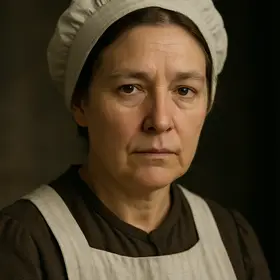 Nelly DeanNarrator
 Catherine LintonMajor character
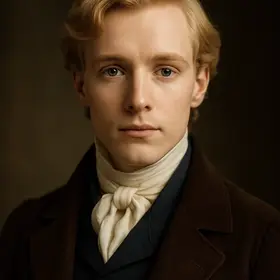 Edgar LintonMajor character
 Hareton EarnshawMajor character
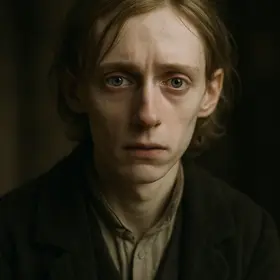 Linton HeathcliffMajor character
 Mr. LockwoodNarrator
 Hindley EarnshawMajor character
All chapter summaries ›Characters ›
Read Wuthering Heights illustrated
Every scene in these notes comes from the Book2Life reader, where the full public-domain text is illustrated as you read, with character portraits and narration. Free in your browser and on iPhone.
