
Cecil Vyse in A Room with a View
Antagonist
An urbane, fastidious aesthete and suitor whose formality and social snobbery constrain Lucy and reveal Edwardian conventions.
Who is Cecil Vyse?
Cecil Vyse is a cultivated, self-conscious young man who courts Lucy Honeychurch with a carefully formed set of tastes and ideals. He wants a respectable, artistically refined marriage that confirms his social and intellectual judgments; he values manners, beauty, and wit and expects others to conform to his standards. In the novel he announces Lucy’s engagement to Windy Corner society (Chapter 8), smooths Lucy’s entry into his circle (Chapter 11), and publicly displays his ironic, controlling humour (Chapters 9–10). Cecil engineers a practical joke by bringing the Emersons into local notice to upend provincial snobbery (Chapter 10), reacts with hauteur to the pond incident (Chapter 12), and reads mockingly in public, provoking friction (Chapters 12, 15). As tensions mount between his aesthetic imperatives and Lucy’s changing sympathies, their intimacy feels awkward and staged (Chapter 9), and Lucy ultimately confronts and dissolves their engagement (Chapter 17). Throughout, Cecil functions as a social force—orderly, pedantic, and often unintentionally rigid—whose presence forces Lucy to clarify what she truly values.
In the book: Cecil Vyse is an upper-class aesthete and suitor whose refined tastes, formality, and social snobbery represent the constricting side of Edwardian convention. Through his courtship and interactions, he becomes a foil to more spontaneous characters and helps illuminate the novel’s themes of authenticity, class, and the tension between intellect and feeling—pushing the heroine to clarify what she truly values without revealing major plot turns.
Personality
- Fastidious
- He reacts with distaste to the coffee stain at the garden-party and complains about social degradation (Chapter 9).
- Aesthetic
- He styles himself as a cultivated man, comparing social life to art and confessing a devotion to the 'Comic Muse' when defending his prank (Chapter 10).
- Controlling
- He announces Lucy’s engagement to the household and expects ceremonies and social approval to follow (Chapter 8).
- Ironical
- He reads aloud satirical material and mocks local tastes, creating social friction during the tennis and lawn scenes (Chapters 12, 15).
- Proud
- He is wounded and dignified when Lucy breaks their engagement, acknowledging his own failure to reach her (Chapter 17).
Character arc
Cecil first appears as a confident, cultivated suitor who embodies refined Edwardian tastes and the desire to civilize and correct what he sees as provincial vulgarity. Early scenes show him taking pride in arranging Lucy’s social placement and in his urbane ironies; he treats social life as an aesthetic project and believes instruction and wit are useful corrective tools (Chapters 8–11). As incidents accumulate—the pond embarrassment, the awkward public readings, and Lucy’s growing discomfort—his manner that once seemed charming begins to alienate her (Chapters 12–15). When Lucy exposes the incompatibility between his controlling idealism and her need for feeling and freedom, Cecil is momentarily baffled but nevertheless honest: he recognizes her charge and admits his inability to know people intimately (Chapter 17). By the end of his arc he moves from assured suitor to a wounded, self-aware figure who must accept that his cultivated ironies and social doctrines cannot hold Lucy’s affections, revealing the limits of his aestheticism within human relationships.
Relationships
- Lucy Honeychurch His fiancée for a time; he courts her with refined manners but their differences in temperament and values drive a wedge between them.
- Mrs. Honeychurch Lucy’s mother, who welcomes Cecil’s respectability and celebrates the engagement as proper and advantageous.
- Mr. Beebe A kindly clergyman who treats Cecil with measured regard and discusses Lucy’s moral significance with him (Chapter 8).
- Mrs. Vyse His social mother figure whose salon and urbane circle help assimilate Lucy into Cecil’s cultured world (Chapter 11).
- George Emerson A foil and rival in the sense that George’s spontaneous humanity contrasts with Cecil’s controlled aestheticism; their temperaments unsettle Lucy in different ways.
- Miss Bartlett Lucy’s chaperone, who worries about Cecil’s influence and later mediates matters of decorum and secrecy.
Quotes by Cecil Vyse
““She has accepted me,” he said, and the sound of the thing in English made him flush and smile with pleasure, and look more human.”
Chapter 8Cecil announces Lucy's acceptance to the gathered family, and the confession humanizes him briefly despite his stiff manner.
““I have no profession,” said Cecil.”
Chapter 8In conversation with Mr. Beebe, Cecil admits his leisured stance, revealing his attitudes toward work, leisure and social role.
“To me it seemed perfectly appalling, disastrous, portentous.”
Chapter 9Cecil protests at the garden-party’s public congratulations, revealing his view that engagement should be private.
“I had got an idea—I dare say wrongly—that you feel more at home with me in a room.”
Chapter 9Walking in the woods, Cecil voices a worry that Lucy associates him with interiors rather than the open country, expressing a difference in sensibility.
“I was hoping you’d come. I heard you all bear-gardening, but there’s better fun up here.”
Chapter 10Cecil calls Lucy to the smoking-room window in high spirits to announce his successful prank about tenants.
“Anything is fair that punishes a snob.”
Chapter 10Cecil defends his trick of placing his acquaintances as tenants, framing it as moral retribution against social snobbery.
Why Cecil Vyse matters
Cecil represents the constraining side of Edwardian order: an elegant aestheticism that prizes form, irony, and social propriety over spontaneity and emotional truth. Through his actions—practical jokes, public mockery, and the insistence on cultivated roles—he exposes tensions between intellect and feeling, appearance and authenticity. The discomfort he provokes in Lucy forces her to confront whether she values social approval or inward truth, making Cecil crucial to the novel’s exploration of class, convention, and the moral cost of living according to ideals rather than lived experience.
Chapters with Cecil Vyse
More A Room with a View characters
 Lucy HoneychurchProtagonist
 Freddy HoneychurchMinor character
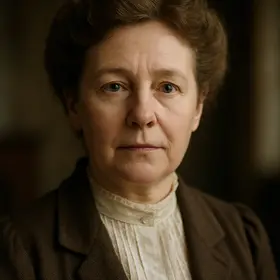 Mrs. HoneychurchMajor character
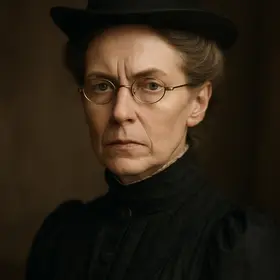 Charlotte BartlettMajor character
 George EmersonMajor character
 Mr. BeebeMajor character
 Mr. EmersonMajor character
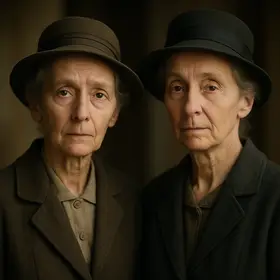 The Miss AlansMinor character
All chapter summaries ›Characters ›
Read A Room with a View illustrated
Every scene in these notes comes from the Book2Life reader, where the full public-domain text is illustrated as you read, with character portraits and narration. Free in your browser and on iPhone.
