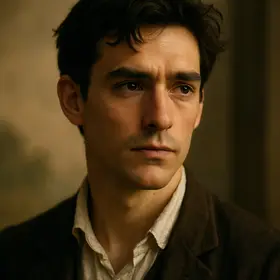
George Emerson in A Room with a View
Major character
The serious, candid son of Mr. Emerson whose feeling and frankness unsettle Lucy and prompt her moral and emotional awakening.
Who is George Emerson?
George Emerson is Mr. Emerson’s son, introduced as a sombre, intelligent young man whose blunt kindness and unconventional candour contrast with the genteel world around Lucy Honeychurch. He acts with moral directness: offering the better room in Florence, attending to a fallen child at Santa Croce, carrying the fainted Lucy to safety, and later throwing stained photographs into the Arno. He speaks frankly about fate, feeling, and freedom, playfully joins others at the pond, and impulsively kisses Lucy in Windy Corner’s shrubbery. George repeatedly articulates a belief in truthful feeling and refuses to observe social evasions; he declares his love for Lucy and later quietly withdraws when necessary. Across Windy Corner and Florence episodes he becomes the living alternative to Cecil’s polished conventionality, urging Lucy to confront her muddle and choose authenticity. He helps create the conditions for Lucy’s break with Cecil and eventually shares intimate, settled moments with her in Florence, where he comforts and reassures her about the permanence of their love.
In the book: George Emerson is the intelligent, unconventional son of Mr. Emerson whose candor and emotional intensity challenge the rigid social codes surrounding the heroine. As a figure of honest feeling and clear-sighted skepticism about class and propriety, he becomes a catalyst for the protagonist’s awakening, offering a freer, more authentic way of seeing the world and herself.
Personality
- candid
- He offers the better room at the Pension Bertolini through Mr. Beebe and later speaks plainly to Lucy about her feelings and about love (Chapters 1, 16).
- serious
- At Santa Croce he appears sombre and meditative, discussing the sense that the universe’s pieces 'don’t fit' (Chapter 2).
- emotionally direct
- He carries Lucy when she faints in the Piazza Signoria and throws her blood-stained photographs into the Arno rather than preserve them (Chapters 4, 4).
- principled
- He declares his love to Lucy in the dining-room while urging freedom from controlling conventions and then walks away calmly rather than dramatize the scene (Chapter 16).
- playful
- He strips and gamboled in the pond with Freddy and Mr. Beebe, showing a youthful abandon that contrasts with stiff propriety (Chapter 12).
Character arc
George appears first as a serious, somewhat melancholy presence beside his outspoken father; from the start he acts with blunt kindness (offering rooms, helping the fallen child). Early encounters in Florence reveal his capacity for direct moral gestures—tending the child, carrying Lucy after her faint, and disposing of stained photographs—gestures that both alarm and attract Lucy. Back at Windy Corner he oscillates between social awkwardness and emotional courage: playful at the pond, impulsive in the stolen kiss, and candid in his declaration of love in the dining-room. He refuses theatrical melodrama, choosing instead to speak plainly and to walk away when his words must stand on their own. By the end of the narrative passages in Florence he is in a quieter intimacy with Lucy—kneeling to mend a sock, sharing the river view, and reassuring her that their love is the lasting fact. Over the chapters he moves from provocative outsider to confirmed partner, consistently embodying a steady moral seriousness that prompts Lucy’s decisive break with Cecil and allows a settled closing intimacy.
George Emerson in pictures
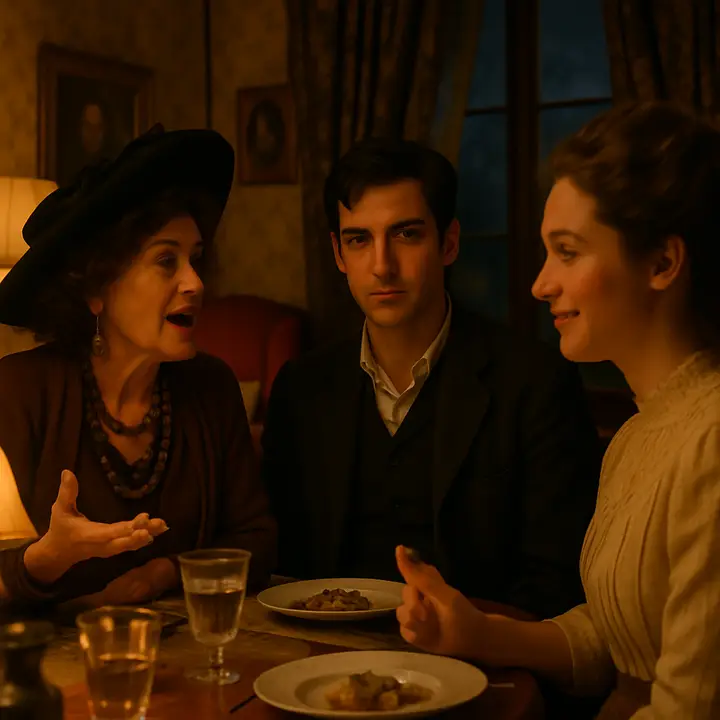
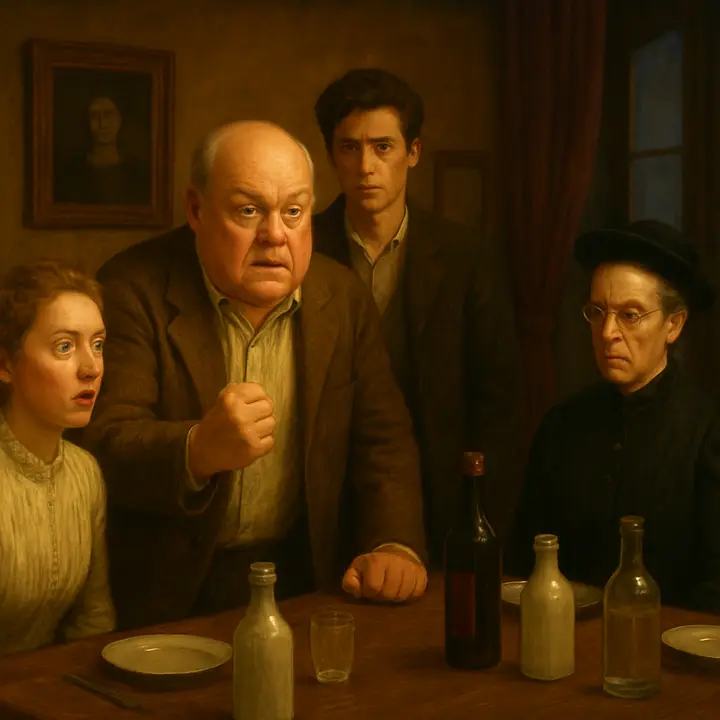
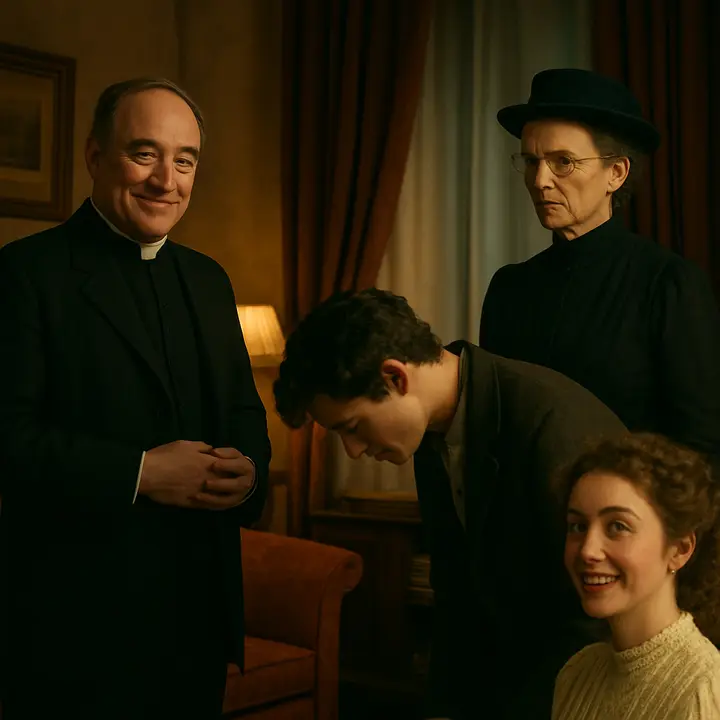
Relationships
- Mr. Emerson His father and candid companion; they act together in Florence and share blunt, unconventional views that unsettle propriety (Chapters 1, 2, 19).
- Lucy Honeychurch The heroine whom he unsettles and ultimately loves; his frankness and emotional intensity catalyse her break with Cecil and lead to their intimate reconciliation (Chapters 2–4, 12, 15–17, 20).
- Charlotte Bartlett Lucy’s chaperone whose prudence and interventions often frustrate George’s openness and complicate Lucy’s ability to respond freely (Chapters 1, 5, 19).
- Mr. Beebe A kindly clergyman and mediator who notices George’s awakening and interacts with him with teasing good humour (Chapters 1, 3, 12).
- Cecil Vyse Lucy’s fiancé and social contrast to George; Cecil’s polished conventionality highlights George’s emotional honesty and helps precipitate Lucy’s split (Chapters 10–11, 15–17).
- Freddy Honeychurch A friend present in light, youthful scenes—most notably the pond—where Freddy and George share spontaneous, boyish abandon (Chapter 12).
Quotes by George Emerson
“You fainted.”
Chapter 4His blunt, practical response when Lucy regains consciousness, showing his matter-of-fact character and beginning their direct interaction.
“I shall probably want to live.”
Chapter 4A startling, weighty remark near the chapter’s end that hints at Emerson’s urgent interior life and shifts the tone of his exchange with Lucy.
“I do love you surely in a better way than he does.”
Chapter 16George's direct claim that his love is truer than Cecil's is the emotional core of his appeal and challenges Lucy's engagement.
“I do believe that, far down in her heart, far below all speech and behaviour, she is glad.”
Chapter 20George intrapolates a charitable reading of Charlotte's motives, introducing ambiguity about her true feelings.
Why George Emerson matters
George represents the moral force of feeling and plain truth against the novel’s codes of social propriety and cultivated irony. His candid acts and speech challenge Lucy to confront her own muddle and to choose authenticity over comfortable convention. Through George, Forster explores themes of personal liberty, the ethical value of honesty, and the possibility that love grounded in sincerity can transcend classed manners. He embodies a humanist alternative to the controlling, aestheticized masculinity that Cecil displays, and his steady seriousness helps bring about Lucy’s ethical and emotional maturation.
Chapters with George Emerson
More A Room with a View characters
 Lucy HoneychurchProtagonist
 Freddy HoneychurchMinor character
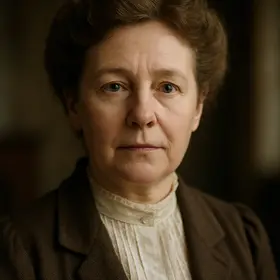 Mrs. HoneychurchMajor character
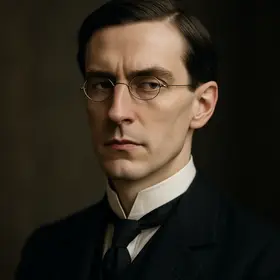 Cecil VyseAntagonist
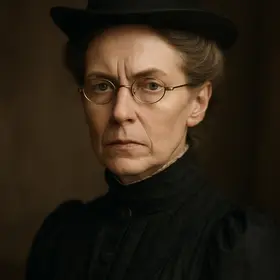 Charlotte BartlettMajor character
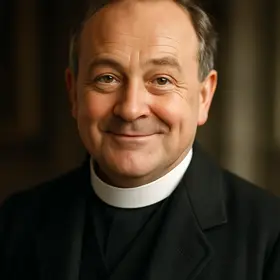 Mr. BeebeMajor character
 Mr. EmersonMajor character
 The Miss AlansMinor character
All chapter summaries ›Characters ›
Read A Room with a View illustrated
Every scene in these notes comes from the Book2Life reader, where the full public-domain text is illustrated as you read, with character portraits and narration. Free in your browser and on iPhone.
