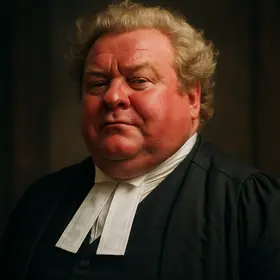
C. J. Stryver in A Tale of Two Cities
Major character
Ambitious, boastful London barrister who takes credit, courts Lucie, and relies on Sydney Carton's unseen labor.
Who is C. J. Stryver?
C. J. Stryver is a successful, self‑confident London lawyer whose public bluster and social ambition mark him as a man of position and appetite for advantage. In courtroom passages and social circles he presents himself as the lead advocate and claims credit for defenses; he summons Carton late at night to prepare cases and depends on Carton’s industry while he lounges and adopts the honors. Stryver decides to propose marriage to Lucie Manette, treating the match as a sensible step in social advancement; when Jarvis Lorry warns him that proposal would be unwise, he bows outwardly to prudence but immediately reforms the story to appear magnanimous. He also appears among Tellson’s clients making cynical remarks about the French refugees, signaling his comfortable contempt for foreign trouble. Stryver acts chiefly through boast, plan, and social maneuver rather than deep feeling; his role in the plot emphasizes the contrast between surface competence and hidden merit performed by others.
In the book: C. J. Stryver is an ambitious London lawyer whose bluster and social climbing contrast with the quiet integrity of others around him. Professionally successful and self‑congratulatory, he relies heavily on the unseen labor and sharp mind of his colleague Sydney Carton, a dynamic that highlights themes of merit versus appearance. His interactions with the Manette circle and the courts help illuminate the novel’s legal world and the moral vanity of certain strata of English society, without being central to the story’s deepest sacrifices.
Personality
- Boastful
- After Darnay's acquittal he loudly claims credit for the defense and accepts congratulations in the court passages.
- Ambitious
- He confidently resolves to propose to Miss Manette, imagining the match as a clear and creditable victory for his prospects.
- Dependant (on Carton)
- In the Temple chamber he lounges while Carton, the 'jackal,' prepares the legal details and papers late into the night for Stryver's cases.
- Unreflective
- When Lorry warns him against proposing to Lucie, Stryver quickly accepts the retreat but immediately recasts it as magnanimous rather than acknowledging deeper reasons.
- Cynical
- At Tellson’s he joins refugees in deriding a Frenchman, showing a comfortable, spiteful attitude toward those threatened by events in Paris.
Character arc
Stryver appears consistently as a confident, forward figure whose public career and manner remain largely intact from first to last appearance. Early on he takes visible credit after Darnay’s trial and comfortably plays the part of a commanding barrister. His reliance on Carton’s labors is established in the late‑night Temple scene, where Stryver lounges and reaps the benefit of Carton’s quiet industry. Emboldened by social hopes, he plans to marry Lucie Manette and acts on that plan with assurance; yet when told by Jarvis Lorry that the match would be unwise, he withdraws from the proposal. Rather than admit a change of heart grounded in principle or deference to the family, he spin‑reframes the retreat as calculated generosity and worldly wisdom, restoring his public image intact. Throughout the chapters in which he appears Stryver shows little introspection or moral growth—he adapts his posture to preserve advantage and reputation while continuing to depend on others’ unseen labor—so his arc is essentially a maintenance of social pose rather than transformation.
Relationships
- Sydney Carton Legal partner who does Stryver's heavy intellectual work while Stryver assumes the public honors; Stryver teases and bullies him despite dependence.
- Charles Darnay Acquaintance and defendant whom Stryver defends and accepts public thanks for after the trial.
- Lucie Manette Object of Stryver's courtship and planned marriage, approached as a socially advantageous match.
- Jarvis Lorry Family friend and cautioning advisor who warns Stryver that proposing to Lucie is unwise, tempering Stryver's swagger.
- Monseigneur Fellow client at Tellson’s whose company Stryver keeps while deriding the plight of French refugees, showing shared contempt.
- Dr. Manette Member of the Manette circle whose household Stryver visits in the social negotiations surrounding Lucie.
Quotes by C. J. Stryver
“I intend to marry.”
Chapter 11Stryver bluntly announces to Carton that he plans to marry, setting the chapter’s main action in motion.
“The young lady is Miss Manette.”
Chapter 11Stryver reveals the bride-to-be’s identity; this declaration links Stryver directly to the Manette household and recalls Carton’s earlier dismissive remark.
Why C. J. Stryver matters
Stryver embodies the novel's critique of surface success and social vanity. His bluster, calculated charm, and reliance on Carton’s unseen competence dramatize the gap between appearance and true merit. By presenting ambition that is energetic in posture but shallow in moral depth, he highlights Dickens’s concern with who truly serves and who merely takes credit. Stryver’s behavior toward Lucie and his ease among Tellson’s gossips also illustrate social climbing and complacent judgment as counterpoints to sacrifice, compassion, and inner worth shown by other characters.
Chapters with C. J. Stryver
More A Tale of Two Cities characters
 Dr. ManetteMajor character
 Lucie ManetteMajor character
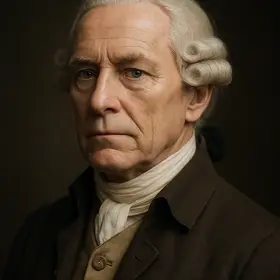 Jarvis LorryMajor character
 Charles DarnayProtagonist
 Ernest DefargeMajor character
 Madame DefargeAntagonist
 Miss ProssMajor character
 Sydney CartonProtagonist
All chapter summaries ›Characters ›
Read A Tale of Two Cities illustrated
Every scene in these notes comes from the Book2Life reader, where the full public-domain text is illustrated as you read, with character portraits and narration. Free in your browser and on iPhone.
Read A Tale of Two Cities free
