
Gabelle in A Tale of Two Cities
Minor character
A timid steward and postmaster of the Evrémonde estate whose imprisonment sparks Darnay’s return to France.
Who is Gabelle?
Gabelle is the steward/postmaster attached to the Evrémonde domain who quietly manages local business and errands for the Marquis and his household. He appears first as a visible part of the Marquis’s retinue and local administration, carrying out orders with hesitant loyalty. When revolutionary fury breaks out, villagers seize him from the post-house and later he is imprisoned in the Abbaye and threatened by revolutionary tribunals. From his cell he writes a begging letter appealing to his former lord (addressed through Tellson’s and seen by Jarvis Lorry and Charles Darnay). That letter becomes the immediate cause of Darnay’s secret return to Paris to attempt rescue. Gabelle later appears in the tribunal where he confirms Darnay’s motive for returning, helping secure an acquittal. Throughout, he acts out of duty and fear rather than ideology, and his legal peril exposes how personal ties and obligations bind characters across the collapsing ancien régime.
In the book: Gabelle is a small-town tax and post official in the Evrémonde domain whose timid loyalty and legal entanglements place him at the mercy of revolutionary forces; his plight becomes a catalyst that draws major characters into critical choices and deepens the novel’s conflict between old regime and revolution, highlighting themes of duty, fear, and responsibility.
Personality
- timid
- He is hoisted away by villagers at the Marquis’s post-house in Chapter 9, portrayed as overwhelmed and at the mercy of the crowd.
- dutiful
- He writes a desperate, respectful letter from the Abbaye pleading for his former lord’s aid in Chapter 24, showing adherence to obligation.
- impoverished
- He is one of the small officials in the rural posting-house seen amid the Marquis’s indifferent procession in Chapter 8, embedded in the impoverished countryside.
- vulnerable
- His imprisonment in the Abbaye and condemnation by revolutionary tribunals in Chapter 24 place him entirely at the mercy of political forces.
Character arc
Gabelle appears initially as an institutional functionary tied to the Evrémonde household, a visible but unresisting agent of the old regime (Chapter 8). When the Marquis’s carriage and contempt for the peasantry draw revolutionary attention, villagers seize and carry him away, demonstrating how his protected position collapses (Chapter 9). Years later, amid the Revolution’s legal machinery, he is imprisoned in the Abbaye and writes a plaintive letter that surfaces in Tellson’s and provokes action from Darnay (Chapter 24). His plea transforms him from a background steward into a catalyst: his vulnerability compels Darnay to return to France and face hazard. At Darnay’s trial and the proceedings at La Force, Gabelle testifies about Darnay’s motive for returning, using his own plight as evidence and contributing concretely to Darnay’s acquittal (Chapters 1 and 6). Gabelle’s role thus shifts from passive servant to an object of political violence whose personal desperation produces decisive choices by central characters; he does not actively change his principles but his circumstances force others into moral and practical action on his behalf.
Relationships
- Marquis St. Evrémonde Gabelle serves as steward/postmaster under the Marquis and follows his orders in the countryside (Chapter 8).
- Charles Darnay Gabelle writes from the Abbaye begging help, and his letter directly prompts Darnay’s secret return to Paris to try to rescue him (Chapters 24 and 1).
- Jarvis Lorry Mr. Lorry receives and handles the soiled letter about Gabelle at Tellson’s, which sets the rescue plot in motion (Chapter 24).
- Ernest Defarge Defarge, who runs the wine-shop in Saint Antoine, is present in the neighborhood whose revolutionary energy leads to Gabelle’s capture (Chapter 5 and 9 context).
- Jacques Three Local revolutionary actors (the villagers/Jacques) seize and carry Gabelle away from the post-house, exposing him to revolutionary justice (Chapter 9).
- Dr. Manette Dr. Manette testifies at Darnay’s trial where Gabelle confirms Darnay’s motive; their combined testimony helps secure acquittal (Chapter 6).
Quotes by Gabelle
“For the love of Heaven, of justice, of generosity, of the honour of your noble name!”
Chapter 24Gabelle’s desperate plea to his former master; it crystallizes the personal appeal that compels Darnay to act.
Why Gabelle matters
Gabelle embodies how personal duty and legal ties survive even as political order collapses. His helplessness and appeal reveal the human casualties of systemic upheaval and force other characters to confront moral responsibility—most importantly Darnay, who is drawn back by loyalty to a dependent servant. Gabelle’s fate highlights the novel’s themes of obligation, the vulnerability of intermediaries between classes, and the way private bonds become entangled with public justice during revolution.
Chapters with Gabelle
More A Tale of Two Cities characters
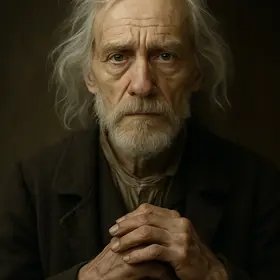 Dr. ManetteMajor character
 Lucie ManetteMajor character
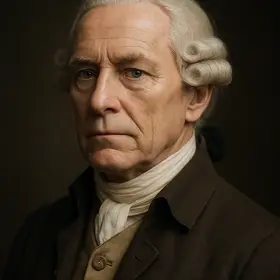 Jarvis LorryMajor character
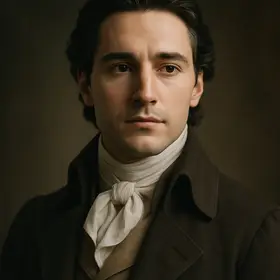 Charles DarnayProtagonist
 Ernest DefargeMajor character
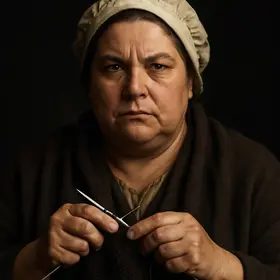 Madame DefargeAntagonist
 Miss ProssMajor character
 Sydney CartonProtagonist
All chapter summaries ›Characters ›
Read A Tale of Two Cities illustrated
Every scene in these notes comes from the Book2Life reader, where the full public-domain text is illustrated as you read, with character portraits and narration. Free in your browser and on iPhone.
Read A Tale of Two Cities free
