Jacques Three in A Tale of Two Cities
Minor character
A member of the revolutionary club (one of the Jacques) who listens, plots, and supports the Defarges' vengeance.
Who is Jacques Three?
Jacques Three is one of the discreet but watchful members of the Jacques who gather in Defarge’s wine-shop. He participates in the private deliberations that convert villagers’ grievances into organized revolutionary purpose, listening to witnesses (the mender of roads) and endorsing the group’s vow to register and exterminate members of the hated Evrémonde family. He is present in the wine-shop and at clandestine meetings with Madame Defarge, Defarge, and The Vengeance as they plan denunciations and coordinate attendance at public acts of violence. Jacques Three helps sustain the mob’s momentum by bearing witness, approving plans, and joining the crowd when the Quarter mobilizes—he is part of the collective force that moves from restrained fury to active, public vengeance during the Bastille seizure and the later parading and executions.
Personality
- Observant
- In Chapter 15 he sits in the wine-shop listening intently to the mender of roads’ account and the details of the tall man’s brutality.
- Collectivist
- He acts with the other Jacques—meeting, questioning, and agreeing to register the condemned rather than acting alone (Chapter 15).
- Resolute
- In Chapter 22 he takes part in the Quarter’s swift mobilization that drags enemies like Foulon into public vengeance.
- Compliance
- In Chapter 14 he follows Madame Defarge’s designs in the wood-sawyer’s shed, accepting her plan to pursue the Evrémonde family.
Character arc
Jacques Three’s role is steady rather than transformative: he appears first as a quiet, attentive conspirator in Defarge’s wine-shop and remains a committed member of the revolutionary collective through the Bastille assault and the Quarter’s bloody reprisals. Early on he listens to the mender of roads and endorses the decision to register the Evrémonde crimes; this establishes him as part of the engine that turns private outrage into public action. As events escalate, he shifts from a listening conspirator to an active participant in the mob’s violence, present when Foulon and other enemies are seized and displayed on pikes. He does not undergo a moral reversal or personal crisis in the notes provided; instead, he consistently embodies the crowd’s progression from suppressed fury to triumphant vengeance, illustrating how ordinary members of a faction move from discussion to complicity in public atrocity.
Relationships
- Madame Defarge A close ally and co-conspirator who leads the knitting-registering and drives the vengeance Jacques Three supports.
- Ernest Defarge The wine-shop proprietor who hosts the Jacques meetings in which Jacques Three takes part.
- The Vengeance A fellow revolutionary and female lieutenant whose fierce actions and presence accompany Jacques Three at meetings and mobilizations.
- Charles Darnay An object of the Jacques’ (including Jacques Three’s) hostility as a member of the Evrémonde line they seek to register and punish.
- Dr. Manette A target of interest because his name and cell at the Bastille are discovered during the Jacques’ investigations and inflame their purpose.
Why Jacques Three matters
Jacques Three represents the ordinary, collective energy that fuels the Revolution in the novel: not a leading ideologue but a reliable member whose attention and compliance convert private grievance into public violence. His presence in the wine-shop, at the Bastille’s aftermath, and during the Quarter’s bloody actions demonstrates how anonymous participants—bound by shared hatred and ritual (Madame Defarge’s knitting, the drum)—sustain the machinery of vengeance, highlighting themes of mob psychology, collective responsibility, and the dangerous ease with which communal fury becomes destructive justice.
Chapters with Jacques Three
More A Tale of Two Cities characters
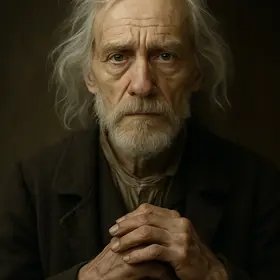 Dr. ManetteMajor character
 Lucie ManetteMajor character
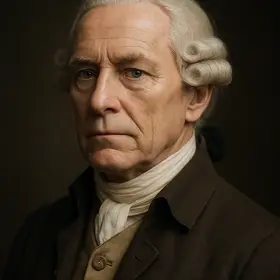 Jarvis LorryMajor character
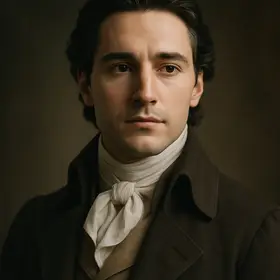 Charles DarnayProtagonist
 Ernest DefargeMajor character
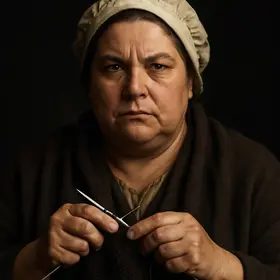 Madame DefargeAntagonist
 Miss ProssMajor character
 Sydney CartonProtagonist
All chapter summaries ›Characters ›
Read A Tale of Two Cities illustrated
Every scene in these notes comes from the Book2Life reader, where the full public-domain text is illustrated as you read, with character portraits and narration. Free in your browser and on iPhone.
Read A Tale of Two Cities free
