All Quiet on the Western Front Chapter 1 Summary
Rest Behind the Front
A company rests five miles behind the front, enjoys unexpected rations, visits wounded Kemmerich, and begins to feel disillusioned with authority.
Summary
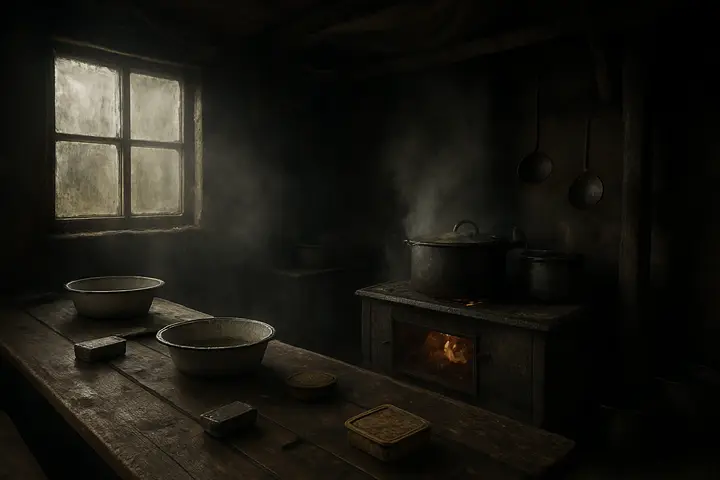
Paul Bäumer narrates as he and his friends sit five miles behind the front after being relieved; they find themselves unusually well supplied with food, tobacco, and mail. The unexpected abundance results from a quartermaster's miscalculation: their company returned from the line with heavy losses, leaving rations drawn for a full complement. Katczinsky, Müller, Tjaden, Leer, Albert Kropp, Haie Westhus, Detering and Paul lead the queue at the cook-house and secure the full issue after pressure and the company lieutenant’s reluctant approval. The men relax in a meadow, improvise latrine-box seating, play cards, smoke, read letters, and enjoy a rare, almost idyllic sense of ease beneath blue skies and observation balloons.
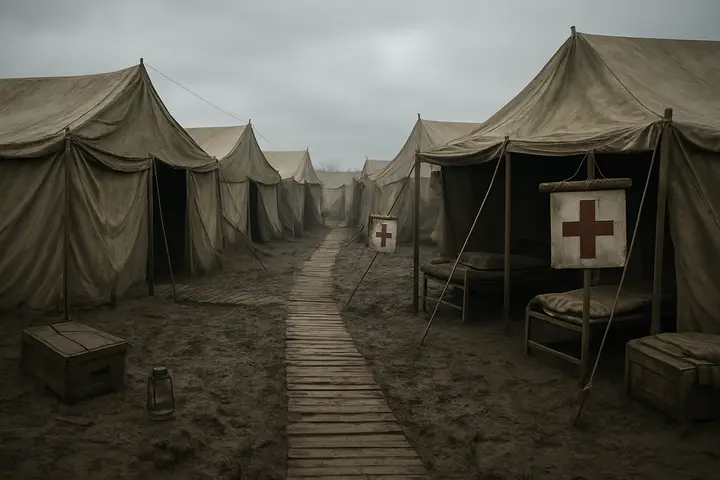
Their reprieve is underscored by uneasy memories and recent experiences. Conversation turns to Franz Kemmerich, who is in the dressing-station with a severe leg injury; the group goes to see him. In the hospital atmosphere of carbolic and ether they find Kemmerich pale and feverish; his leg has been amputated. The men bring his belongings, worry over a stolen watch, and debate the fate of a pair of coveted English boots. Müller’s crude practical thinking about who will acquire the boots and the men’s tacit calculations about survival quietly reveal how the front reshapes values. Paul observes Kemmerich’s altered face and voice, and imagines macabre details, overwhelmed by the sense that life is being pressed out of his friend.
The chapter closes with the men reflecting on Kantorek, their former schoolmaster, whose patriotic urging sent them to enlist; they recall Josef Behm, who was persuaded to volunteer and then was among the first of their classmates to fall. Bitterly, they contrast the teachers’ patriotic rhetoric with the brutal reality they have seen and acknowledge a loss of innocence: they feel older than their years and increasingly estranged from the authority figures who glorified war.
Key events
- Company rests five miles behind the front after relief.
- Unexpected double rations and tobacco due to quartermaster's miscount.
- Men relax in a meadow: play cards, smoke, and enjoy the brief peace.
- They recall Kantorek and how school propaganda led classmates to enlist.
- Visit to dressing-station to see Franz Kemmerich, who has had his leg amputated.
- Discussion about Kemmerich's possessions (watch, English boots) and the men’s uneasy practical thinking.
Chapter 1 in pictures
Analysis
Chapter I establishes the novel’s central tone by juxtaposing a rare moment of comfort with the encroaching reality of war. The leisurely opening—rations, tobacco, cards, summer meadow—creates a fragile idyll that repeatedly collapses into grim practicality and moral erosion. Remarque uses close, grounded detail (the cook’s carroty head, margarine-tub lid as a card table, the latrine-boxes) to anchor readers in soldiers’ bodily world; this emphasis on appetite and physical needs becomes a recurring motif that exposes how survival priorities override peacetime sentimentality.
Character dynamics are sketched economically: Katczinsky as pragmatic leader, Müller as bluntly opportunistic, Kropp as clear thinker, and Paul as observant narrator. Their conversation about Kantorek and the recollection of Josef Behm’s death begin the novel’s critique of authority and patriotic rhetoric. The visit to Kemmerich functions structurally as a counterpoint to the earlier cheer—his amputated leg and waning vitality foreshadow how quickly youth and normal life are consumed. Narrative technique—first-person, immediate present, sensory specificity—creates intimacy while allowing ironic distance; Paul’s internal fantasies about decay reveal how trauma intrudes on thought. Symbols (the English boots, the stolen watch) materialize the barter economy of the front and the men’s shifting moral compass. Overall, the chapter seeds themes of lost innocence, the body as battlefield, and the disillusionment with societal authority that the novel will develop.
Important quotes
“We are at rest five miles behind the front.”
NarratorOpens the chapter and establishes the physical setting and temporary respite from combat.
“We are the Iron Youth.”
Albert Kropp (reported)Cited from a letter by Kantorek; the phrase is mocked by the men and signals their bitter disillusionment with patriotic rhetoric.
“Damned shit, the damned shit!”
Albert KroppKropp’s outburst reveals sudden, raw emotion—frustration and the psychological strain that underlies the men's outward calm.
Characters in Chapter 1
All chapter summaries ›Characters ›
Read All Quiet on the Western Front illustrated
Every scene in these notes comes from the Book2Life reader, where the full public-domain text is illustrated as you read, with character portraits and narration. Free in your browser and on iPhone.
Read All Quiet on the Western Front free
