All Quiet on the Western Front Chapter 2 Summary
From Schoolboys to Soldiers
Young recruits describe basic training, the harsh Corporal Himmelstoss, comradeship's formation, and the death of Franz Kemmerich.
Summary
The narrator (Paul Bäumer) reflects on how the war has cut off their previous civilian lives—poems, plans, and vague futures—and contrasts the rooted older generation with the uprooted “Iron Youth” (Kropp, Müller, Leer and the others) whose ties beyond parents are minimal. He explains how their youthful ideals are stripped away in military training: bright buttons, drill, and the system replace intellect and individuality. The recruits are distributed among platoons and exposed to petty, exhaustive punishments and humiliations under Corporal Himmelstoss, an overbearing former postman who delights in drill and polishing. The narrator recounts many specific torments—repeatedly remaking beds, scrubbing with a toothbrush, freezing drills, bayonet practice and being forced into ridiculous physical ordeals—but also the moment the men collectively resist Himmelstoss and thereby end his absolute hold over them.
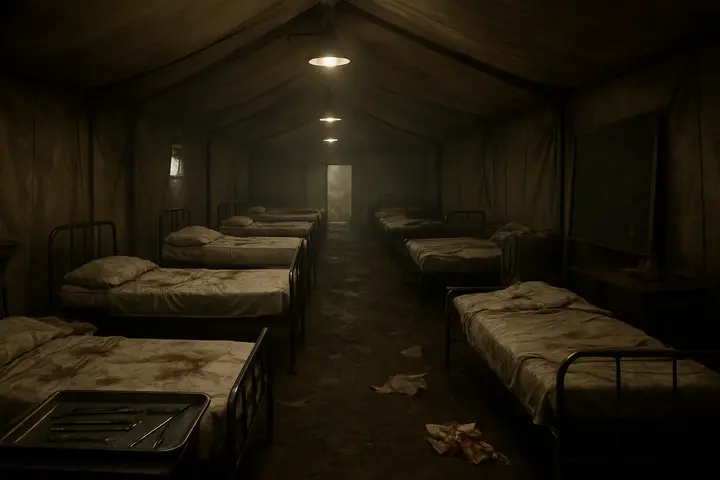
Training, cruel though it is, hardens the boys and produces practical survival skills and, crucially, comradeship: the narrator argues that esprit de corps is the war’s greatest positive outcome. The chapter ends in a hospital ward with Franz Kemmerich dying from gangrene after an amputation. The narrator tries to comfort him with talk of convalescence and prosthetics, but Kemmerich quietly accepts his fate and asks the narrator to send his watch home. The doctor and hospital staff act with brusque efficiency—beds and space are urgent—and soon Kemmerich is pronounced dead. The narrator, stunned and emotionally numb one moment and exhilarated by a sudden rush of life the next, hands Kemmerich’s boots to Müller, who will put them to immediate use, while they share a small piece of sausage, tea, and rum.
Key events
- Narrator reflects on loss of civilian past and roots for the young recruits.
- Description of harsh, dehumanizing ten-week training that replaces ideals with drill.
- Introduction of Corporal Himmelstoss and vivid examples of his abusive discipline.
- Collective small rebellion ends Himmelstoss’s total control over the group.
- Kemmerich’s decline in the hospital: conversation, acceptance, and death.
- Immediate practical aftermath: Kemmerich’s belongings and his boots given to Müller.
Chapter 2 in pictures
Analysis
Chapter II establishes central themes and tones for the novel: the severing of prewar identities, the brutal practicalities of military life, and the emergence of comradeship as a life-saving human bond. The narrator’s reflections early in the chapter set up a generational contrast—older men with prewar anchors versus uprooted youths—framing the war as a force that annihilates future possibilities. The extended section on training and Himmelstoss functions both as realistic reportage and as social criticism: Remarque shows how ritual, authority, and petty cruelty replace intellectual and moral formation, producing soldiers who are "hard, suspicious, pitiless, vicious, tough." Yet this harsh schooling also cultivates solidarity; the revolt against Himmelstoss foreshadows the deeper mutual reliance these men will need at the front.
The hospital episode balances bleak naturalism with poignant individual detail: Kemmerich’s physical disintegration, his wish about the watch, and the narrator’s helpless attempts at consolation reveal the personal cost of war. Symbolically, the boots transfer—Müller’s pragmatic claim on Kemmerich’s boots—encapsulates the novel’s focus on material realities and emotional desensitization: life-and-death is subordinated to immediate necessity. Narratively, the chapter moves from broad reflection to concrete scenes, using close third-person first-person consciousness to blend philosophical observation with sensory immediacy, deepening readers’ identification with the narrator and his comrades.
Important quotes
“Only the facts are real and important for us.”
NarratorSummarizes the recruits’ pragmatic, hardened outlook—abstract ideals fall away and material realities (like boots) matter.
“We became hard, suspicious, pitiless, vicious, tough—and that was good; for these attributes had been entirely lacking in us.”
NarratorExplains how training brutalizes the boys but prepares them to survive in the trenches and fosters comradeship.
Characters in Chapter 2
All chapter summaries ›Characters ›
Read All Quiet on the Western Front illustrated
Every scene in these notes comes from the Book2Life reader, where the full public-domain text is illustrated as you read, with character portraits and narration. Free in your browser and on iPhone.
Read All Quiet on the Western Front free
